
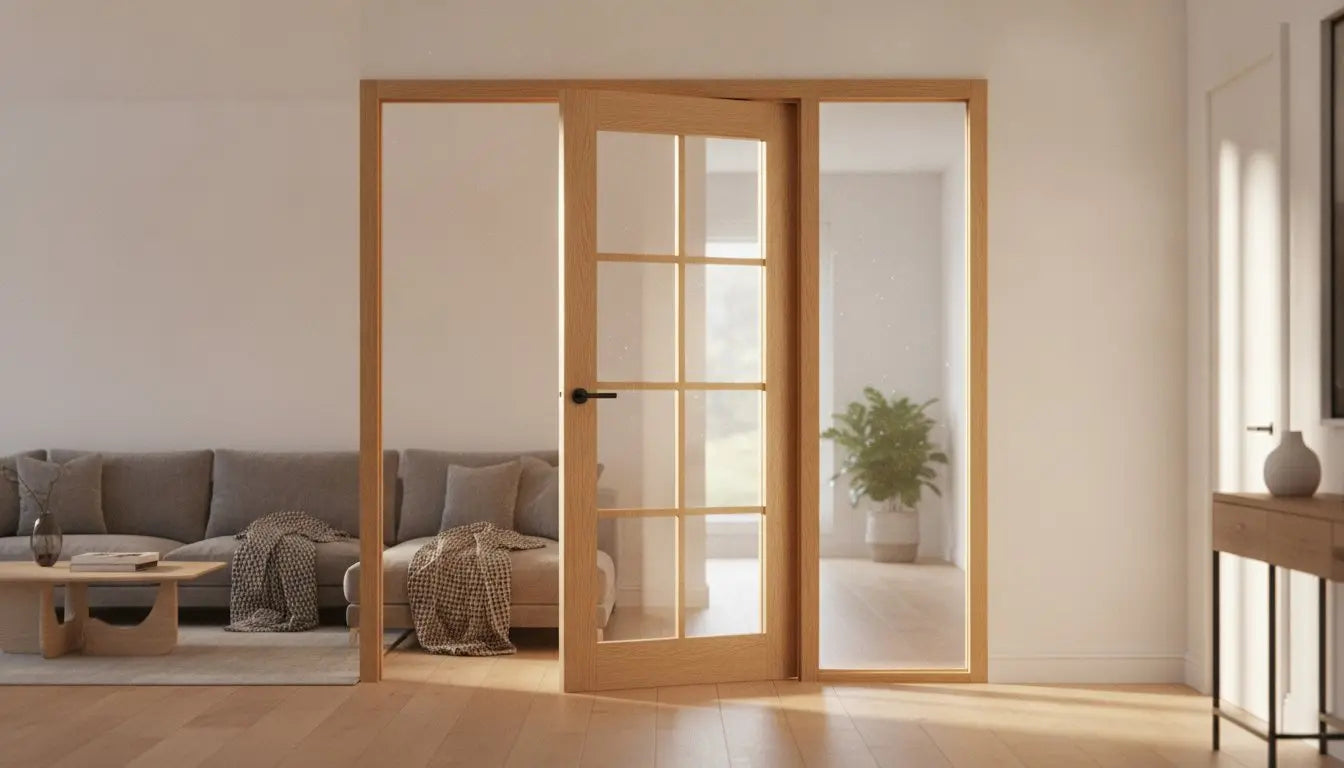
Could a single design choice do more for your home's atmosphere than a complete structural renovation? It is a question many homeowners ask when faced with dark hallways or rooms that feel closed off from the rest of the property. You likely already appreciate that internal oak glazed doors are the gold standard for inviting natural light into a space, yet finding the right balance between heritage style and modern safety often feels like a challenge. You want the elegance of traditional timber, but you also need the peace of mind that comes with certified safety glass for a busy family environment.
We understand that your home is a carefully curated space where every detail matters. This guide will show you how to select doors that complement your existing oak flooring and furniture whilst meeting the latest UK safety regulations. We will explore the different glass types available, from clear panels that create a seamless open-plan feel to obscure options for added privacy in home offices or bathrooms. By the end, you will have the expert knowledge needed to choose long-lasting joinery that adds genuine value and character to your living space.
Key Takeaways
- Learn how to brighten dark corridors and create an open-plan feel whilst maintaining clear room definition.
- Understand the essential safety standards for internal oak glazed doors, ensuring your choice complies with British Building Regulations for family homes.
- Identify the perfect aesthetic for your property, whether it is a minimalist Shaker design or a traditional multi-pane heritage style.
- Discover the practical differences between solid timber and veneered constructions to ensure your investment adds lasting value to your home.
- Gain clarity on fire-rated glazing options that provide crucial protection without sacrificing the flow of natural light.
The Aesthetic and Functional Benefits of Internal Oak Glazed Doors
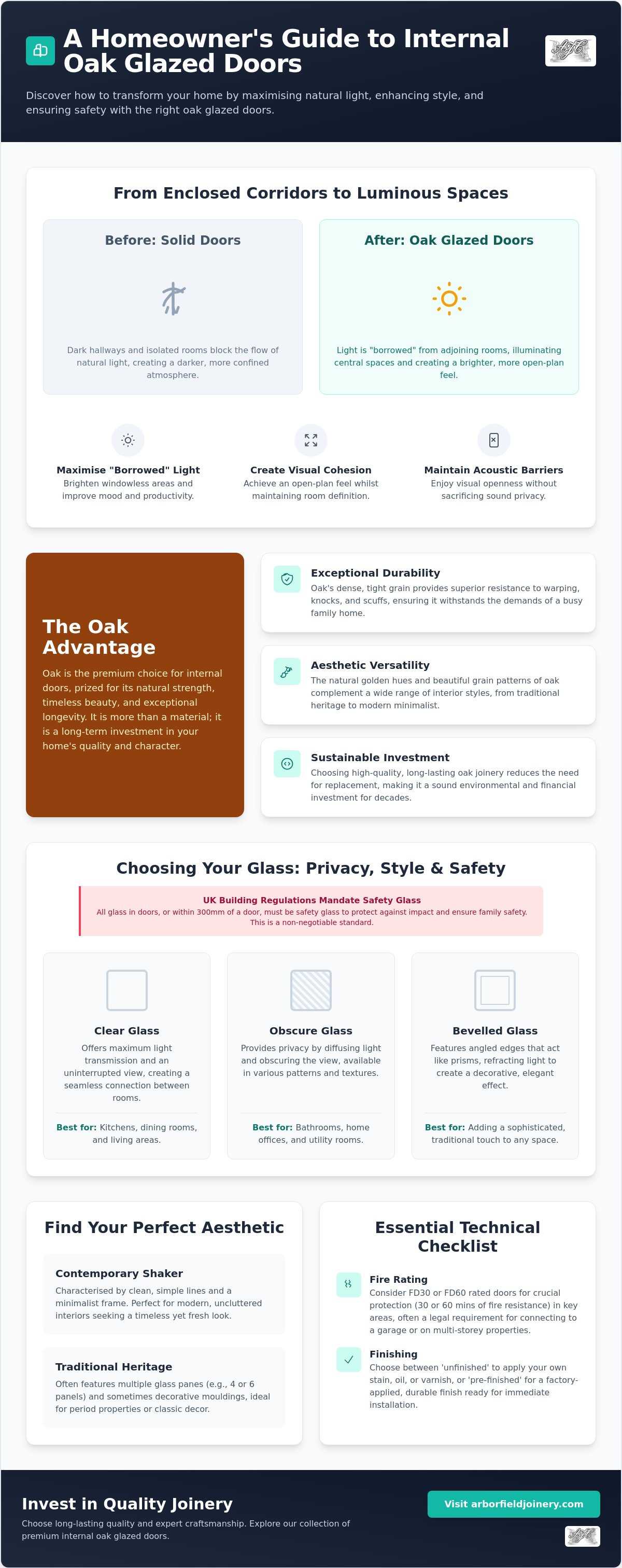
At its core, an internal oak glazed door represents a deliberate marriage between the structural integrity of premium hardwood and the transformative power of light-transmitting glass panels. It is a design choice that serves two masters: the need for a robust, physical partition and the desire for an airy, connected home. For many homeowners in the UK, the primary architectural challenge is the "landlocked" hallway. These central transit zones often lack external windows, creating a claustrophobic atmosphere that feels disconnected from the rest of the property. By installing internal oak glazed doors, you effectively turn every room into a potential light source, allowing sunshine to penetrate deeper into the floor plan.
The psychological impact of this "borrowed light" shouldn't be underestimated. Natural light is known to improve mood, increase productivity, and make even the most modest rooms feel significantly larger than their square footage suggests. Beyond the mental benefits, there is a practical, aesthetic flow created when you can see glimpses of your decor from one room to the next. It creates a sense of cohesion that solid doors simply cannot achieve, all whilst providing the necessary density to keep heat in and noise out.
Maximising Natural Light Transfer
The concept of "borrowed light" is a practical solution for windowless internal spaces that would otherwise rely on artificial bulbs throughout the day. These doors act as a bridge; they create a semi-open-plan feel that maintains the necessary acoustic barriers for privacy whilst visually expanding the room's boundaries. It is an ideal compromise for those who want the sociability of an open layout without the lack of sound control. Larger glass panes generally offer higher light transfer efficiency by reducing the ratio of timber to glass within the frame.
Oak as a Premium Material Choice
Why is oak the preferred timber species for these designs? The answer lies in the wood's inherent density and stability. Oak is a robust hardwood that offers exceptional resistance to warping, which is vital when the frame must support the weight of heavy glass panels. Unlike cheaper softwoods or white-primed alternatives, oak handles the humidity changes of a busy home with grace.
- Durability: Oak's tight grain makes it resistant to the knocks and scuffs of daily family life.
- Versatility: The natural golden hues of the timber complement both traditional heritage colours and modern, minimalist palettes.
- Sustainability: Choosing high-quality oak is a long-term environmental investment, as its longevity ensures you won't need to replace your joinery for decades.
When you consider the safety and security of laminated glass within these sturdy frames, the result is a product that offers peace of mind alongside its visual appeal. This combination of dense timber and resilient glazing creates a high-end finish that adds genuine value to any property.
Glass Options and Safety Standards: Choosing the Right Glazing
Selecting the right glass for your home is about more than just aesthetics; it is a functional decision that affects privacy, safety, and acoustic comfort. Whilst the oak frame provides the structural strength, the glazing determines how a room feels and performs. Whether you are looking to create a seamless transition between a kitchen and dining area or need to shield a home office from the distractions of a busy household, the type of glass you choose is paramount. In modern internal oak glazed doors, you aren't limited to simple clear panes. You have a spectrum of options that range from high-clarity glass to intricately textured obscure patterns.
According to UK building regulations for glazed doors, safety is the non-negotiable starting point for any installation. Every pane of glass in a door, or located within 300mm of a door, must be safety glass. This ensures that the glass can withstand the typical impacts of a domestic environment, from a door accidentally slamming in a draught to a child's toy hitting the surface. For those seeking a more traditional, high-end look, bevelled glass offers a sophisticated touch. These panels feature edges that are cut at an angle, acting as prisms that catch and refract the light, adding a layer of depth and craftsmanship to the oak frame.
Privacy Levels and Obscure Glass
Privacy is a common concern when choosing internal oak glazed doors for rooms like bathrooms or bedrooms. Obscure glass is rated on a scale, typically from 1 to 5, where level 1 offers minimal distortion and level 5 provides full privacy. Frosted or sandblasted glass is an excellent choice for utility areas or en-suites, as it diffuses light beautifully to reduce glare whilst completely obscuring the view. In south-facing rooms, this diffusion can also protect delicate furniture from direct sun damage without plunging the space into darkness.
British Safety Standards for Glazing
When we talk about "toughened safety glass," we are referring to material that has been heat-treated to increase its strength compared to standard glass. If it does break, it is designed to crumble into small, relatively harmless granules rather than long, dangerous shards. You should always look for the permanent safety kite-mark etched into the corner of the pane, which confirms compliance with BS EN 12150. Standard float glass is never used in modern internal joinery because it poses a significant injury risk by shattering into large, razor-sharp pieces upon impact.
If you are designing a home office, you may also want to consider acoustic glazing. This specialized glass uses a laminated interlayer to dampen sound vibrations, helping you maintain a quiet workspace even when the rest of the house is active. If you're unsure which glass texture suits your hallway, you might find it helpful to view our glazed door collections to see the different finishes in person.
Finding Your Style: From Traditional Panelled to Contemporary Designs
Selecting a door style is about respecting the architectural DNA of your home. Whether you live in a crisp new-build apartment or a carefully restored Victorian terrace, your choice of internal oak glazed doors acts as a visual anchor for your interior design. The door is often the first thing you touch when entering a room, so its aesthetic must align with the tactile experience of the space. For those favouring a sleek, industrial-inspired aesthetic, minimalist "Urban" designs utilise large, single panes of glass to create a bold, clean profile. This approach, often referred to as the "Pattern 10" design, maximises the glass surface area for the greatest possible contemporary impact.
To achieve a truly professional finish that adds value to your property, don't overlook the importance of coordination. It's best to match your internal oak doors with existing oak skirting and architrave. This creates a continuous line of high-quality timber that frames each room, highlighting the natural properties of white oak, including its famed durability and intricate grain patterns. When these elements work in harmony, the doors feel like an integral part of the building's structure rather than a mere after-thought.
The Versatility of the Shaker Design
Shaker designs remain the UK's most popular choice because they offer a timeless simplicity that fits almost any setting. The Shaker aesthetic serves as the bridge between traditional and modern, providing clean lines without the starkness of purely minimalist styles. You can tailor this look to your specific needs by experimenting with glass configurations. A 1-light Shaker door provides a broad, unobstructed view, whereas a 4-light version introduces subtle vertical and horizontal bars that add a layer of traditional charm to transitional interiors.
Heritage and Period-Correct Glazing
If you are renovating a period property, selecting the correct glazing pattern is vital for maintaining historical integrity. 1930s-style doors, for instance, are instantly recognisable by their top-third glazing, often featuring three vertical panes that mirror the geometric trends of the early 20th century. Victorian and Edwardian styles often employ more complex multi-pane configurations that add a sense of grandeur to high-ceilinged rooms. By choosing consistent oak door styles across your hallway and landings, you create a unified look that respects the heritage of your home whilst enjoying the benefits of modern craftsmanship.
Technical Considerations: Fire Ratings, Sizing, and Finishing
Whilst the aesthetic appeal of internal oak glazed doors is often the primary driver for a purchase, the technical specifications ensure the product performs its duty for decades. One of the most common questions we encounter involves the choice between solid oak and oak veneer construction. Most high-quality modern doors utilise a solid engineered core with a thick oak veneer; this provides the weight and feel of timber whilst significantly reducing the risk of warping in centrally heated homes. Understanding your sizing requirements is equally vital. UK standard door heights are typically 1981mm, but older properties often feature non-standard frames that require a bespoke joinery solution to ensure a perfect fit.
The structural integrity of the door is particularly important when glass is involved. Because glass is heavy, the oak stiles and rails must be precisely engineered to prevent sagging over time. This is where the expertise of a long-established joiner becomes invaluable. They ensure that the relationship between the timber and the glazing is balanced, providing a door that opens smoothly and closes with a reassuringly solid sound. Whether you are dealing with a standard renovation or a complex new build, these technical details form the foundation of a successful installation.
Internal Glazed Fire Doors (FD30)
Legal requirements in the UK often mandate fire doors in specific areas, such as loft conversions, integral garages, or in blocks of flats. An FD30 rating signifies that the door can withstand fire for at least 30 minutes. These aren't just thicker versions of standard doors; they incorporate specialised fire-rated glass and intumescent strips that expand when heated to seal the gap between the door and the frame. It's a common mistake to install a fire door in a standard frame. To achieve the full 30-minute protection, the frame must also be fire-rated and fitted with compatible, certified hardware.
The "Finish" Debate: Pre-finished vs. Unfinished
Choosing a pre-finished door means it arrives factory-lacquered, offering a consistent colour and allowing for immediate installation. This is often the best route for those wanting a professional, durable finish without the mess of on-site work. Conversely, unfinished oak is the preferred choice for those who wish to perfectly match the timber to existing furniture or flooring using specific oils, waxes, or stains. To keep your timber amongst the best-looking features in your home, we recommend a light re-treatment every few years to maintain its lustre and protection. If you are unsure which fire rating or finish suits your specific project, you can view our full collection of oak doors to compare the technical specifications in detail.
Investing in Quality: Why Arborfield Joinery is the UK’s Trusted Specialist
Choosing the right internal oak glazed doors is an investment in your property's long-term character and functionality. It is a decision that benefits from the guidance of a specialist who understands the life of the timber and the intricacies of glass safety. At Arborfield Joinery, we don't just supply products; we share a legacy of craftsmanship that dates back to 1953. As a family-run business, we've spent over seven decades refining our selection of joinery, ensuring that every piece meets the high standards our customers expect from a heritage brand. This longevity in the industry has allowed us to become a steady hand for homeowners, acting as knowledgeable consultants rather than mere retailers.
Whilst digital browsing offers convenience, nothing replaces the tactile experience of a physical showroom. We host over 120 doors in our Berkshire centre, allowing you to feel the grain of the oak and see exactly how different glass textures interact with light in a real-world setting. This showroom experience is vital for those who want to ensure their new doors perfectly match the existing tones of their home. Our team is always on hand to provide personalised advice, helping you navigate the technical details of sizing and safety with ease and empathy for your specific renovation goals.
Our Commitment to Craftsmanship
Our 70-year history informs every part of our selection process, from the initial sourcing of the finest oak timber to the final quality checks. We understand the nuances of UK building regulations, ensuring that your chosen style doesn't just look beautiful but also complies with all necessary safety and fire standards. We take palpable pride in our role as quality curators, showing a discerning eye for both style and sustainability. Visit our Berkshire showroom or browse our full range of internal oak glazed doors online to see the standard of joinery we provide.
Seamless National Delivery
Organising the transport of fragile glazed products requires a specialised approach to ensure they arrive in pristine condition. We have developed secure transport methods specifically designed for the mainland UK, treating every order with the care a premium product deserves. To make high-end joinery more accessible, we offer free mainland shipping on orders over £900, providing a cost-effective route to transforming your home. Our "quality-first" approach extends far beyond the point of sale; we pride ourselves on a level of aftercare that values long-term relationships over quick transactions, ensuring you feel supported at every stage of your home improvement journey.
Enhance Your Home with Timeless Craftsmanship
Choosing the right internal oak glazed doors is about more than just aesthetics; it's about creating a brighter, safer, and more cohesive living environment. By prioritising certified safety glass and selecting a style that respects your property's heritage, you ensure your investment adds lasting value. Whether you've opted for the clean lines of a Shaker design or a fire-rated solution for a loft conversion, the right joinery transforms how you experience your home every day.
At Arborfield Joinery, we've been a family-run specialist since 1953, helping homeowners find the perfect balance between tradition and modern performance. You can explore over 120 doors in person at our Berkshire showroom or take advantage of our expert national delivery service. We offer free mainland UK shipping on orders over £900, ensuring your premium timber arrives securely at your door. Our team is ready to provide the professional guidance you need to make an informed choice for your project.
Browse our extensive collection of Internal Oak Glazed Doors and discover how the right combination of oak and light can redefine your space.
Frequently Asked Questions
Are internal oak glazed doors safe for homes with children?
Yes, they are entirely safe for family environments. Modern internal oak glazed doors are fitted with toughened safety glass as standard, complying with British safety standard BS EN 12150. This glass is significantly stronger than standard float glass. If it does break, it crumbles into small, blunt-edged granules rather than sharp shards. This makes them a reliable choice for busy households where accidental impacts are more likely to occur.
What is the difference between clear and frosted glass in terms of light?
Clear glass provides maximum light transfer and maintains a visual connection between rooms, making spaces feel larger. Frosted or obscure glass diffuses the light, which softens the atmosphere and reduces sharp glare in sun-drenched areas. Whilst you still benefit from "borrowed light," frosted options provide essential privacy for rooms like bathrooms or home offices. It is a balance between open-plan aesthetics and the practical need for seclusion.
Can I get a glazed oak door that is also a fire door?
Yes, you can certainly specify a glazed oak door with an FD30 fire rating. These specialised doors are engineered to withstand fire for at least 30 minutes. They utilise fire-rated glass and intumescent strips that expand under heat to seal the doorway. It's vital to ensure the frame and hardware are also fire-rated to maintain the integrity of the safety barrier in your property, as standard frames will not provide the necessary protection.
Do internal glazed doors come with the glass already fitted?
Most standard internal oak glazed doors are supplied with the glass already factory-fitted. This ensures the glazing is secure and meets all safety standards before it reaches your home. For bespoke or very high-end custom joinery, panes are sometimes fitted on-site by a specialist joiner, but for the majority of homeowners, the pre-glazed option is the most convenient and cost-effective way to achieve a professional, high-quality finish.
How do I clean and maintain the glass and oak frame?
You should clean the glass with a standard non-abrasive glass cleaner and a lint-free cloth. For the oak frame, a simple wipe with a soft, dry cloth is usually sufficient for dusting. To maintain the timber's lustre, apply a high-quality wood oil or wax every few years, depending on the room's humidity. Avoid using harsh household chemicals on the wood, as these can strip the natural oils and damage the grain over time.
Can I trim a glazed oak door to fit my non-standard frame?
You can trim most glazed oak doors, but the amount is strictly limited to protect the door's structural integrity. Typically, you can remove between 6mm and 10mm from each edge, including the top and bottom. Trimming beyond the manufacturer's recommendations can weaken the joints and may even expose the engineered core. If your frame is significantly non-standard, we recommend commissioning a bespoke door to ensure a perfect, long-lasting fit.
What is the most popular style of oak glazed door in 2026?
Shaker style doors continue to be the most popular choice in 2026 due to their timeless aesthetic that suits both modern and traditional homes. However, we've seen a sharp increase in demand for minimalist "Urban" designs. These feature slim oak profiles and large single panes of glass, reflecting the current trend for industrial-inspired interiors that prioritise an unobstructed flow of natural light throughout the property.
Is solid oak better than oak veneer for a glazed door?
Engineered oak veneer is often the better choice for modern homes with central heating. Whilst solid oak is prized for its traditional heritage, it is more susceptible to warping or splitting as temperatures fluctuate. A veneered door uses a stable, engineered core that resists movement, topped with a thick layer of premium oak for the look and feel of solid timber. This construction provides superior durability and performance over the long term.
Share:
The Complete Guide to Walnut Doors: Luxury, Safety, and Style for 2026
The Complete Guide to Walnut Doors: Luxury, Safety, and Style for 2026