
Can a single design choice truly redefine the atmosphere of your home whilst meeting the strictest modern safety standards? As we move into 2026, walnut doors have emerged as the definitive investment piece for the discerning homeowner, offering a rich, chocolatey depth that lighter timbers simply cannot match. You might worry that such a bold wood tone will make a smaller hallway feel cramped, or perhaps you feel overwhelmed by the technical shift from BS 476-22 to the latest EN 1634-1 fire regulations. These are valid concerns, but they are easily resolved with the right professional guidance.
We believe that your home should be a sanctuary of both style and security. You want a space that feels sophisticated and warm, yet you need total peace of mind regarding fire safety compliance and the longevity of your joinery. This guide will help you discover how to select the perfect walnut doors to suit your architecture, whether you are looking for slim, modern profiles or the substantial weight of a traditional fire-rated door. We will clarify the differences between FD30 and FD60 requirements and explain why high-quality engineered veneers provide the stability and durability your home deserves.
Key Takeaways
- Discover why the rich grain and deep 'chocolate' tones of walnut have become the definitive choice for premium British interiors in 2026.
- Understand how to balance high-end aesthetics with essential fire safety by choosing certified walnut doors that meet the latest building regulations.
- Learn the critical differences between fully finished and unfinished options to ensure your joinery offers long-term durability and UV protection.
- Explore how to match specific walnut styles to your home's architecture, from heritage Victorian properties to contemporary industrial-inspired spaces.
- Find out why seeing timber in person at a specialist showroom is the most reliable way to ensure your chosen doors complement your unique environment.
Why Walnut Doors are the Premium Choice for British Interiors
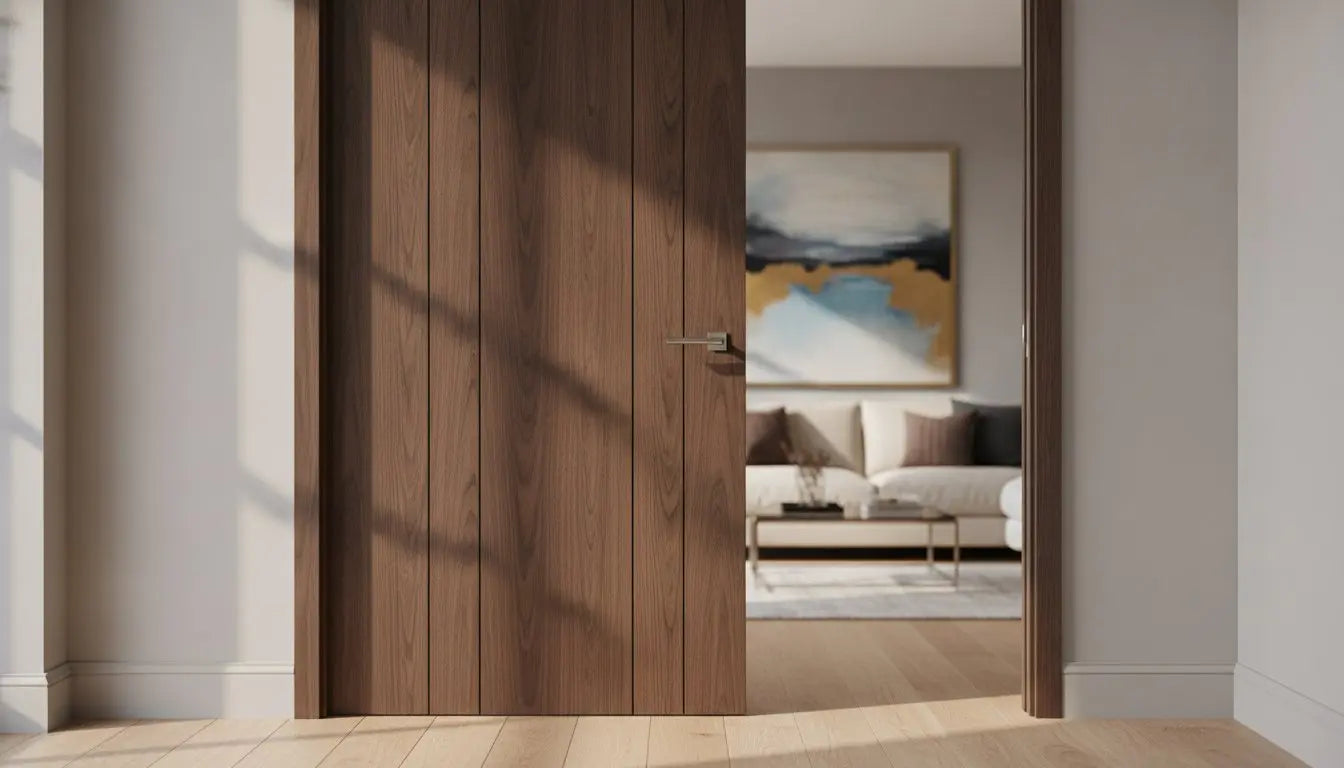
Walnut has long been associated with the finest cabinetry and heritage furniture, but its rise in modern British interiors is driven by a desire for something more substantial than the ubiquitous light timbers of the past decade. Choosing walnut doors is an intentional design statement. They offer a deep, chocolatey richness that instantly elevates a property from standard to bespoke. Unlike lighter species, the properties of walnut wood include a naturally lustrous finish and a complex grain structure that captures light beautifully, adding a layer of visual texture to your hallways.
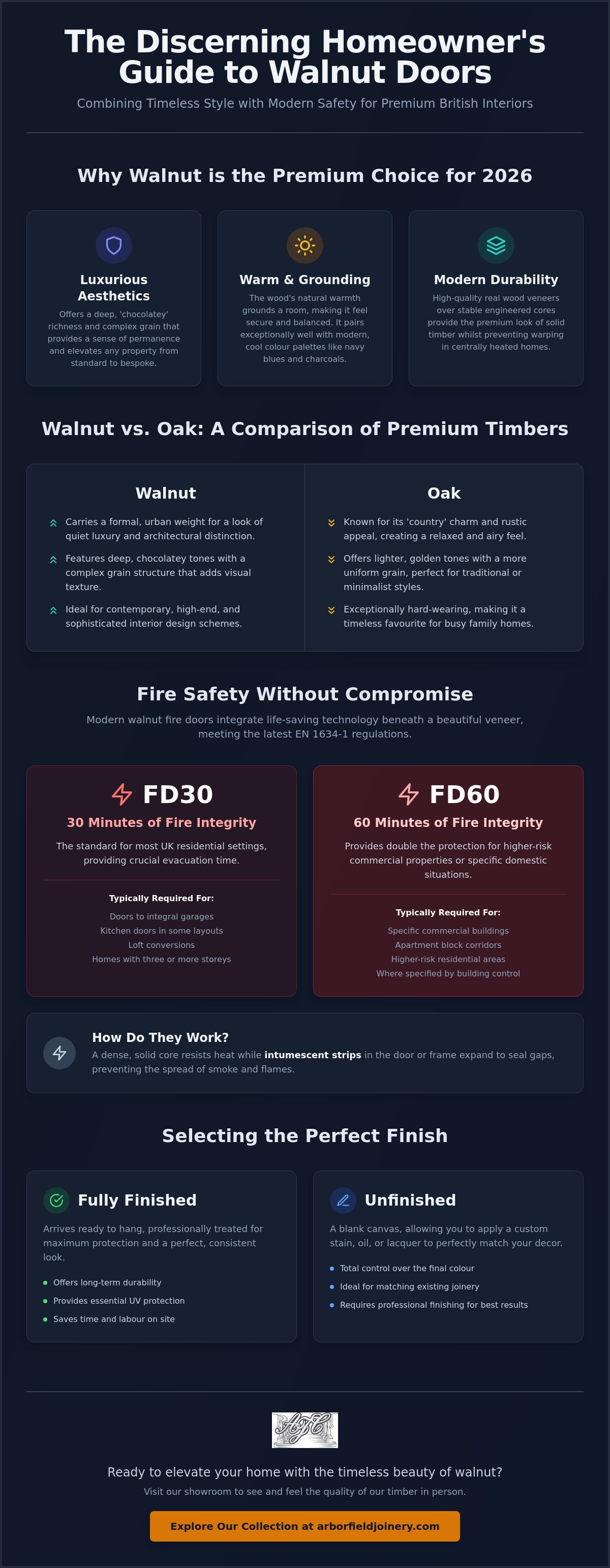
In luxury developments across the UK, designers are increasingly specifying walnut over traditional oak. Why? It's about the psychological impact. Darker timber provides a sense of permanence and "grounding" that helps a room feel secure and warm. This is particularly effective in open-plan living areas where you need architectural elements to define the space without cluttering it. Modern veneering techniques have also made this premium material more sustainable. By using high-quality real wood veneers over stable engineered cores, we preserve rare timber whilst ensuring your doors won't warp or twist in centrally heated homes.
The Aesthetic Appeal of the Walnut Grain
The beauty of walnut lies in its contrast. You'll often see the interplay between the dark, creamy heartwood and the lighter, almost golden sapwood. This creates a striking natural variation that makes every door unique. We find that these rich tones pair exceptionally well with contemporary colour palettes. Think deep forest greens, moody navy blues, or even sophisticated charcoals. The wood's warmth prevents these cooler colours from feeling sterile, creating a balanced, high-end atmosphere that feels both modern and timeless.
Walnut vs. Oak: A Quick Comparison of Premium Timbers
While oak remains a timeless favourite for its "country" charm and rustic appeal, walnut carries a more formal, urban weight. Oak is exceptionally hard-wearing, but walnut is surprisingly resilient to the knocks of family life when properly finished. If you're deciding between the two, consider the architectural "voice" of your home. If you want a relaxed, airy feel, you might prefer to read The Ultimate Guide to Internal Oak Doors. However, for those seeking a look of quiet luxury and architectural distinction, walnut is the undisputed choice.
The Intersection of Safety and Style: Walnut Fire Doors
Many homeowners worry that meeting building regulations means sacrificing the aesthetic vision they have for their property. This is a common misconception. You don't have to choose between the life-saving security of a fire-rated door and the premium finish of walnut. In fact, high-quality walnut doors are increasingly designed with dual-purpose functionality in mind, ensuring that your home remains both a sanctuary of style and a safe environment for your family.
Underneath that beautiful veneer, a walnut fire door is a feat of modern engineering. These doors feature a dense, solid core specifically tested to withstand extreme temperatures. When heat rises, intumescent strips hidden within the door or frame expand to seal any gaps, preventing the spread of smoke and flames. The American Hardwood Information Center highlights walnut's excellent working properties, which allow manufacturers to create these complex, fire-rated structures without losing the timber's signature lustre or stability.
In the UK, the legal requirements for fire doors are clear. Following the Fire Safety Act 2021 and the Fire Safety (England) Regulations 2022, proper fire protection is mandatory in specific residential scenarios. You will typically need fire doors for loft conversions, doors leading to integral garages, and in any home with three or more storeys to protect the stairwell. These regulations aren't just red tape; they provide vital minutes for evacuation whilst containing damage to a single room.
FD30 vs. FD60 Walnut Doors: Which Do You Need?
The most common specification for UK homes is the FD30 door, which provides 30 minutes of fire integrity. This is usually sufficient for most residential settings, including kitchen doors or bedrooms in multi-storey houses. FD60 doors, offering 60 minutes of protection, are generally reserved for commercial buildings or high-risk areas like boiler rooms. Always check the certification label on the door's edge. This label is your proof of compliance and must never be painted over or removed, as it contains the essential tracking data for the "Golden Thread" of safety information.
Standout Fire-Rated Walnut Designs
Modern manufacturing means you can now find fire-rated versions of the most popular contemporary styles. The 'Milano' and 'Venice' designs are particularly favoured for their clean lines and architectural presence. If you're concerned about a solid door blocking light in a narrow corridor, glazed walnut fire doors are an excellent solution. They use specialist fire-resistant glass that maintains the safety rating whilst allowing light to flow between rooms. To see how these safety features look in a real-world setting, you might like to explore our Berkshire showroom where we display a variety of certified options.
Protect your home without compromising on style; browse our certified Fire Doors collection to find a walnut finish that meets your safety requirements perfectly.
Selecting the Right Finish: Fully Finished vs. Unfinished Walnut
Deciding how your new walnut doors are treated is just as vital as selecting the grain pattern itself. Because walnut is a premium, characterful timber, the way it's sealed determines how the light interacts with those deep chocolate tones over time. Whilst the temptation to customise a finish on-site is high, the reality of working with such a porous and oil-rich wood requires a professional touch to avoid a blotchy or uneven appearance. High-quality clear lacquers are designed to do more than just protect; they penetrate the fibres to enhance the natural depth of the timber, creating a lustrous sheen that feels smooth to the touch.
Most homeowners now opt for pre-finished options to ensure a level of consistency that's nearly impossible to replicate in a domestic environment. A factory-controlled setting allows for "furniture-grade" application, where the lacquer is applied in dust-free conditions. This process also incorporates essential UV protection. Without it, the rich pigments in walnut can fade or "bleach" when exposed to direct sunlight through windows, leading to a mismatched look across your hallway. If you're a professional designer looking to match a very specific heritage stain, unfinished doors provide the necessary blank canvas, but for most, the convenience of a ready-to-hang door is the superior choice.
The Case for Pre-Finished Walnut Doors
One of the most overlooked benefits of a factory finish is the total encapsulation of the door. When a door is sealed in a factory, every surface, including the top and bottom edges, receives protection against humidity. This is crucial in British homes where central heating can cause timber to contract and expand. A pre-finished door remains stable, resisting the warping that often plagues poorly sealed wood. Maintenance is equally straightforward. You won't need oils or waxes; a simple wipe with a damp cloth is usually enough to keep the surface looking pristine for years.
Understanding Walnut Veneers and Engineered Cores
There's a common worry that a veneer is "lesser" than solid timber, but in the world of high-end joinery, the opposite is often true. We use engineered cores because they provide the structural integrity needed to prevent twisting in modern, temperature-controlled environments. When shopping for walnut doors, look for the following quality indicators:
- Veneer Thickness: Quality doors typically feature a thick real-wood veneer that allows for light sanding if you ever need to refresh the finish.
- Trimming Margins: Always check the "lipping" on the door edges. This determines how much you can trim the door to fit non-standard or slightly out-of-square frames without exposing the engineered core.
- Weight and Feel: A high-quality engineered door should feel substantial and heavy, providing the same acoustic insulation and "thud" as a solid piece of timber.
Architecture and Style: Matching Walnut Doors to Your Home
Walnut doors are remarkably versatile architectural elements. They don't just belong in ultra-modern penthouses; they can breathe new life into heritage properties too. When you match the right door style to your home's era, you create a sense of cohesion that feels both intentional and luxurious. For instance, in Victorian or Edwardian homes, panelled walnut designs add a layer of sophistication that complements high ceilings and original cornicing. The deep tones provide a stately weight that lighter woods often lack, making them a perfect fit for a traditional study or a formal dining room.
In contemporary settings, the 'Urban' look has become a defining trend for 2026. This aesthetic relies on high-contrast pairings, such as matching walnut doors with matt black ironmongery and industrial-inspired lighting. For modern UK apartments where space and light are at a premium, the 'Ladder' style door has seen a significant rise in popularity. Its horizontal grooved panels create a sense of width and rhythm, offering a minimalist, high-end hotel feel that works beautifully in smaller rooms. If you're working with a darker hallway, glazed walnut options are a clever solution. They allow light to flow between living spaces whilst the natural grain provides the privacy you need.
Traditional vs. Contemporary Walnut Designs
Your choice of profile dictates the entire "voice" of a room. Panelled designs offer a heritage feel, grounding the space in tradition. Conversely, flush or grooved designs are ideal for those seeking a sleek, architectural finish. The hardware you choose is the final flourish. Satin chrome handles offer a sharp, cool contrast against the warm wood, while matt black hardware blends more subtly, allowing the natural texture of the walnut to take centre stage. It's these small details that define the difference between a standard renovation and a bespoke interior design.
Measuring and Avoiding Common Installation Mistakes
Precision is paramount when ordering high-end joinery. The "measure twice, order once" rule is a cliché for a reason; even a few millimetres can cause significant delays. Whilst most modern homes follow standard UK door sizes, older properties often have non-standard frames that require careful assessment. One common pitfall is forgetting to account for floor clearance, especially if you're planning to install thick new carpets or underfloor heating after the doors arrive. If you're undertaking a larger renovation that includes the hallway, it's worth reading The Complete UK Homeowner’s Guide to Stairs to ensure your new doors and staircase components share a consistent design language.
Ready to see how these styles look in a real home environment? Book a visit to our showroom to explore our full range of walnut doors and receive expert guidance on your project.
Why Source Your Walnut Doors from Arborfield Joinery?
Choosing the right timber is only half the journey; the specialist you purchase from ensures that your vision translates into a long-lasting reality. At Arborfield Joinery, we've been supplying premium joinery to UK homeowners and trade professionals since 1953. This heritage as a family-run business means we don't just sell products; we offer a steady hand of expertise honed over seven decades. When you invest in walnut doors, you're choosing a material defined by its unique character. Our showroom in Berkshire features over 120 doors on display, allowing you to see the intricate grain patterns and deep chocolate tones in person before making a commitment.
Navigating the technicalities of modern building regulations can be daunting. Our team acts as knowledgeable consultants, helping you decipher complex fire safety requirements or answering specific questions about trimmability for non-standard frames. Whether you're coordinating a single room refresh or a full-scale renovation, we provide the clarity needed to ensure your installation is seamless. Once you've made your selection, our national delivery service ensures your premium joinery arrives safely at your doorstep anywhere across the UK mainland, handled with the care that such high-end materials deserve.
Our Commitment to Craftsmanship and Sustainability
We believe that quality joinery should be a legacy, not a temporary fixture. This is why we favour suppliers who prioritise ethical timber sourcing and sustainable forestry practices. Our walnut doors are designed to last for decades, utilising stable engineered cores that withstand the rigours of modern life whilst maintaining their aesthetic appeal. This personalised approach to service ensures that every project, regardless of its scale, receives the same attention to detail and pride in craftsmanship that has defined our business for over 70 years.
Ready to Upgrade Your Interior?
Walnut remains one of the most sophisticated investments you can make for your home. Its timeless appeal and inherent warmth provide a level of luxury that few other materials can match. Whether you choose to browse our extensive online range or visit us in person to feel the quality of the timber for yourself, we're here to help you curate your ideal living space. We invite you to experience the difference that heritage and expertise make to your home improvement journey.
Secure your home with elegance; explore our full range of walnut and fire-rated doors today.
Transform Your Interior with Confidence
Choosing the right internal joinery is a decision that shapes the character of your home for decades. We've explored how walnut doors provide a unique blend of architectural weight and sensory warmth, serving as a sophisticated alternative to traditional oak. By prioritising certified fire safety and selecting the appropriate factory finish, you ensure your investment is as practical as it is beautiful. Whether you're matching a minimalist 'Urban' aesthetic or grounding a period property, the right timber makes all the difference to your environment.
At Arborfield Joinery, we've been trusted UK joinery experts since 1953. Our Berkshire showroom features over 120 doors on display, whilst our team of certified fire safety experts is always on hand to offer specific technical advice for your project. We're here to help you navigate every detail, from initial measurements to final delivery. Secure your home with elegance and browse our certified Fire Doors collection today. Your journey toward a more refined and secure living space starts with a single, well-chosen door. We look forward to helping you find the perfect match for your home.
Frequently Asked Questions
Are walnut doors more expensive than oak doors?
Walnut is indeed a more premium investment compared to oak. This is primarily because walnut trees grow more slowly and are less abundant, resulting in a rarer timber. Whilst oak offers a rustic, country charm, walnut provides a more formal and exclusive aesthetic. Many homeowners find that the added cost is justified by the wood's deep, chocolatey tones and the immediate sense of luxury it brings to a property.
Can I get walnut fire doors that match my standard walnut doors?
You can certainly find fire-rated versions that match your standard internal doors perfectly. Most contemporary ranges include FD30 options that share the same veneer patterns and grooved designs as their non-fire-rated counterparts. This allows you to maintain a consistent look throughout your home, using fire doors where legally required, such as hallways or kitchens, and standard doors elsewhere without any visible difference in style.
Do walnut internal doors fade in direct sunlight?
Natural timber is sensitive to light, and walnut can lighten or "bleach" if exposed to prolonged direct sunlight. However, most pre-finished walnut doors are treated with UV-resistant lacquers that significantly slow this process. If your doors are in a particularly sunny spot, it's worth using curtains or blinds during peak hours to preserve the wood's rich, dark pigments for as long as possible.
How much can I trim off a walnut veneer door?
Most high-quality veneer doors allow for a trimming margin of approximately 6mm to 10mm from each edge. This depends entirely on the thickness of the solid timber "lippings" hidden beneath the veneer. Trimming beyond these margins risks exposing the engineered core, which compromises the door's structural integrity and aesthetic. Always check the specific manufacturer's guidelines before your joiner begins work to ensure a perfect fit.
What is the best way to clean and maintain a fully finished walnut door?
Maintenance is remarkably simple for a fully finished door. You don't need expensive oils or waxes; a soft, lint-free cloth that is slightly damp with water is usually sufficient for removing dust or fingerprints. Avoid using harsh chemical cleaners or spray polishes, as these can leave a greasy residue that dulls the natural lustre of the timber over time. Regular dusting is the best way to keep the grain looking sharp.
For readers who might need specialist assistance with door mechanics or maintenance, Liberty Door Repair serves as an excellent resource for professional repair and installation expertise.
Are walnut doors suitable for modern industrial-style interiors?
Walnut is an exceptional choice for industrial-style interiors. Its dark, rich tones provide a sophisticated warmth that balances out "colder" materials like exposed brick, polished concrete, or steel. Pairing walnut doors with matt black handles and hinges creates a high-contrast 'Urban' look that is currently very popular in modern British renovations. The wood's natural texture adds a layer of organic luxury to an otherwise minimalist space.
Do I need special hinges for heavy walnut fire doors?
Fire doors are considerably heavier than standard doors and require robust, certified hardware. You should typically use three 102mm ball-bearing hinges per door to support the additional weight of the fire-rated core. Using the correct hinges isn't just about functionality; it is a legal requirement for maintaining the door's FD30 or FD60 certification. We always recommend using grade 11 or grade 13 hinges for these installations.
What colour walls go best with dark walnut internal doors?
Contrast is your best friend when choosing a wall colour to complement dark timber. Crisp off-whites or soft greys allow the walnut grain to take centre stage and prevent the room from feeling too dark. If you prefer a more dramatic look, deep navy or forest green can create a moody, cocoon-like atmosphere that feels incredibly high-end. Avoid mid-toned browns or yellows, as these can clash with the wood's natural undertones.
Share:
The Complete Guide to Internal Oak Glazed Doors: Style, Light, and Quality
The Complete Guide to Internal Oak Glazed Doors: Style, Light, and Quality