
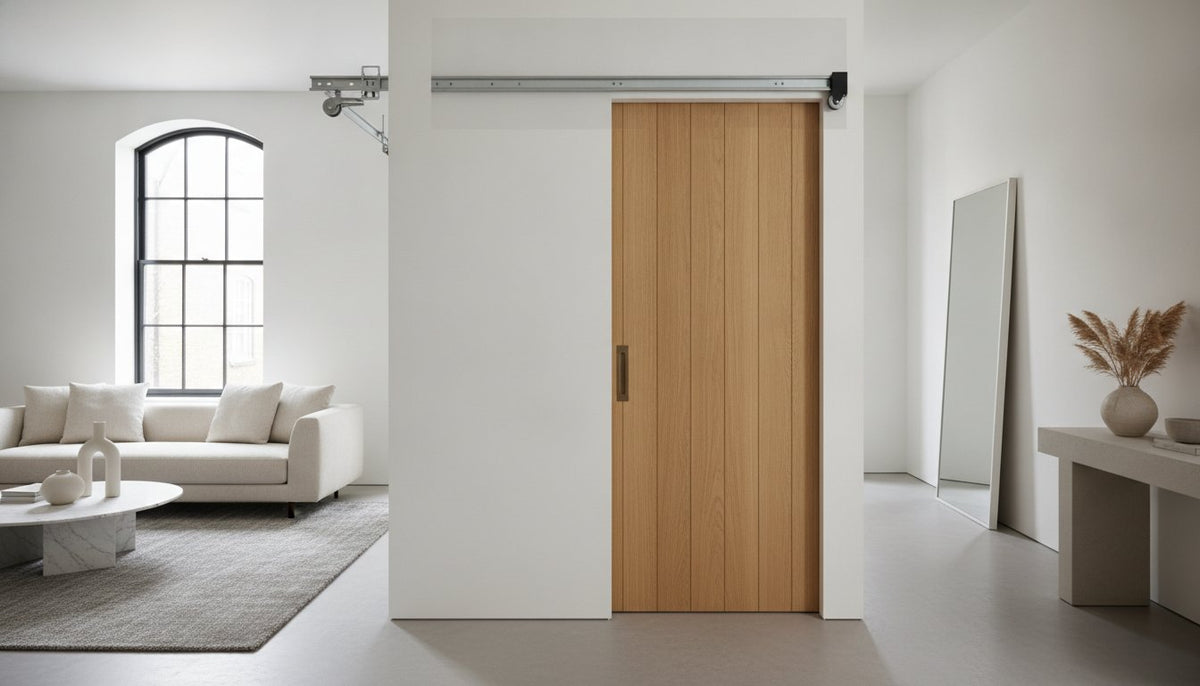
Did you know that a standard swinging door can effectively "kill" up to 8% of a room's usable floor space? It is a frustrating reality for many homeowners who find that the arc of a traditional door dictates exactly where furniture can sit and how a room functions. You shouldn't have to sacrifice your floor plan just to move between rooms. This is where pocket door systems offer a transformative solution, sliding elegantly into a wall cavity rather than demanding a wide radius of empty space.
We understand that the idea of a "hidden" door often raises concerns about complex installations or noisy, sticking tracks that fail after a few years. However, true luxury joinery is built on precision engineering that ensures silent, effortless movement for decades. In this guide, we'll show you how modern systems can support heavy, solid oak doors while meeting the latest UK building regulations. You'll discover everything from FD30 fire safety compliance to the technical requirements for stud walls, giving you the confidence to reclaim your home's potential without compromising on heritage style.
Key Takeaways
- Learn how to eliminate the restrictive "swing zone" of traditional doors and reclaim up to 10 square feet of usable floor space in every room.
- Understand the technical anatomy of high-quality pocket door systems, including the galvanised steel cages that prevent wall bowing.
- Identify the right configuration for your home, whether you require a space-saving single door or a grand, fire-rated double-door entrance.
- Discover how to successfully match your sliding mechanism with premium solid oak or walnut door leaves for a seamless and durable finish.
- Gain professional insight into choosing hardware that ensures a smooth, silent operation designed to last for decades.
What is a Pocket Door System and Why Choose One?
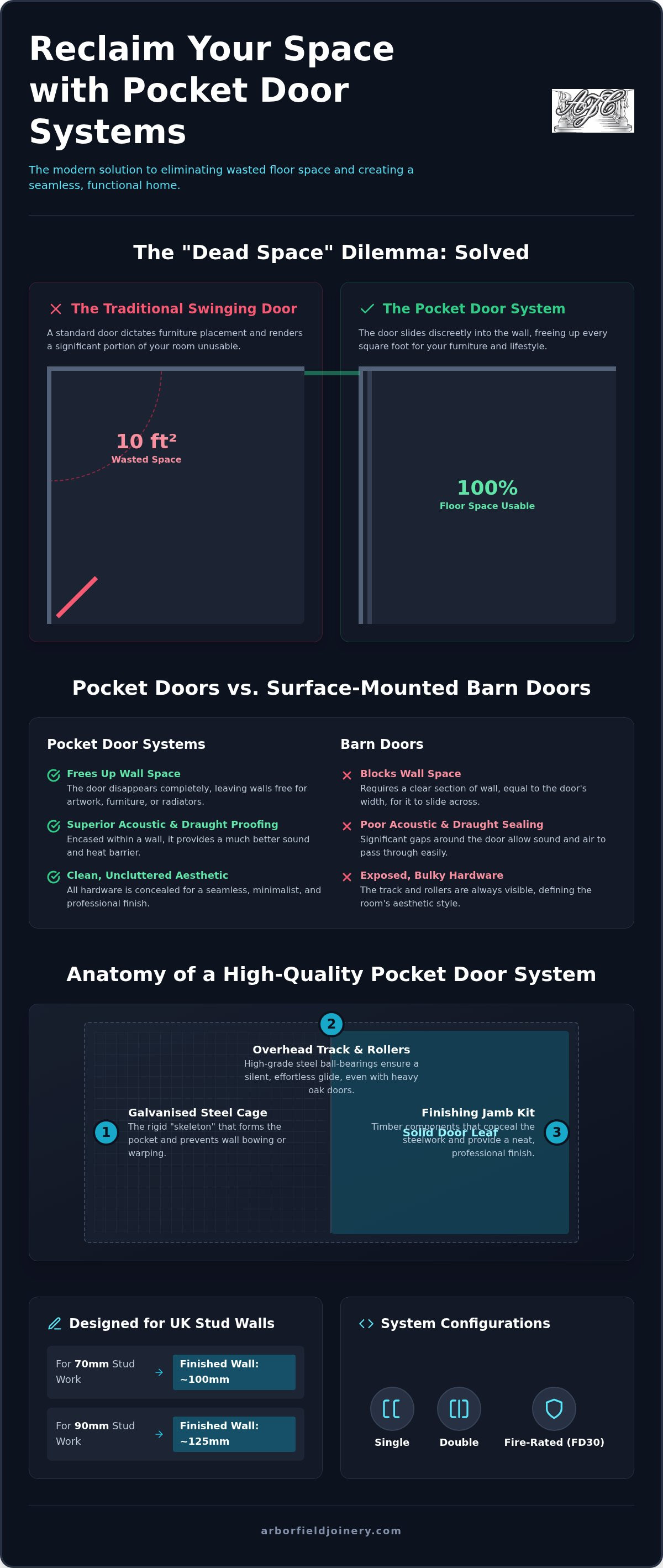
Imagine a room where the door doesn't dictate your furniture layout. A Pocket door is a sliding system where the door leaf glides into a recessed cavity within the wall, effectively vanishing when open. Unlike a standard hinged door that requires a clear arc to operate, pocket door systems sit flush within the partition itself. This design choice eliminates the "swing zone", a dead area of floor space that typically consumes up to 10 square feet per door. For a compact UK terrace or a modern apartment, this reclaimed space is often the difference between a cramped hallway and a functional, breathable living area.
Aesthetically, these systems offer a minimalist, "disappearing" entry that complements both contemporary and traditional interiors. Whether you're working with a sleek white primed leaf or a heavy solid oak door, the result is an uncluttered transition between rooms. They are particularly effective in areas where space is at a premium, such as en-suites, utility rooms, walk-in wardrobes, and narrow hallways where a traditional door would block circulation.
The Practical Benefits for UK Homeowners
UK homes are often designed with efficiency in mind, but traditional joinery can hinder that goal. By removing the door's swing, you gain immediate freedom. You can place a vanity unit closer to an en-suite entrance or fit a larger wardrobe in a bedroom without obstruction. It isn't just about utility; it's about psychological comfort. These systems allow you to enjoy an open-plan feel whilst retaining the ability to close off a room for privacy or heat retention. Adding such a refined architectural feature often enhances a property's appeal to future buyers who value clever, high-end design.
Pocket Doors vs. Surface-Mounted Barn Doors
Whilst surface-mounted barn doors are a popular trend, they come with a significant compromise: you lose the use of the wall the door slides over. Pocket door systems keep your wall space free for artwork, radiators, or shelving. There's also the matter of acoustic performance. Because the door leaf is encased within a structural cavity, it provides a far superior sound barrier than a door hanging on the outside of a wall. This makes them a more professional choice for bathrooms or home offices where privacy is paramount. The result is a clean, sophisticated finish where the hardware remains entirely out of sight, providing a seamless look that barn doors simply cannot match.
The Anatomy of a High-Quality Pocket Door Kit
A pocket door is only as reliable as the components hidden behind the plasterboard. When investigating pocket door systems, you'll find the "skeleton" of the assembly is a galvanised steel cage. This structure isn't just a simple frame; it's a rigid box that prevents the wall from bowing over time. Without this structural stability, the wall cavity could contract, causing the door leaf to scrape or jam. It's a foundational element that ensures your partition remains as solid and straight as any other wall in your home.
Standard UK stud work typically uses 70mm or 90mm timber frameworks. Your choice of kit must align with these dimensions to ensure the finished wall thickness remains consistent. Usually, a 70mm stud with a single layer of plasterboard results in a finished wall of approximately 100mm, whereas a 90mm stud creates a 125mm profile. Precision here is vital. A high-quality kit integrates seamlessly into these standard sizes, allowing for a flush finish that looks like a permanent part of the building's architecture.
Tracks and Rollers: Why Quality Matters
The overhead track and roller bearings act as the system's engine. High-grade steel ball-bearing rollers are essential for a smooth, silent glide. Unlike cheaper nylon alternatives that can flat-spot over time, these high-capacity rollers can handle the significant weight of internal oak doors without sagging or stuttering. Modern, maintenance-free designs ensure you won't need to lubricate the track, which prevents dust buildup and ensures the mechanism operates perfectly for decades. To prevent the timber leaf from rattling, high-quality pocket door systems also include adjustable floor guides and soft-close stops that bring the door to a gentle, quiet halt.
Finishing the System: Architraves and Jambs
While the metal frame does the heavy lifting, the timber jamb kit and architraves provide the visual finish. These components hide the metal work and allow the door to "dock" securely when closed. If you prefer a contemporary look, "flush" or "frameless" systems remove the need for architraves entirely. This creates the space-saving and design-forward solutions that modern architects favour. Selecting the right components is a long-term investment in your home's functionality. If you're unsure which kit suits your specific wall type, our experts at Arborfield Joinery are always available to provide guidance based on seven decades of joinery experience.
Choosing Between Single, Double, and Fire-Rated Systems
Single pocket door systems are the most frequent choice for standard internal entries. They offer a clean, discrete solution for bathrooms, bedrooms, or home offices. However, when wall space is severely limited on one side, a unilateral system allows two door leaves to slide into a single pocket, stacking neatly behind one another. This is an excellent way to bridge wider gaps without requiring double-sided wall cavities, proving that even the most restrictive layouts can benefit from high-end joinery.
Historically, sliding doors were sometimes seen as flimsy, but modern engineering has restored the quality and heritage of pocket doors to their rightful place in premium home design. Whether you choose a single or double configuration, the focus remains on the marriage of heavy-duty hardware and beautiful timber. Selecting the right configuration depends entirely on the flow of your home and the specific requirements of the room in question.
Fire Safety and Building Regulations
In the UK, fire safety isn't just a preference; it's a legal requirement under specific circumstances. If your door leads to a protected stairwell or separates a kitchen from a living area, you'll likely need an FD30 fire-rated system. These kits are tested to withstand fire for at least 30 minutes. It's vital to remember that you can't simply add a fire-rated door to a standard kit. A compliant installation requires a certified fire-rated frame, intumescent strips, and specific fire-rated jambs. These components work together to seal the wall cavity in the event of a fire, preventing the spread of smoke and heat through the partition.
Grand Openings with Double Systems
Double, or biparting, systems create a sense of grandeur and flexibility. They act as movable walls, allowing you to open up a dining room into a lounge for entertaining, then close it off for a more intimate atmosphere. To ensure a premium experience, many homeowners opt for a syncro-mechanism. This clever piece of hardware allows you to open both doors simultaneously by moving just one leaf. When planning a double system, pay close attention to structural requirements. Because the opening is significantly wider, you'll need a suitable lintel to support the weight of the wall above the track. Consulting with a specialist early in your project ensures the structural integrity matches the aesthetic ambition of your home.
Matching Your Pocket System with Premium Timber Doors
Choosing the right door leaf is just as important as the mechanism itself. While many retailers treat the door as a generic slab, the weight and thickness are critical for the longevity of your pocket door systems. Most standard internal doors in the UK are 35mm thick, but premium solid timber or fire-rated leaves often come in at 44mm. You must ensure your chosen pocket kit is compatible with these thicker profiles to avoid the leaf catching on the internal cage. A mismatched pairing can lead to scuffed timber or a mechanism that feels laboured rather than effortless.
Style choices are equally vital for a cohesive interior. You don't have to settle for a plain design just because the door slides. From traditional four-panel oak that suits a period property to modern "urban" designs with slim stiles and industrial lines, the pocket system can accommodate almost any aesthetic. The key is to ensure the door leaf has enough structural integrity to handle the top-hung rollers without warping, which is why solid-core timber remains the professional choice.
Oak and Walnut: The Luxury Choice
There's a distinct, tactile satisfaction in the smooth glide of a heavy walnut door. It feels substantial and permanent. When you match your internal doors and door frames across a property, the pocket door shouldn't be an outlier. It should carry the same weight and finish as every other entrance. The natural, flowing grain of oak provides a warm, organic contrast that beautifully enhances the clean lines of a modern sliding system. Whether you prefer a traditional design or a minimalist flush finish, solid timber offers the acoustic mass and durability that hollow-core alternatives lack.
Glazed Pocket Doors for Natural Light
One of the most effective ways to use pocket door systems is to introduce light into windowless areas like ensuites or inner hallways. A glazed timber door allows light to permeate throughout the home even when the door is closed. Frosted glass is a popular choice for bathrooms, providing essential privacy whilst maintaining a bright, airy feel. For social spaces, clear glass options can divide a kitchen and dining room without making either space feel small.
These modern styles often feature multiple glass panes, creating a refined aesthetic that acts as a feature piece. All glazed leaves must use toughened safety glass to meet UK regulations, ensuring that your home remains safe as well as stylish. By selecting a glazed option, you transform a simple doorway into a functional light source that improves the overall atmosphere of your living space.
If you're ready to select the perfect timber leaf for your project, you can explore our extensive collection of premium internal doors and find the ideal match for your pocket system.
Quality and Heritage: The Arborfield Joinery Difference
Since 1953, Arborfield Joinery has stood as a steady hand in the UK timber industry. We have seen design trends evolve from traditional hinged entries to the sophisticated pocket door systems that define modern luxury today. This seven-decade heritage isn't just a point of pride; it's the foundation of our expertise. When you choose a system from a family-run business with this much history, you aren't just buying a metal kit. You're benefiting from a depth of joinery knowledge that ensures every component is fit for purpose and built to last for generations.
We operate as a "Quality Curator", which means we don't simply stock every product on the market. Instead, we apply rigorous standards to our range, selecting only the systems that can comfortably support the weight and character of premium solid timber leaves. We understand that a sliding door is only as good as the track it runs on. By focusing on durability and precision engineering, we ensure that your installation remains as smooth and silent in twenty years as it is on the day it's fitted. Our national delivery service brings this commitment to quality directly to your doorstep across mainland UK.
A Family-Run Business Built on Trust
Our heritage informs every product we supply. As a family-run enterprise, we value long-term relationships over quick transactions, which is why we prioritise sustainable timber and robust craftsmanship. There is a significant advantage in sourcing both your door and your pocket system from a single expert source. It ensures total compatibility between the timber's thickness and the wall cavity's dimensions. We take the guesswork out of the process, providing a cohesive solution that respects the architectural integrity of your home whilst offering the modern flexibility you need.
Ordering Your System
Investing in high-end joinery should be a straightforward and reassuring experience. We offer free mainland UK shipping on all orders over £900, making it easier to manage the logistics of your renovation or new build. Whilst we don't provide installation, our technical support team is always on hand to offer expert advice. We can help you or your joiner understand the specific requirements for stud walls and weight capacities, ensuring the final result meets our exacting standards. Whether you visit our 120-plus door showroom or browse our extensive collection online, you'll find the guidance you need to start your project with confidence. Explore our range today and discover how seven decades of expertise can transform your living space.
Transform Your Home with Precision Space-Saving Design
Choosing pocket door systems is a commitment to both modern functionality and timeless aesthetic appeal. By reclaiming that vital floor space once lost to traditional door swings, you can finally arrange your furniture exactly how you've always wanted. Whether you're installing a fire-rated single door for a utility room or a grand biparting system between living areas, the success of your project rests on the quality of the hardware and the beauty of the timber leaf.
As family-run joinery experts since 1953, we understand that these systems are a long-term investment in your home's architecture. We only curate kits that meet our exacting standards for durability and silent operation. If you want to see the quality for yourself, visit our 120-plus door showroom or browse our collection online. We offer free mainland UK shipping on orders over £900 to ensure your premium joinery arrives safely and efficiently. Expert advice is always available to help you choose the right configuration for your specific wall type.
Ready to start your renovation? Explore our range of pocket door systems and premium timber doors and take the first step toward a more versatile, elegant home. We look forward to helping you curate your ideal living space.
Frequently Asked Questions
Do pocket door systems save a lot of space?
Yes, pocket door systems effectively reclaim the "swing zone" required by traditional hinged doors, which can save up to 10 square feet of usable floor space. This is particularly beneficial in compact UK homes where every centimetre counts. By sliding into the wall cavity, these systems allow for more flexible furniture placement and improved circulation in narrow hallways or small en-suites without compromising on the quality of your chosen timber door.
Can I install a pocket door system in an existing wall?
You can certainly install these systems in an existing wall, though it typically requires removing the plasterboard to expose the timber studs or building a new partition alongside the original. Whilst it is a more involved process than hanging a standard door, the architectural benefits are significant. We recommend consulting with an experienced joiner to ensure your existing wall is non-load bearing or that a suitable lintel is correctly specified for the opening.
Are pocket doors noisy to operate?
High-quality systems are remarkably quiet when fitted with precision-engineered tracks and steel ball-bearing rollers. Cheap alternatives might rattle, but our professional-grade kits ensure a smooth, silent glide that lasts for decades. We often suggest adding soft-close mechanisms to prevent the door from slamming against the internal stops. This creates a refined, premium feel that is far superior to the sliding doors of the past, ensuring a peaceful home environment.
Do I need a special door for a pocket system?
You don't necessarily need a bespoke door leaf, as most of our standard oak, walnut, or white primed doors are perfectly compatible with pocket door systems. However, you must ensure the door's thickness, typically 35mm or 44mm, matches the specifications of your chosen pocket kit. It's also important to use a solid-core door leaf to provide the necessary structural stability and prevent warping over time whilst hidden inside the wall cavity.
Can pocket doors be fire-rated for UK building regs?
Yes, fire-rated pocket doors are essential for complying with UK building regulations in specific areas, such as doors leading to a stairwell or between a kitchen and a hallway. These FD30-rated kits are tested to withstand fire for 30 minutes. It's vital to purchase a complete, certified fire-rated assembly, including intumescent strips and fire-rated jambs, rather than trying to adapt a standard system with a fire door leaf without the correct hardware.
What happens if the pocket door gets stuck inside the wall?
Modern, high-quality systems are designed to be maintenance-free, but they also include features to address potential issues. Most professional kits allow the overhead track to be removed without tearing down the plasterboard, providing access to the rollers if adjustments are needed. Using a rigid galvanised steel cage during installation prevents the wall from bowing, which is the most common cause of a door leaf sticking or catching inside the wall cavity over time.
Can I hang pictures on a wall containing a pocket door?
You can hang pictures on the wall, provided you take care with the length of your fixings. It's important to use short screws or nails that do not penetrate through the plasterboard and into the internal cavity where the door leaf sits. Some premium systems feature reinforced horizontal bars within the steel cage specifically designed to provide a secure fixing point for light wall decorations without risking damage to the sliding timber leaf.
Do pocket doors provide enough privacy for bathrooms?
Pocket doors provide excellent privacy when correctly installed with a dedicated timber jamb kit and a suitable hook-bolt lock. These components allow the door to dock securely into the frame, minimising gaps. For enhanced acoustic privacy, we recommend choosing a solid oak or walnut door leaf. These heavier materials offer much better sound insulation than hollow-core alternatives, making them a perfectly reliable choice for en-suites and family bathrooms across the UK.
Share:
How Long Does Staircase Renovation Take? (2026 Timelines)
Top 5 Modern Internal Door Trends for 2026