
Table of Contents
- Staircase Renovation Timelines by Project Type
- Staircase Cladding Installation Time: What to Expect
- The Staircase Renovation Process Step by Step
- What Affects Staircase Renovation Cost UK
- Building Regulations for Staircase Renovations
- Can You Live in the House During Renovation?
- DIY vs Professional Staircase Renovation Time
- Conclusion
- Frequently Asked Questions
Last Updated: September 7, 2026
Planning a staircase renovation raises one question before any other: how long will the house be disrupted? For most UK homeowners, the answer depends entirely on whether you are refreshing the existing staircase or replacing it completely. A staircase renovation for stair recapping and cladding typically takes 2-4 days on site, while a full staircase replacement runs 5-10 days once manufacturing lead time is factored in (nhbc.co.uk). This guide from Arborfield Joinery breaks down those timelines by project type, so you can plan the work, your living arrangements, and your budget with confidence.
The distinction matters because it changes everything downstream. Cosmetic work on existing treads and risers is quick, relatively clean, and often lets you keep using the stairs overnight. Structural replacement involves removing the staircase, preparing the opening, and installing a new unit, which is a different project altogether. Below, we'll walk through realistic timelines for each approach, the process step by step, and the building regulations that govern the work.
Staircase Renovation Timelines by Project Type
How long does staircase renovation take varies from two days to two weeks depending on scope. The shortest projects are stair recapping and cladding, where new treads and risers are fitted over your existing staircase structure.
Stair recapping and cladding: 2-4 days on site
Stair cladding installation time is the quickest route to a transformed staircase. A joinery team typically completes this in 2-4 days, assuming the existing staircase is structurally sound. The work involves measuring each tread and riser, cutting the new oak or hardwood components, and fitting them securely over the originals. Finishing, whether varnishing or oiling, adds a day to the schedule because coatings need time to cure before the stairs take weight.
Full staircase replacement: 5-10 days plus lead time
A full staircase replacement is a more involved project. On-site installation usually takes 5-10 days, but this comes after a manufacturing lead time of several weeks for bespoke designs. A straight staircase is quicker to install than a half-turn staircase with a landing, which requires more complex joinery and careful alignment. If you are replacing the balustrade and handrail at the same time, budget for the longer end of that range.

| Project Type | On-Site Time | Lead Time | Best For |
|---|---|---|---|
| Stair recapping and cladding | 2-4 days | Minimal | Sound structure, new look |
| Straight staircase replacement | 5-7 days | 2-4 weeks | Structural issues, full redesign |
| Half-turn staircase replacement | 7-10 days | 3-6 weeks | Landings, complex layouts |
Staircase Cladding Installation Time: What to Expect
Staircase cladding is the fastest way to change the look of your stairs, and the staircase renovation timeline reflects that. Where a full replacement demands structural work, cladding simply covers the existing treads and risers with new timber, preserving the staircase components you already have.
The process is straightforward. A joiner takes precise measurements of every step, off-site manufacturing prepares the new oak or hardwood cladding pieces, and the installation phase fits them in sequence from the bottom up. Expect the room to be usable each evening, though you should avoid heavy traffic on freshly finished steps while the varnish dries. For homeowners who want the appearance of a new timber staircase without the cost or disruption of replacement, this is the practical middle ground.
The Staircase Renovation Process Step by Step
Understanding the process helps you ask the right questions before work begins. Every reputable staircase renovation follows the same core sequence, whether the job is cosmetic cladding or full structural replacement. However, what most guides skip is the crucial post-installation phase: when the finish is applied, how long it takes to cure, and when the stairs are actually safe to walk on. This is where many homeowners get caught out, so we give it the attention it deserves.
Site survey and sub-floor preparation
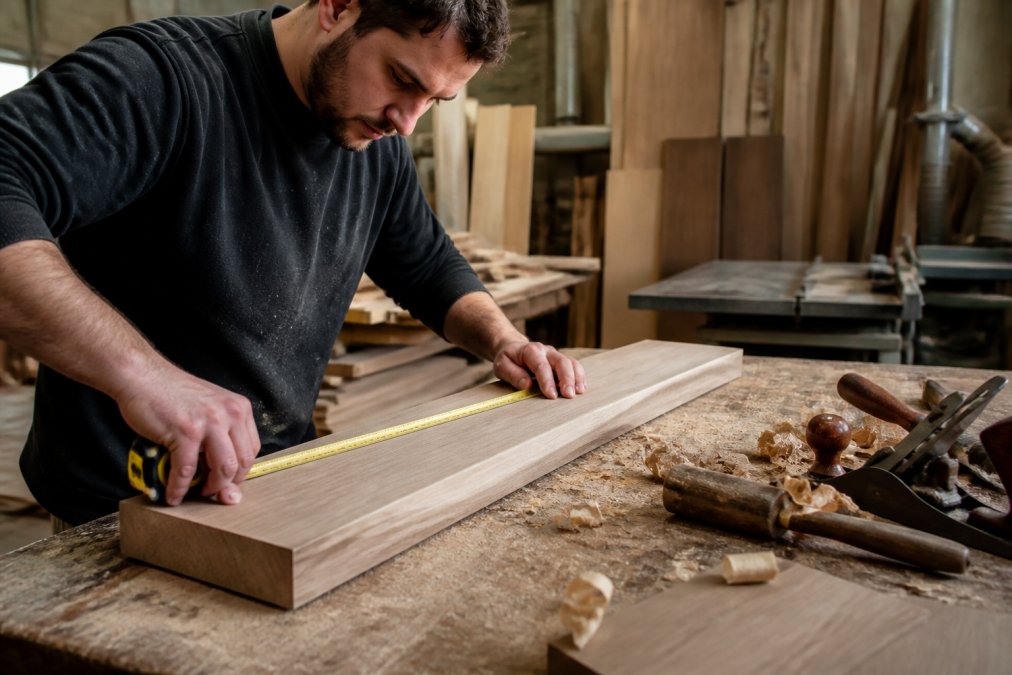
The first stage is a site survey, where a joiner assesses the existing staircase, checks structural integrity, and takes detailed measurements. This is not a quick glance. Accurate dimensions are essential for off-site manufacturing, and any errors here ripple through the entire project. Sub-floor preparation follows, ensuring the underlying structure is level and sound before new components are fitted. Skipping this stage leads to creaking steps and misaligned risers.
Installation phase and finishing
The installation phase is where the timeline becomes visible. For cladding, each tread and riser is fitted and secured, working upward so the team never stands on fresh work. For replacements, the old staircase is removed, the opening prepared, and the new unit installed and fixed. Finishing is the final stage, whether that means varnishing bare timber or touching up pre-finished components.
Post-installation curing and finishing times: when can you walk on the stairs?
This is the part most guides miss. After the finish is applied, whether varnish, oil, or lacquer, the stairs are not immediately ready for use. The curing time depends on the product and environmental conditions:
- Water-based varnish: Typically dries to the touch in 2-4 hours, but full cure takes 24-48 hours. You can walk on it gently after 24 hours, but avoid heavy traffic or moving furniture for at least 48 hours.
- Solvent-based varnish: Dries in 6-8 hours, but full cure can take 3-5 days. It is more durable but has a stronger odour, so ventilate the area well.
- Hard wax oil: This is popular for oak staircases. It dries to the touch in 8-12 hours, but you should wait 24 hours before light use and 3-4 days before heavy use. Recoating may be needed after a few years.
- Pre-finished components: If your treads and risers come pre-finished from the workshop, they are ready to use immediately after installation, saving you days of downtime.
Why curing time matters
Walking on a finish before it has cured can cause marks, sticking, or a dull finish that is impossible to fix without sanding and recoating. For a busy household, this is a real concern. Ask your joiner exactly what finish they will use and what the recommended curing time is. If you have no alternative access, consider scheduling the finishing for a Friday so the stairs can cure over the weekend.
The role of environmental conditions
Humidity and temperature affect curing. In a damp UK autumn, varnish can take 50% longer to dry than in a warm, dry summer. Ensure the room is well-ventilated but not draughty, and avoid using central heating that dries the surface too quickly, which can cause cracking.
What to expect during the installation process
During installation, you will see the team working methodically from the bottom up. They will protect the surrounding area with dust sheets, but expect some dust and noise. At the end of each day, the team should clear away debris and leave the work area safe. If you have any concerns about access or safety, raise them immediately.
By understanding the full process, including the often-overlooked curing phase, you can plan your renovation timeline realistically and avoid the frustration of a beautiful new staircase that you cannot use for days. kitchen renovation timelines.
What Affects Staircase Renovation Cost UK
The staircase renovation cost UK homeowners face depends on several factors, and understanding them prevents budget surprises. The scope of work is the biggest driver: recapping an existing staircase costs a fraction of a full replacement because you are paying for materials and labour rather than structural engineering.
Material choice matters too. Oak cladding costs more than softwood, but it lasts longer and suits period properties. A bespoke design with a curved handrail or custom balustrade pushes the price up, as does adding a landing to a half-turn staircase. Labour rates vary by region, and a complex installation in an awkward hallway will take longer and cost more. The most reliable way to get an accurate figure is a site survey with itemised quotes, not a phone estimate.

Building Regulations for Staircase Renovations
Building regulations for staircase renovations exist to protect anyone using the stairs, and they apply whether you are cladding or replacing. The key requirements cover the pitch of the staircase, the height of the handrail, and the spacing of the balustrade, all of which must meet the standards set out in Approved Document K (gov.uk). A staircase that was compliant before your renovation must remain compliant after it.
Structural replacement almost always requires building regulations approval, as does any work that alters the staircase's load-bearing capacity. Cosmetic cladding may not require approval if the structure is unchanged, but it is wise to confirm with your local authority. A reputable joinery company will handle this process as part of the project, ensuring the finished staircase meets the government's building regulations standards and safety standards before you sign off.
Can You Live in the House During Renovation?
Most homeowners can stay in the house during a staircase renovation, but the staircase is your access between floors. The reality is that living through the work requires planning, especially for families with young children, pets, or anyone with mobility issues. Here is a practical survival guide that goes beyond the basics.
For stair recapping and cladding: manageable with precautions
During cladding, the stairs remain structurally intact, but they become a work zone. The joinery team will be measuring, cutting (though most cutting happens off-site), and fitting treads and risers. Expect dust and occasional noise, but the staircase is usually usable by evening once any adhesive or finish has dried. However, for the first 24 hours after fitting, avoid heavy traffic and keep pets off the stairs, their claws can mark fresh varnish or oil. If you have a baby or toddler, consider using a stair gate to prevent them from accessing the work area during the day.
For full replacement: plan for no stairs
A full replacement involves days when the staircase is completely removed. This is not just an inconvenience; it is a safety hazard. If you have bedrooms and bathrooms upstairs, you need an alternative plan. Options include:
- Stay with family or friends for the most disruptive days (usually 2-3 days during removal and installation).
- Use a temporary stair, some joinery companies can install a temporary wooden stair or scaffold stair for access, but this adds cost and must be arranged in advance.
- Create a 'downstairs camp', if you have a ground-floor toilet and a sofa bed, you can manage for a few nights, but this is not practical for extended periods.
Safety for pets and children
Pets, especially cats and dogs, are curious and may wander into the work area. Secure them in a separate room during working hours. Children should be kept away from the staircase entirely when work is ongoing. Discuss with your joiner whether they will provide dust sheets and barriers; if not, you may need to supply your own.
Temporary access solutions
If you must stay and have no alternative route, ask your joiner about a temporary stair. These are typically made from plywood and can be installed in a day, but they are not a permanent solution and may not meet building regulations for everyday use. Alternatively, if you have a second staircase (for example, in a period property), you can use that, but ensure it is clear of furniture and accessible.
What to ask your joiner before work starts
- Will the stairs be off-limits at any point, and for how long?
- Do you provide dust sheets and barriers?
- Can you recommend a temporary stair supplier if needed?
- What is the policy on pets and children during the work?
By asking these questions, you can plan your living arrangements with confidence, rather than being caught off guard. This level of preparation is what separates a stressful renovation from a manageable one.
DIY vs Professional Staircase Renovation Time
The DIY vs professional staircase renovation time comparison is stark, and it goes beyond the clock. A professional joinery team completes a stair recapping job in 2-4 days because they have the tools, the workshop for off-site manufacturing, and the experience to avoid mistakes. A competent DIYer tackling the same project should budget two to three weeks, accounting for measurement errors, tool hire, and the learning curve of cutting treads and risers to fit.
The risk with DIY is not just time. Staircase components must meet building regulations, and an incorrectly fitted tread or a handrail at the wrong height creates a safety issue. Professionals also bring finishing experience, so the varnish or oil is applied evenly and cures properly. For a family-run business like Arborfield Joinery, established in 1953, the value of professional craftsmanship is measured in decades of safe, durable results.
Conclusion
A staircase renovation timeline comes down to scope: expect 2-4 days for recapping and cladding, or 5-10 days plus manufacturing lead time for a full replacement. The right choice depends on your staircase's structural condition, your budget, and how long you can manage without normal access between floors.
At Arborfield Joinery, we combine traditional craftsmanship with full manufacturing facilities for bespoke staircases, offering expert advice on what will suit your property best. Whether you need new treads and risers or a complete staircase with a handrail and balustrade, our team delivers quality that lasts. Get started with Arborfield Joinery and plan a staircase renovation with confidence.
Frequently Asked Questions
Can I renovate a staircase without removing the existing structure?
Yes. Stair recapping or cladding covers existing treads and risers with new timber, leaving the structural stringers and framework untouched. This is the fastest staircase renovation option, typically taking 2-4 days on site. It works well when the existing staircase is structurally sound but looks dated or worn. A full replacement is only necessary if there is damage to the stringers, excessive movement, or you want to change the staircase layout entirely.
How much does a staircase refurbishment cost in the UK?
Staircase renovation cost UK figures depend on scope. A recapping project covering treads, risers, handrail and spindles is significantly cheaper than a full replacement because it avoids structural work and new staircase components. The final price is driven by timber choice, staircase type (straight vs half-turn), and whether you need bespoke joinery for non-standard dimensions. A site survey is essential for an accurate quote, as measurements determine material quantities and labour time.
What is the 27 rule for stairs?
The rule refers to the relationship between the going (horizontal depth of a tread) and the rise (vertical height between treads). UK building regulations require that twice the rise plus the going must fall between 550mm and 700mm. For domestic staircases, the maximum rise is 220mm and the minimum going is 220mm. Any staircase renovation that alters treads or risers must comply with these measurements to maintain safety standards and pass building control approval.
How long does a full staircase replacement take from start to finish?
A full staircase replacement involves more than installation time. After the site survey, off-site manufacturing typically takes 3-4 weeks for a bespoke staircase, depending on the joiner's workload and design complexity. On-site installation then takes 5-10 days, which includes removing the old staircase, structural preparation, fitting the new staircase, and finishing work like varnishing. In total, expect 4-6 weeks from initial survey to completion for a made-to-measure staircase.
This guide from Arborfield Joinery is intended to help you plan your project. For specific timelines and quotes, arrange a site survey with our team.
Share:
The Homeowner’s Guide to Choosing an Oak Door and Frame Kit
Pocket Door Systems: The Ultimate Guide to Space-Saving Joinery