
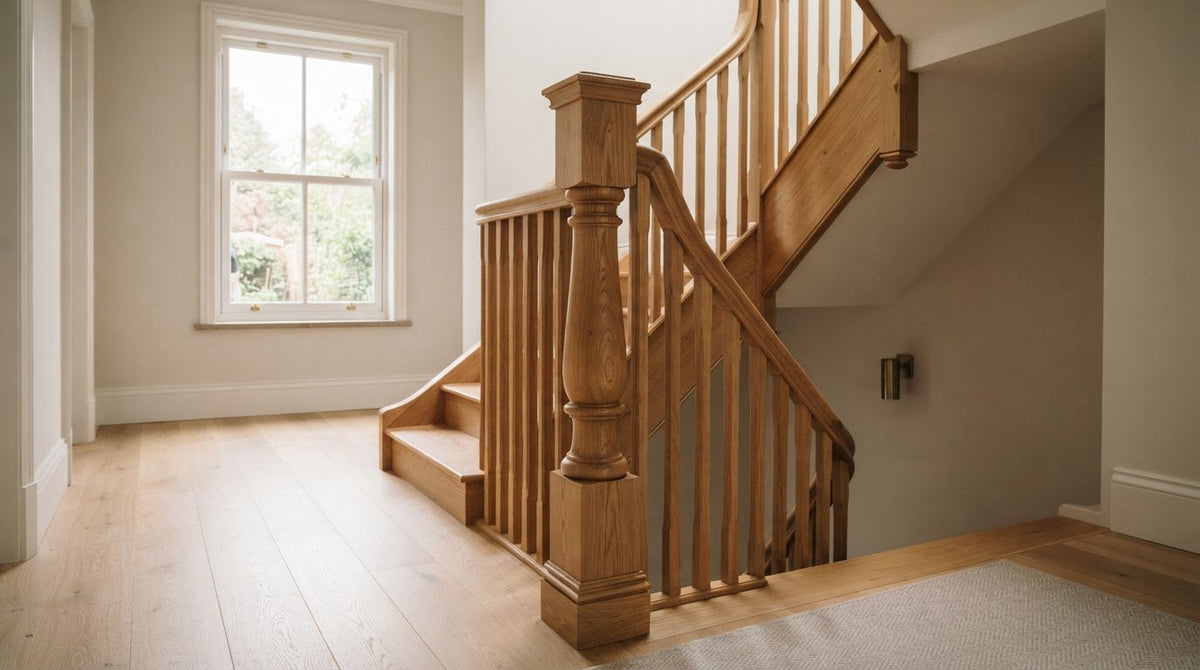
What if the oak newel post you love won’t connect neatly to your handrail? The right choice needs to do more than look at home. Oak newel posts for stairs can provide a visual anchor, so their proportions and finish should work with the rest of the staircase.
It’s understandable to hesitate when dimensions, fixing methods and handrail connections aren’t clear. Replacing a post may involve more than swapping one component, depending on how the existing staircase is built. Checking these details before ordering can help you avoid an ill-fitting choice and decide when to ask a qualified stair professional for advice.
This guide explains what a newel post does and how to compare styles and construction options with your staircase and interior in mind. You’ll also find out which measurements and compatibility details to check before buying. Arborfield Joinery has supplied joinery products since 1953 and sells stair products. Confirm current oak newel post availability and specifications before ordering.
Key Takeaways
- Understand how a newel post connects to the handrail and contributes to the staircase’s overall appearance.
- Compare traditional and contemporary profiles by considering their proportions and visible details alongside your interior.
- Before ordering oak newel posts for stairs, record key measurements and connection details to help assess compatibility with your staircase.
- Plan the process in order: assess the staircase, measure carefully, confirm the post’s specifications, then arrange fitting and choose a finish.
- Check current availability and request clear details on dimensions, construction, finish and connections. Seek advice from a qualified stair professional if fit or replacement work is uncertain.
What Does an Oak Newel Post Do on a Staircase?
A newel post is an upright post positioned at a staircase’s starting point, end or turn. It gives the handrail a connection point and helps define the edge and character of the stairs. When considering oak newel posts for stairs, look at both the visible design and how the post connects with the existing structure.
Newels often sit at the foot or top of a flight, and may also appear where stairs change direction or a handrail ends. The layout depends on the staircase design and construction. Balusters, sometimes called spindles, sit between the handrail and the stairs or landing, helping form the balustrade. A newel is usually more substantial, creating a visual anchor among these narrower components.
Handrail → connects to → Newel post
Balusters │ │ │ sit beneath the handrail
Where do newel posts sit on stairs?
Look at where the handrail begins, finishes or changes direction to identify the newel positions on your staircase. A landing or turn may have its own post, while a straight flight may have posts at its ends. This is a general guide, not a fitting plan. Existing construction and stair design affect the layout. If you’re unsure which post is which, photograph the staircase from several angles before asking a supplier or stair professional for guidance.
How does a newel post contribute to the staircase?
Its design role is easy to see: the post’s height, width and detailing influence the balance of the whole balustrade. Its structural role depends on how the staircase is constructed. A newel may support or secure parts of the handrail, but don’t assume every post performs the same function or can be replaced like for like. The What is a newel post reference gives further background on newel forms and construction.
Why choose oak for a newel post?
Oak’s visible grain brings natural texture and warmth to a staircase. It can coordinate with other timber joinery, such as doors or stair components, or provide a considered contrast with painted surfaces. The shade and grain can vary, so compare the post with the existing wood and finish. Oak is often associated with a solid, substantial appearance, but the material alone doesn’t establish how a particular post is made or how it will perform. Check the product’s construction and finish details before buying.
For a broader explanation of how the components work together, explore the complete guide to stairs and staircase components.
Oak Newel Post Styles and Details: What Changes the Look?
A newel post’s profile can change the feel of a staircase, even when its position stays the same. Traditional designs often feature shaped sections, moulded details or decorative tops, creating a more formal, period-inspired impression. Simpler contemporary profiles tend to favour clean lines and restrained detailing, letting the oak’s grain and the staircase’s overall form take the lead. These are broad style categories, not a guarantee of what any particular supplier stocks.
How do traditional and contemporary profiles differ?
Think about the character of the room as well as the post itself. An ornate profile may suit established decorative details, while a plain, crisply proportioned post can work well in a pared-back interior. Neither choice is automatically right for a period or modern staircase. Compare the post with your existing handrail and balusters, and decide whether you want it to blend in or become a focal point.
Proportion matters, too. A wider, visually weighty post can make a balustrade feel more substantial, while a slimmer profile may appear lighter. Before choosing oak newel posts for stairs, look at the post from the entrance and from the side. Details that seem subtle up close can have a stronger effect across the whole flight.
Style comparison
Traditional profile: Shaped sections and more decorative details may complement a staircase with an established, formal character.
Simpler contemporary profile: Cleaner lines and less ornament may suit a restrained interior where the timber grain is a noticeable feature.
Either approach: Check the post’s proportions and detailing against the handrail and balusters already in place.
How should oak posts coordinate with handrails and balusters?
Consider the three elements as a connected visual set. Compare the oak’s colour and grain with any existing timber, and check whether the finish looks consistent in the room’s light. Then assess profile and scale. A heavily detailed post paired with very simple balusters may create deliberate contrast, or it may feel unbalanced. A sample or clear product photographs can help you judge appearance, but they can’t confirm fit.
Matching styles doesn’t mean components will connect physically. Handrail ends, post tops and fixing arrangements can differ, so confirm connection details with the supplier before ordering replacement parts. If the proposed change involves more than appearance, ask a qualified stair professional to assess the existing construction.
Arborfield Joinery has supplied joinery products, including stairs, since 1953. You can explore its stair products, then confirm whether oak newel posts are available and check their specifications before ordering.
Will an Oak Newel Post Fit Your Existing Stairs?
Not necessarily as a straightforward like-for-like replacement. A post can look similar to the one you have and still differ where it matters: its dimensions, fixing point or handrail connection. Before choosing a replacement, gather details about the existing post and surrounding balustrade so a supplier or qualified stair professional can help assess compatibility.
What should you measure before choosing a replacement?
Record the existing post’s height, width and depth, along with the space available where it meets the stair, floor or landing. Note how the handrail meets the post, including the connection’s position and angle, and how the adjoining balusters are arranged. If the post has visible fixings or a shaped section at its base, include those details too. Measurements from a similar-looking staircase may not apply to yours.
- Post: Overall height and dimensions, plus the shape and size of its base.
- Fixing point: Available space and any visible fixing details.
- Handrail: Height, direction and the position and type of connection to the post.
- Balusters: Their arrangement and how they meet the post or handrail.
- Staircase: Whether the post is at a flight end, landing or turn.
Take clear photographs from several angles, including close views of the post-to-handrail and post-to-stair connections. Images can help explain the layout, but they don’t replace measurements or reveal fixings concealed within the structure. If you’re unsure how to measure a connection, describe what you can see and ask a professional before removing anything.
Can you replace one newel post without replacing the staircase?
It may be possible to replace a single post without changing the whole staircase, but the answer depends on how the stairs were built and how the post is secured. Access to its fixings, the handrail joint or nearby balusters could affect the work required. A visible post may also help support the balustrade, so don’t assume replacement is only a cosmetic change.
If the post moves, a connection is damaged or you can’t identify how it’s fixed, ask a qualified stair professional to assess the construction and stability before planning work. They can advise whether replacing the post alone is suitable or whether other components need attention. For any proposed alterations, check which current UK requirements apply to your project with a qualified professional before work begins.
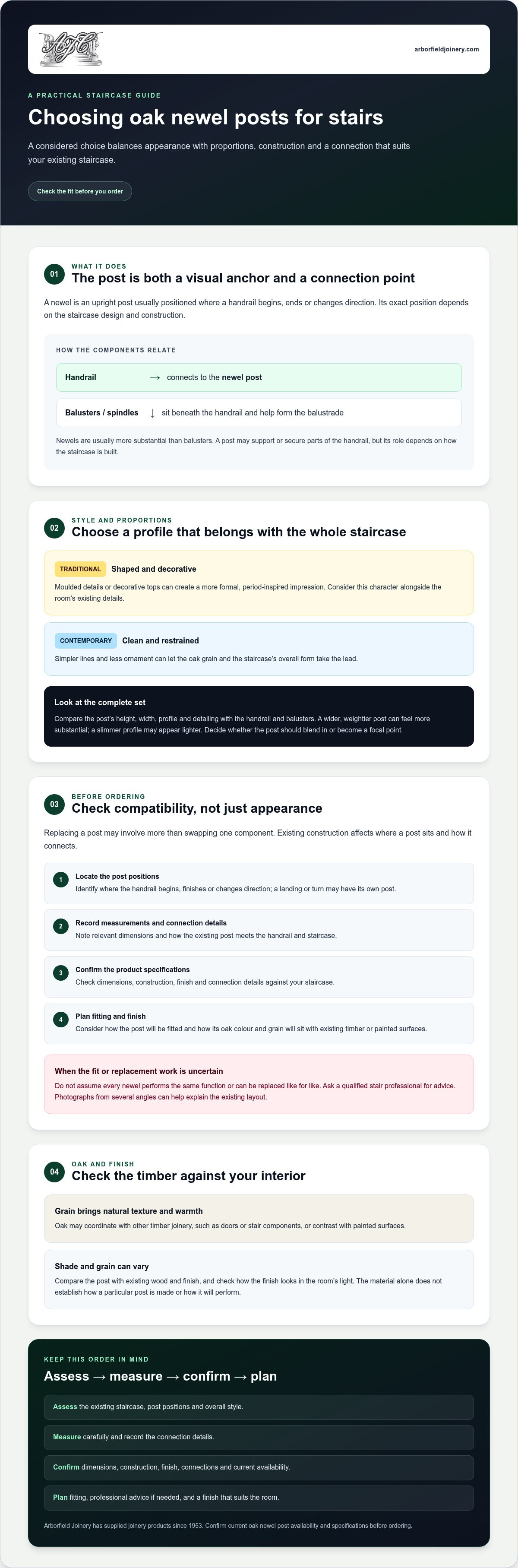
How to Prepare for Oak Newel Post Fitting and Finishing
Good preparation helps you make a considered choice before work begins. Treat the process as a series of checks rather than assuming a new post will match the existing fixing or handrail connection. The right fitting approach depends on the staircase’s construction, so the steps below are planning guidance, not instructions for carrying out structural work.
- Assess the staircase. Note the post’s position, condition and connection to the handrail, stairs and balusters. Photograph the area from different angles.
- Measure what’s there. Record the existing post’s dimensions and the space at its fixing point, along with the handrail height and connection position.
- Confirm compatibility. Share your measurements and photographs with the supplier. Check that the proposed post’s dimensions and connection details suit the staircase.
- Plan the fitting. Before ordering, decide who will assess and carry out the work. Ask a qualified stair professional to review unusual layouts or fixings you can’t identify.
- Choose the finish. Consider how the oak will sit beside the existing timber, then confirm whether the post arrives finished or needs finishing.
What should you confirm before ordering?
Check current availability, exact dimensions, material construction and finish options with the supplier. Ask how the post is intended to connect to the handrail and staircase, and whether the stated specifications apply to the complete post or a particular section. These details matter as much as appearance: oak newel posts for stairs can look suitable yet still prove incompatible with the existing arrangement. If the fixing method is uncertain, seek professional advice before placing an order.
Arborfield Joinery sells stair products but doesn’t provide installation services. Arrange fitting separately with an appropriately qualified professional, and ask them to assess the existing construction before work starts. Requirements may depend on the property and the scope of work. Check current UK guidance that applies to your project with a qualified professional rather than relying on generic online instructions.
How should you plan the finish and fitting?
Compare the intended finish with nearby timber in the room’s natural and artificial light. Oak’s grain and tone can vary, so confirm finish details with the supplier instead of assuming a photograph will represent the exact appearance. Clarify whether any finishing is required and who will undertake it. A professional can also advise how the fitting sequence may affect finishing and access around the handrail.
Once you have your measurements and questions ready, explore Arborfield Joinery’s stair products and confirm whether oak newel posts are currently available, together with their specifications, before ordering.
Choosing and Buying Oak Newel Posts from a Joinery Supplier
Before ordering, bring together the details you’ve gathered about your staircase and compare them with the supplier’s product information. A clear checklist helps you assess whether a post suits the look you want and whether its stated specifications match the existing arrangement. Don’t rely on appearance alone. Oak newel posts for stairs need to be checked for dimensions and connection details as well as style.
- Style: Compare the post’s profile and proportions with your handrail, balusters and interior.
- Measurements: Check the listed dimensions against your recorded measurements and available fixing space.
- Connections: Look for details on how the post is intended to meet the handrail and staircase.
- Material and finish: Read the material description and confirm whether a finish is included or required.
- Availability and delivery: Check current stock and delivery details directly with the supplier before ordering.
What information should a newel post listing provide?
A useful listing should state the post’s dimensions, material description and finish, along with any available information about its construction and connection method. Product photographs can help you judge the general profile, but lighting and screen settings may affect how colour and grain appear. Don’t treat an image as confirmation of exact appearance, construction or compatibility. If key details are missing or unclear, ask the supplier to confirm them before you buy.
What should you ask before placing an order?
Share your measurements and photographs, then ask whether the stated dimensions and connection details appear suitable for your staircase layout and adjoining components. Confirm current availability and delivery arrangements directly, too. If the post’s fixing method is unclear or your layout is unusual, seek an assessment from a qualified stair professional rather than assuming a supplier listing can resolve a site-specific fitting question.
Arborfield Joinery is a family-run UK joinery business supplying doors, windows and stairs since 1953. Its stair-product range can be explored online or in its showroom, but oak newel post stock and specifications aren’t confirmed here, so check availability and product details before ordering. For a wider view of how staircase parts relate, read the staircase components and buying guidance.
Once you’ve checked the measurements and listing, confirm any remaining questions with the supplier. You can contact Arborfield Joinery to explore the next step, and consult a qualified stair professional if you need advice on fitting or compatibility.
Make Your Next Staircase Decision with Confidence
The right oak newel post should feel at home in your interior and suit the way your staircase is built. Before choosing, bring together your style preferences, measurements and connection details, then confirm the post’s specifications and availability with the supplier. If the fixing arrangement or stability is uncertain, ask a qualified stair professional to assess it before planning replacement work.
Arborfield Joinery is a family-run business supplying doors, windows and stairs since 1953, with an online shop and showroom for exploring joinery products. Oak newel post stock and specifications aren’t confirmed here, so check these details before ordering. Explore staircase products and contact Arborfield Joinery to take the next step.
With careful checks, oak newel posts for stairs can be considered as part of a coordinated, well-planned staircase update. Take your time, ask clear questions and move ahead when the details fit your home and project.
Frequently Asked Questions
What is an oak newel post on a staircase?
An oak newel post is an upright post at the beginning, end or turn of a staircase, where it commonly meets the handrail. It forms a prominent part of the balustrade and can contribute to its support, depending on how the staircase is constructed. Oak newel posts for stairs also bring the timber’s natural grain into view, making the post both a practical component and a design feature.
Can you replace a newel post without replacing the whole staircase?
Yes, it may be possible to replace a single newel post, but it depends on how the staircase was built and how the post is fixed. The work might involve the handrail or adjoining balusters, and concealed fixings can affect what is feasible. If the post feels loose, the connections are unclear or stability may be affected, ask a qualified stair professional to assess the structure before planning a replacement.
How do I measure an oak newel post for replacement?
Measure the existing post’s height, width and depth, and note the space available at its fixing point. Record where and how the handrail meets it, including the connection’s position and angle, and note how the adjoining balusters are arranged. Photograph the post, its base and the connections from several angles. Share these details with the supplier, but don’t assume measurements alone can confirm compatibility with concealed fixings.
Do oak newel posts have to match the handrail and balusters?
No, they don’t have to be identical, but they should look considered together. You might coordinate timber tones and profiles for a unified appearance, or use a restrained contrast to make the post stand out. Remember that visual similarity doesn’t confirm a physical fit. Before ordering, check the post’s dimensions and how it connects to the handrail and staircase, especially if you’re replacing only one component.
Are oak newel posts suitable for every staircase?
No single post material or design is guaranteed to suit every staircase. Suitability depends on the existing layout, dimensions, fixing arrangement and connections, as well as the appearance you want. Oak may complement surrounding timber, but that alone doesn’t establish compatibility. Compare the product specifications with your measurements, and ask a qualified stair professional to assess unusual layouts or uncertain fixings before you commit to a replacement.
How much does an oak newel post cost?
The price depends on the particular post and supplier, so check current product details rather than relying on a general estimate. Confirm exactly what the listed price includes, such as the post’s stated construction and finish. Fitting is a separate consideration, and Arborfield Joinery doesn’t provide installation services. If you’re considering its stair products, contact the business to confirm whether oak newel posts are available and ask for current pricing and specifications.
Can I fit an oak newel post myself?
It depends on your experience and the staircase’s construction, but replacing a post can involve connections that affect the balustrade’s stability. Don’t begin if you’re unsure how the post is fixed or how it supports adjoining components. Ask a qualified stair professional to assess the work and advise on suitable fitting. Arborfield Joinery supplies joinery products, but installation isn’t included, so arrange any fitting separately.
Share:
Glass Balustrade Alternatives for Small Hallways
Flush Internal Doors: Benefits and Drawbacks