
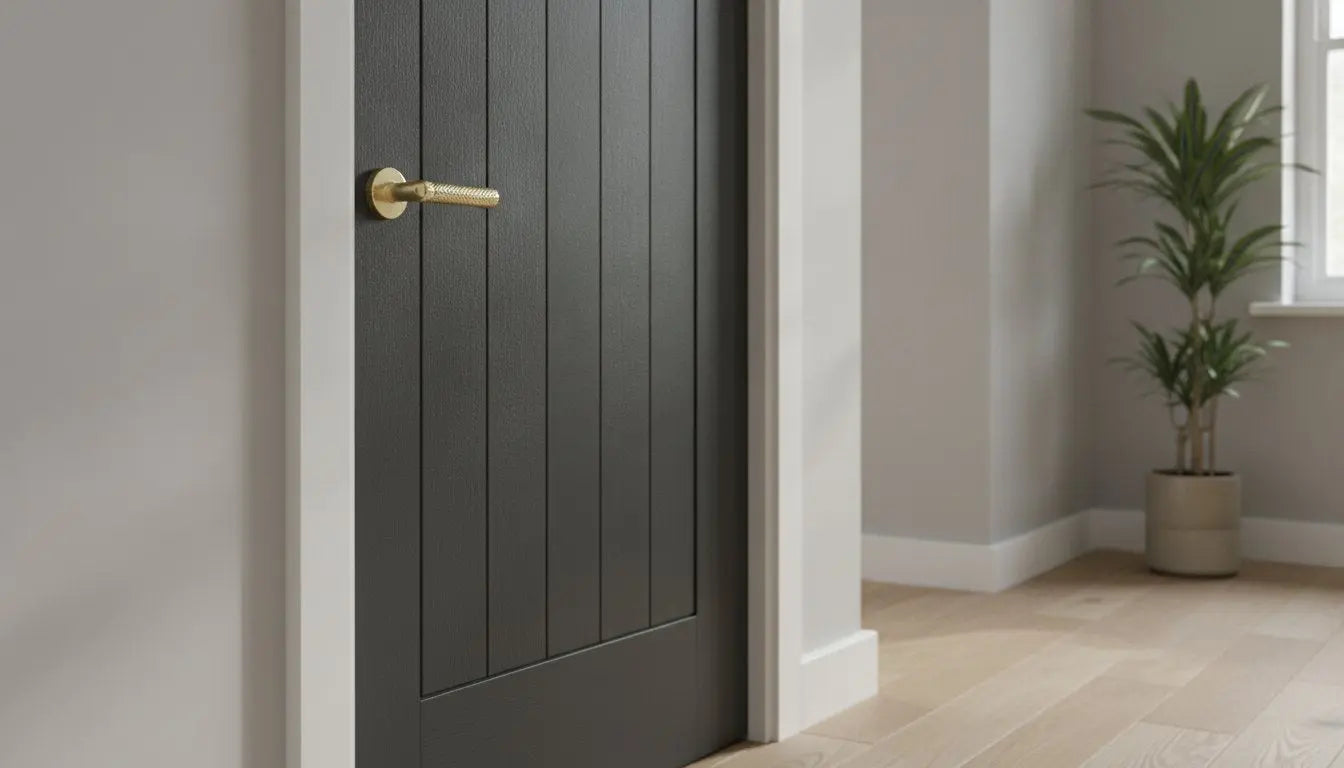
The obvious choice for a premium internal door is solid timber. Or is it? For homeowners navigating busy hallways, family bathrooms, and rooms that demand both beauty and resilience, laminate internal doors are quietly proving themselves to be the more intelligent option, not the compromise one.
You're right to approach this decision carefully. The worry about a door that peels at the edges after two winters, or a finish that looks plasticky against your existing oak skirting boards, is entirely reasonable. And the pre-finished versus unfinished debate can feel unnecessarily complicated when all you want is a door that works beautifully for years to come.
This guide cuts through that uncertainty. Drawing on over seven decades of joinery expertise here at Arborfield Joinery, we'll walk you through exactly how laminate doors are constructed, why that construction makes them exceptionally well-suited to the demands of modern British homes, and how to choose a style that complements your existing décor with confidence. By the end, you'll have the technical knowledge and the aesthetic reassurance to make a decision you'll be genuinely satisfied with for years ahead.
Key Takeaways
- Learn how modern high-pressure laminate technology creates grain patterns that are visually indistinguishable from natural timber.
- Explore the engineering behind HPL and how composite cores offer superior stability in high-traffic areas of the home.
- Compare the long-term maintenance costs of laminate internal doors against natural veneers to see which investment truly suits your requirements.
- Identify the latest "Urban" design trends, including how to pair dark laminates with contemporary hardware like knurled or satin brass handles.
- Understand why selecting a curated brand is essential for ensuring your doors meet heritage standards for both performance and visual appeal.
Understanding Laminate Internal Doors: Performance and Style in 2026
Laminate internal doors represent a significant leap in home joinery. For years, the term "laminate" was unfairly associated with budget-friendly but short-lived furniture. That's no longer the case. A modern laminate door is a sophisticated composite structure. It combines a stable, dense core with a High-Pressure Laminate (HPL) surface designed to withstand the rigours of a busy household.
The visual quality we see in 2026 is remarkable. High-definition printing and synchronised embossing mean the "ticks" and "pores" of the wood grain actually align with the printed image. When you run your hand over the surface, it feels like timber. This level of precision is why many of our customers at Arborfield Joinery now choose laminate over traditional veneers for their primary living spaces. The underlying laminate construction and engineering techniques ensure these doors don't just look the part but offer a tactile experience that matches their visual depth.
Why Laminate is Surpassing Traditional Veneers
Natural wood is beautiful, but it's also unpredictable. If you're installing multiple doors along a single corridor, achieving a perfect colour match with natural oak or walnut is nearly impossible. Natural timber reacts to its environment; it darkens with age and can bleach if exposed to direct sunlight through a window.
Laminate internal doors solve this through engineered consistency. Every door in your order will share the same precise tone and grain pattern. They're also exceptionally resistant to UV fading, meaning the door you install today will look exactly the same in ten years. Because the core often utilises sustainable composite fibres, it's also a choice that balances aesthetic desire with environmental responsibility.
The "Pre-Finished" Revolution
One of the most persuasive reasons to choose laminate is the "pre-finished" nature of the product. Traditional unfinished doors require hours of preparation. You'd need to sand, prime, and apply multiple coats of lacquer or paint, often in a dusty environment that risks ruining the final look. This on-site labour adds significant hidden costs to your project.
With laminate, the finish is applied in a controlled factory environment. This ensures a blemish-free surface that's impossible to replicate with a brush or roller at home. It saves you the mess of on-site finishing and the uncertainty of a DIY result. When you're planning your renovation, consider how these units will sit within your internal doors and door frames to ensure a professional transition between the leaf and the woodwork. This "fit-and-forget" approach is why laminate is rapidly becoming the standard for modern British interiors.
The Engineering Behind Laminate: Durability and Construction Decoded
To understand why laminate internal doors have become a mainstay in modern renovations, we need to look beneath the surface. These aren't simply wooden doors with a decorative sticker. They're the result of a sophisticated manufacturing process known as High-Pressure Laminate (HPL). This involves fusing multiple layers of kraft paper impregnated with thermosetting resins under intense heat and pressure. The result is a singular, incredibly dense skin that's far more resilient than a thin slice of natural wood veneer.
The core of the door provides the necessary weight and structural integrity. Most high-quality options utilise either Medium Density Fibreboard (MDF) or a specialised particleboard. MDF is particularly favoured for its smooth, consistent surface, which ensures the laminate skin remains perfectly flat without any "telegraphing" of grain from underneath. To finish the construction, a protective clear overcoat is applied. This transparent layer acts as a shield, preventing the decorative pattern from being compromised by daily knocks or cleaning chemicals.
Longevity also depends on how the edges are handled. High-quality edge banding is applied to seal the core materials completely. This is a vital step in preventing moisture ingress, which can cause cheaper doors to swell or delaminate over time. If you're looking for a solution that combines this technical rigour with a premium aesthetic, you can explore our curated range of laminate doors to see how these engineering choices translate into a beautiful finished product.
Impact and Scratch Resistance
For homes with young children or pets, the surface hardness of a door is a primary concern. Traditional softwoods like pine are notorious for picking up small dents and scratches from the slightest impact. Laminate internal doors, however, feature a technical wear layer that is significantly harder than natural timber. This surface doesn't just resist scratches; it's designed to withstand the "point loads" of toys, vacuum cleaners, and enthusiastic pets without leaving a mark. As interior design trends for UK homes move towards "living" spaces that don't require constant babying, this durability has become a non-negotiable benefit for many families.
Stability and Warp Resistance
British homes often subject joinery to challenging conditions, particularly the dry, warm air produced by modern central heating. Natural timber is hygroscopic, meaning it breathes, expands, and contracts as humidity levels change. This often leads to sticking or bowing. Laminate doors utilise a "balanced construction" method, where identical layers are applied to both sides of the core. This creates equal tension, ensuring the door remains perfectly straight. Laminate cores are engineered to remain dimensionally stable even when subjected to the rapid temperature fluctuations common in centrally heated UK homes, providing a reliable fit that lasts for decades.
Laminate vs. Natural Veneer: A Comparative Analysis for UK Homeowners
Choosing between laminate and natural veneer often feels like a choice between engineering and nature. Whilst we have already explored the technical resilience of laminate, it's essential to understand how it sits alongside traditional timber in a real-world home environment. The fundamental difference lies in your preference for consistency versus character. Natural veneer offers the unique, unpredictable beauty of real wood, where no two doors are identical. In contrast, laminate internal doors provide a flawless, repeatable finish that ensures your hallway looks cohesive from every angle.
The "touch test" was once the downfall of laminate, but 2026 technology has changed the sensory experience. Modern laminate surfaces now utilise synchronised embossing. This process creates a physical texture that follows the visual grain, mimicking the pores and ridges of real timber so accurately that it's difficult to tell them apart by touch alone. When you compare the initial investment, laminate often appears more attractive, but the true saving is found in the long-term maintenance. Natural veneers require periodic oiling, waxing, or varnishing to prevent the wood from drying out or losing its lustre. Laminate requires nothing more than an occasional wipe with a damp cloth.
For those who feel that nothing can truly replace the organic warmth of real timber, exploring internal oak doors remains a popular path. However, for many modern households, the trade-off between natural variation and engineered reliability is increasingly leaning towards the latter.
When to Choose Laminate
Laminate is the superior choice for high-traffic environments where durability is paramount. If you're managing a rental property or raising a busy family, the "fit-and-forget" nature of these doors is invaluable. They're also perfectly suited to modern apartments that demand a sleek, uniform aesthetic, such as the popular Industrial or Urban styles. When a project requires ten or more doors to be replaced simultaneously, the cost-efficiency and guaranteed colour matching of laminate make it a highly practical investment.
When to Choose Natural Veneer
Natural veneer still holds the crown in period properties where the "perfect" look of laminate might feel out of place against original features. If you're undertaking a high-end bespoke renovation where a one-of-a-kind grain pattern is a priority, real wood is the only answer. Additionally, if your door frames are particularly irregular, natural veneer doors typically allow for more significant trimming and planishing than the strict limits found on laminate products. This flexibility can be crucial in older British homes where "square" is rarely a reality.

Styling Your Space: From Industrial Urban to Classic Wood-Effect Laminates
A door is no longer just a functional barrier; it's a significant design element that sets the tone for your entire interior. In 2026, we're seeing a decisive shift away from "safe" neutral palettes towards bold, intentional styling. Laminate internal doors are at the forefront of this movement because they offer finishes that are difficult or expensive to achieve with traditional timber. Whether you're aiming for a moody, contemporary apartment vibe or a bright, Nordic-inspired sanctuary, the versatility of laminate allows for a level of aesthetic precision that was previously reserved for bespoke architectural projects.
The rise of "Urban" styles has seen black and dark grey doors become a favourite amongst British homeowners. These darker tones provide a sophisticated anchor for a room, especially when paired with modern hardware. To complete the look, consider knurled black handles for a tactile, industrial feel, or satin brass for a touch of quiet elegance. Glazed laminate doors are also becoming increasingly popular in communal areas, allowing natural light to flow between rooms whilst maintaining a clear design boundary.
The Industrial Trend in 2026
The industrial aesthetic has evolved into something more refined. Black laminate doors are now frequently used to complement Crittall-style internal partitions and windows. This creates a cohesive "loft" feel that works just as well in a suburban semi-detached as it does in a city centre warehouse conversion. Many homeowners are choosing to coordinate these interior choices with their exterior joinery; for instance, matching the slim profiles of your internal doors with high-quality timber windows creates a seamless transition from the street to the sofa. If you're working with smaller rooms, look for doors with a vertical grain pattern. This subtle detail draws the eye upwards, creating a clever illusion of height and space.
Warmth Without the Work: Wood-Effect Finishes
If you prefer a more traditional atmosphere, modern wood-effect laminates in Walnut, Ash, and Oak offer the organic warmth of timber without the maintenance burden. The key to a professional finish is coordination. Try to match the undertones of your door with your LVT or laminate flooring to avoid clashing wood grains. Alternatively, you can make the door a focal point by choosing a contrasting colour for your architraves. A light oak-effect door framed by a dark grey architrave creates a striking, modern frame that highlights the door's texture.
Ready to transform your home with a design that lasts? Browse our full collection of laminate doors to find the perfect match for your interior vision.
Selecting Your Perfect Door: Why Quality Curation Matters
Investing in laminate internal doors is a decision that affects the daily rhythm of your home for years. Whilst we have explored the technical merits and design versatility of these products, the final step is ensuring you source from a provider that understands the nuances of joinery. Not all laminate surfaces are created equal. Many big-box retailers prioritise the lowest price point, which often results in inferior edge-banding and a higher risk of delamination in humid environments. At Arborfield Joinery, we take a different path, curating only those brands that meet our heritage standards for engineering and finish.
Before you place your order, run through this final checklist to ensure a smooth installation:
- Measurements: Record the height, width, and depth of your existing frames at three different points to account for any settling in the property's walls.
- Handing: Confirm the direction of the swing and which side the hinges will sit on, especially if you're replacing doors in tight corridors.
- Hardware: Ensure your chosen handles and latches are compatible with the door's internal structure. Modern knurled or satin brass hardware often requires specific latch depths that are best confirmed before the door arrives.
The Arborfield Difference Since 1953
We've operated as a family-run enterprise since 1953, maintaining a deep-rooted pride in craftsmanship that spans seven decades. We've seen the industry evolve from basic timber frames to the sophisticated laminate internal doors of 2026. This longevity allows us to act as a knowledgeable consultant for your project rather than just a retailer. We don't just ship boxes; we ensure every product in our range is FSC-certified and meets the sustainability requirements of the modern homeowner. We value long-term relationships, which is why we still prefer to speak with our customers to ensure every detail is correct before an order is finalised.
Next Steps for Your Home Renovation
Seeing a door in person is the only way to truly appreciate the synchronised embossing and depth of colour we've discussed in this guide. Our Berkshire showroom features over 120 doors on display, providing a real-world environment where you can test the weight and feel of different finishes. For those managing a larger renovation, we provide free mainland UK shipping on all orders over £900, ensuring your investment reaches you safely and without hidden costs.
Ready to finalise your selection? View our complete collection of laminate internal doors and find the ideal match for your home renovation.
Securing Your Home’s Aesthetic Future
Choosing the right doors is a long-term investment in your home’s character and functionality. As we have explored, laminate internal doors offer a unique combination of technical resilience and aesthetic consistency that natural timber simply cannot match. By opting for High-Pressure Laminate construction, you are choosing a surface that resists the daily knocks of family life whilst maintaining its premium finish without the need for ongoing maintenance.
At Arborfield Joinery, we have been helping homeowners refine their living spaces since 1953. Our family-run team brings decades of expertise to every order, ensuring you receive a product that meets our rigorous standards for quality. Whether you choose to visit our Berkshire showroom to see over 120 doors on display or take advantage of our free mainland UK delivery on orders over £900, we're here to guide you.
Explore our expertly curated range of laminate internal doors today and take the first step towards a more beautiful, low-maintenance home. Your ideal interior is well within reach.
Frequently Asked Questions
Can laminate internal doors be trimmed to size?
Yes, laminate internal doors can be trimmed, but the allowance is generally more restricted than that of solid timber doors. Most premium brands allow for a reduction of up to 10mm from the sides and bottom. It's essential to follow the manufacturer's specific instructions, as cutting beyond these limits can expose the composite core to moisture and potentially void your product warranty.
How do I clean and maintain laminate doors?
Maintenance is exceptionally straightforward, requiring nothing more than a soft cloth and warm, soapy water. You should avoid using abrasive cleaners, wax polishes, or steam mops, as these can damage the protective overcoat. Because the surface is non-porous, it's highly resistant to staining and daily grime, making it a practical choice for busy households that require a "fit-and-forget" solution.
Are laminate doors fire-rated?
Many designs in our collection are available as FD30-rated fire doors, providing 30 minutes of protection in the event of a fire. These versions feature a specifically engineered fire-retardant core whilst maintaining the exact same aesthetic as the standard versions. Always ensure you use the correct fire-rated hardware and intumescent strips to meet UK building regulations and ensure your home remains safe.
Do laminate doors look like real wood?
Modern technology has made laminate internal doors virtually indistinguishable from natural timber. Synchronised embossing ensures that the physical texture of the door follows the printed grain pattern perfectly. This creates a tactile experience that mimics the pores and ridges of real oak or walnut, providing the organic warmth of wood with the added benefit of superior engineering and surface resilience.
Are laminate doors suitable for bathrooms and kitchens?
These doors are well-suited for bathrooms and kitchens due to their moisture-resistant High-Pressure Laminate skin. Whilst they aren't fully waterproof, they handle the humidity and temperature fluctuations of these spaces far better than natural wood veneers or white primed doors. Ensure that any trimmed edges are properly sealed during installation to prevent moisture from entering the core over time.
What handles and hinges should I use with laminate doors?
You can use standard internal handles and hinges, though we recommend choosing high-quality hardware to match the door's premium feel. Black, knurled, or satin brass finishes are currently popular for modern styles and complement the consistent grain of laminate perfectly. Ensure your hinges are rated for the door's weight, particularly if you have chosen a solid-core model for better sound insulation.
Why are laminate doors more expensive than moulded doors?
The higher cost is a direct result of the more robust construction and premium materials used. Whilst moulded doors often have a lightweight honeycomb core, laminate internal doors feature a dense composite centre and a resilient High-Pressure Laminate skin. This engineering provides a much more substantial feel, better acoustic properties, and a level of durability that cheaper alternatives simply cannot provide.
How long do laminate internal doors typically last?
With proper installation and minimal care, these doors are designed to last for several decades. Their resistance to UV fading, scratches, and warping ensures they retain their original appearance much longer than timber doors that require regular refinishing. This longevity makes them one of the most cost-effective choices for a long-term home improvement project, providing excellent value for money over their lifespan.
Share:
The Ultimate Buying Guide to External Oak Doors: Style, Security, and Longevity
The Ultimate Buying Guide to External Oak Doors: Style, Security, and Longevity