
Table of Contents
- Georgian and Edwardian Doors Compared at a Glance
- Georgian Door Proportions: Six Panels and Strict Symmetry
- Edwardian Door Glass Panels: More Light, Softer Lines
- Materials, Construction and How Each Style Wears
- Period Front Door Restoration: What Each Style Demands
- Choosing Between Georgian and Edwardian Doors
- Conclusion
- Frequently Asked Questions
Last Updated: September 29, 2026
Georgian and Edwardian Doors Compared at a Glance
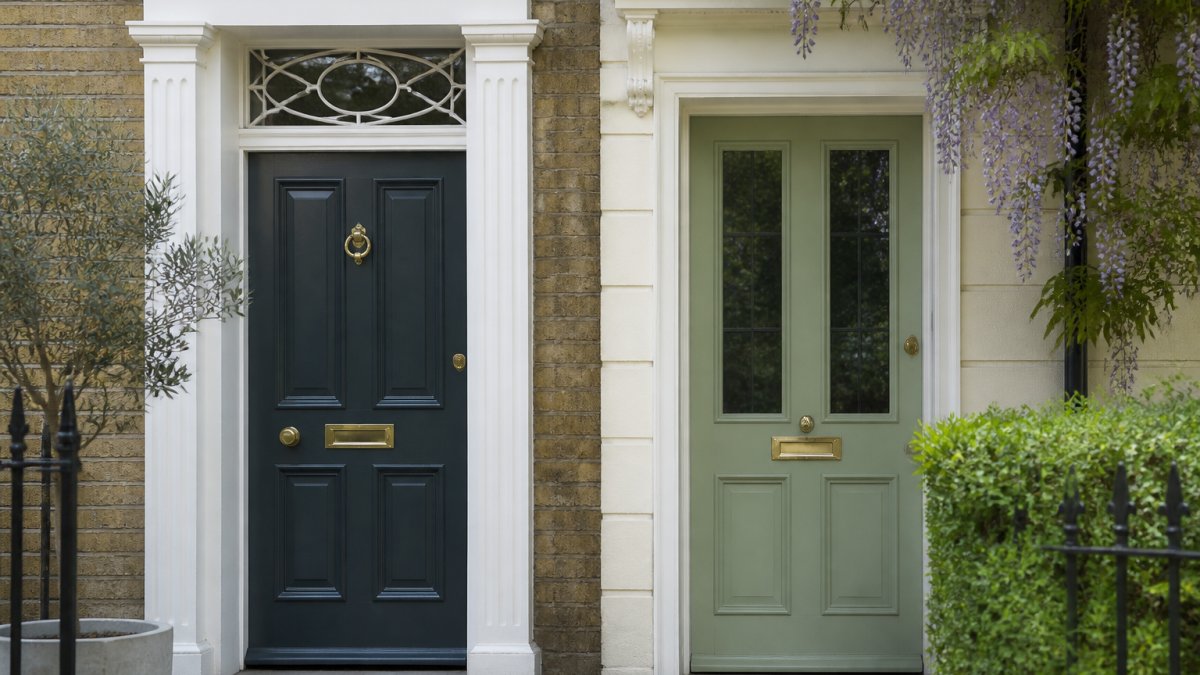
Georgian Edwardian doors differ most obviously in proportion and light: Georgian doors are tall, narrow and strictly symmetrical with six panels, while Edwardian doors are wider, shorter and built around large glass panels. The difference between Georgian and Edwardian door styles comes down to three things: panel count, glazing and overall proportion. At Arborfield Joinery, we have supplied and manufactured period-style timber doors since 1953, and the questions we hear most often are about exactly these details. This guide breaks down each style so you can match a replacement door to your property with confidence.
| Feature | Georgian Doors | Edwardian Doors |
|---|---|---|
| Typical panel count | Six panels | Four panels, often glazed |
| Glazing | Rare, usually fanlight only | Common, large glass panels |
| Proportion | Tall and narrow | Wider and shorter |
| Symmetry | Strict and centred | Softer, less rigid |
| Door width | Often 813mm to 838mm | Often 838mm to 914mm |
| Best suited to | Georgian and Victorian homes | Edwardian and early 20th-century homes |
The table above shows the headline differences. Below, we explain what each one means in practice, from proportions to restoration demands.
Georgian Door Proportions: Six Panels and Strict Symmetry
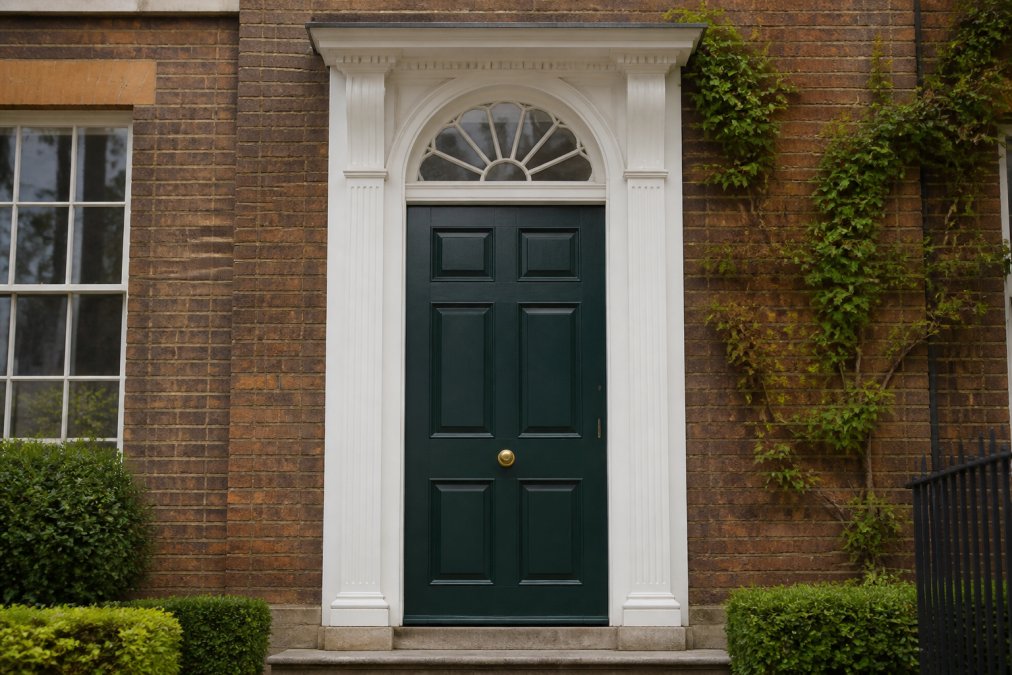
Georgian doors follow a fixed formula: six raised or fielded panels arranged in two columns of three, with the lock rail positioned so the top and bottom sections balance each other. Nothing is accidental. The proportions mirror the architecture around them, which is why a Georgian door on a Georgian facade looks settled and a mismatched door never quite does.
The classic Georgian layout uses two small panels at the top, two longer panels in the middle and two medium panels at the bottom. Door widths for this style typically sit around 813mm to 838mm, and heights run tall, often close to 2,032mm, to suit high-ceilinged rooms.
Symmetry is the whole point. The panel edges line up vertically, the margins are even, and any hardware sits centred on the lock rail. Get one panel out of alignment and the eye notices immediately.
Edwardian Door Glass Panels: More Light, Softer Lines
Edwardian doors traded strict symmetry for daylight. Where Georgian doors kept glazing to a fanlight above the frame, Edwardian designs brought glass into the door itself, often with two or more large panes in the upper section and solid panels below.
The result is a lighter hallway and a softer overall look. Edwardian doors are usually wider, sitting around 838mm to 914mm, and the lines are less rigid than their Georgian predecessors. Decorative touches such as leaded or bevelled glass appear more often, and the panel arrangement tends to be simpler, often four panels rather than six.
For homeowners, this matters because an Edwardian doorway is doing two jobs: it is a front door and a light source. Replacing it with a solid six-panel Georgian design will darken the hall, even if the door itself is beautiful.
Materials, Construction and How Each Style Wears
Both styles are built from the same family of timbers, and both live or die on construction quality. A door made from solid timber with a stable core will hold its shape for decades. A cheap hollow-core door will warp within a few seasons, regardless of how authentic the panel layout looks.
Oak is the most common choice for both styles because it takes paint and stain well and resists movement. For internal Georgian designs, the Oak Regency 4P RM2S uses unfinished white oak over a solid engineered core, and comes with a 10-year manufacturer's conditional warranty. Where a fire-rated door is required, the Oak Regency 4P RM2S Fire Door offers the same Georgian look in a compliant build.

For external Edwardian entrances, the Hardwood Edwardian Unglazed External Door uses solid unglazed framing for privacy and security, and is built to handle weather exposure. If you want a lighter, glazed look, the Grey Amsterdam 3L Glazed Primed applies a Georgian-inspired three-panel glazed design in a primed silk grey finish.

The practical difference between the two styles comes down to exposure. Edwardian doors carry more glass, so the frame and glazing bars take more weather. Georgian doors are mostly solid, so the panels take the wear. Both need the same thing: proper sealing, drainage and periodic repainting.
Period Front Door Restoration: What Each Style Demands
Period front door restoration is not the same job for both styles, and knowing the difference saves money. Georgian doors usually need work on the panel joints and the paint build-up around them. Edwardian doors usually need work on the glazing, the putty or beading and the timber around the glass.
For a Georgian door, the common problems are:
- Paint bridging the panel edges, which traps moisture and causes rot
- Split panels where the timber has moved with the seasons
- Worn lock rails from decades of hardware changes
For an Edwardian door, expect:
- Failed putty or beading around the glass
- Water ingress at the glazing bars
- Cracked or missing glass panes
A common mistake is to strip a period door completely and refinish it in one go. In practice, it is better to repair the structure first, let the timber settle, then paint. Rushing this stage is how doors end up with panels that move and crack within a year.
Choosing Between Georgian and Edwardian Doors
When choosing between Georgian Edwardian doors, match the door to the property, not to personal preference alone. A Georgian door on an Edwardian house looks borrowed. An Edwardian glazed door on a Georgian facade breaks the symmetry the whole street was built around.
Use this decision framework:
- Georgian property, or a Victorian terrace with symmetrical frontage: choose a six-panel Georgian design.
- Edwardian property, or a wider hallway needing light: choose a glazed Edwardian design.
- Internal doors where fire rating is required: choose a compliant fire door in the matching style.
- Non-standard opening sizes: choose a bespoke build rather than forcing a stock size.
For odd openings, bespoke manufacturing is the only reliable option. At Arborfield Joinery, our manufacturing facilities allow us to build doors to non-standard dimensions, which matters in period properties where nothing is square.
Conclusion
Choosing between Georgian and Edwardian doors is really about matching the architecture you already have, and getting the proportions right is where most projects succeed or fail. Whether you need a six-panel Georgian internal door, a glazed Edwardian entrance or a fully bespoke build for an awkward opening, Arborfield Joinery can supply it. We have been trading since 1953, we carry a huge range of internal and external doors on display, and we offer free mainland shipping on orders over £900. Get started with Arborfield Joinery and find a period door that fits your property properly.
Frequently Asked Questions
What are the main design features of a Georgian front door?
Georgian doors are built on strict symmetry. The classic front door carries six raised panels, usually arranged in two columns of three, with the top pair the longest and the bottom pair the shortest. Panels sit within moulded frames, and the door is topped by a fanlight, often semi-circular. Georgian door proportions follow the wider architecture of the period, so the door feels tall and narrow against the facade. Painted finishes are typical, with white, black, green and deep blue among the most common choices.
How do Edwardian doors differ from Georgian styles?
Edwardian doors keep the panelled base but open up the top half with glass. Where a Georgian door is solid six-panel, an Edwardian door often has three or more glazed panels above a solid lower section, letting more daylight into the hallway. The proportions are also wider and less rigidly symmetrical, matching the broader, lighter homes of the period. If you are weighing Georgian vs Edwardian doors for a renovation, the glazing and the width are the two quickest ways to tell them apart.
Do Edwardian doors feature more glass than Georgian doors?
Yes. Edwardian door glass panels are a defining feature, with the upper half of the door typically divided into three, six or nine panes by slender glazing bars. Georgian doors sometimes include a glazed fanlight above the door, but the door leaf itself is usually solid. If you want a brighter entrance hall and your property dates from around 1901 to 1910, an Edwardian-style door with glazed upper panels will suit the architecture more closely than a solid Georgian design.
How can I tell if my property requires a Georgian or Edwardian door?
Start with the age of the house. Georgian properties, roughly 1714 to 1830, tend to have symmetrical facades, sash windows with six panes per sash, and a solid panelled front door under a fanlight. Edwardian properties, around 1901 to 1910, are usually wider with larger windows and a front door that includes glazed upper panels. Check the surrounding houses on the street for the original pattern. If the openings are non-standard, bespoke joinery can match the period style exactly.
Are Georgian doors typically painted or stained?
Painted is the traditional finish. Georgian joinery was designed to be painted, often in white for the door frame with a darker colour on the leaf itself, such as black, deep green or navy. Stained timber became more popular in later periods, and an unfinished oak door such as the Oak Regency 4P RM2S at £165.00 can be finished to suit either approach. If you are restoring a period front door, matching the original paint colour is usually the safest route.
Share:
Hardwood Sill Extensions: How to Choose the Right Fit
Georgian Timber Internal Doors: A 2026 Buying Guide