
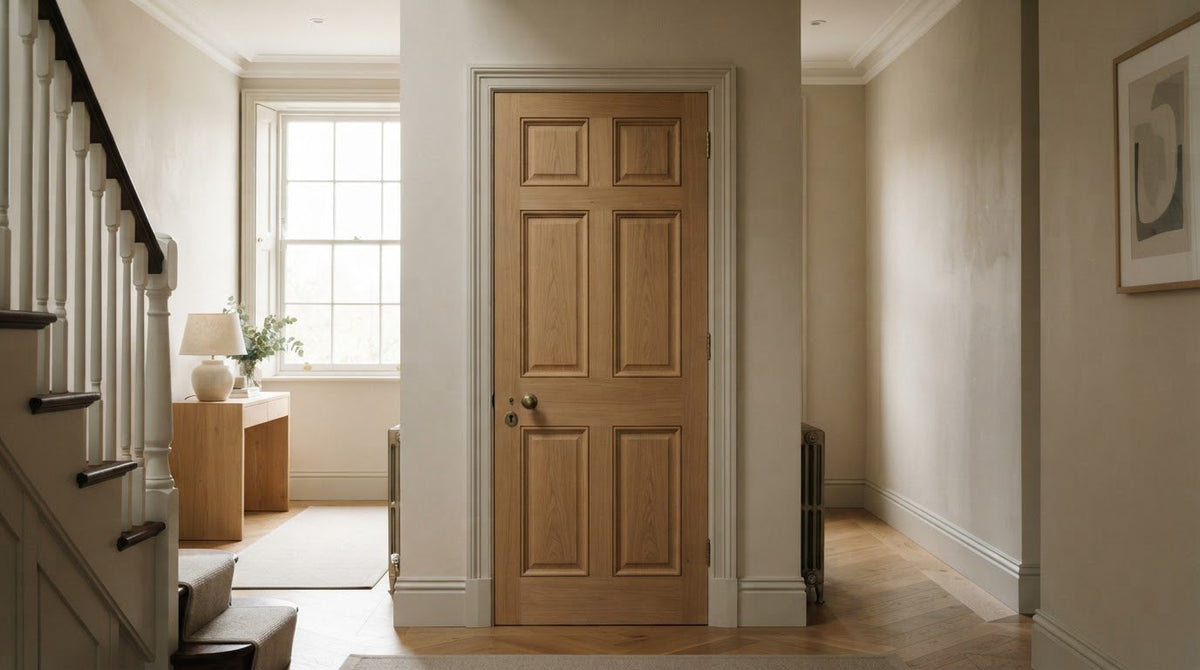
Choosing Georgian timber internal doors is about more than recreating a period look. Panel proportions, timber construction and finish all affect the result, and a traditional design can work just as well in a newer interior when it suits the space.
You may be wondering what makes a door Georgian in style, or whether the details you like will work with your opening and everyday needs. This guide explains the defining visual features, how to compare timber options and what to check before you buy.
We’ll look at panel design, glazing, finish and sizing, then cover the checks that can help you decide whether a standard size or a made-to-measure option is right for your home. Arborfield Joinery has supplied joinery products since 1953. The same considered approach to choosing well can help you compare the details that matter.
Key Takeaways
- Recognise how symmetry, balanced proportions and moulding details can create a Georgian-inspired look without assuming a single standard design.
- Compare georgian timber internal doors by visible style, confirmed construction and finish, rather than relying on the word “timber” alone.
- Learn to distinguish Georgian-inspired designs from other traditional internal doors by their visible features.
- Use a practical checklist to assess your opening, frame, handing and clearances, and check product guidance before considering any trimming.
- Explore the wider internal-door range and find out what to verify when asking Arborfield Joinery about Georgian-style options.
What makes Georgian timber internal doors distinctive, and where do they suit?
A Georgian-style door uses balanced proportions and considered detailing to suggest the architectural language associated with the Georgian period. It describes a design reference, not one fixed panel arrangement. The phrase georgian timber internal doors indicates an intended look, but does not confirm the timber species, construction method or whether the door includes glazing.
Symmetry and proportion are useful visual clues. The wider principles of Georgian architecture include an emphasis on order and balance, qualities that can also inform an interior door’s design. Still, judge the door by its actual features rather than inferring its details from a period label.
Which design details create a Georgian-inspired appearance?
Look for panels arranged in a balanced composition and moulding that defines the panels without overpowering the door. These are visual cues, not fixed rules: panel shapes, proportions and detailing vary between products. Similar-looking doors may also use different materials and construction methods. Check product images and specifications to confirm the exact layout, materials and finish before deciding.
Can Georgian-style doors work in a contemporary home?
Yes. Traditional detailing can add warmth and structure to a simple modern interior, while a restrained design can sit comfortably alongside clean lines and pared-back furnishings. Consider how the door’s moulding, colour and visual weight relate to the skirting, architraves and other finishes. A more detailed design can become a focal point; a simpler interpretation can add character without dominating the room.
Consider the view through the home, not just the appearance of one doorway. Repeating a door style between connected rooms can create visual continuity, even when the rooms have different functions or furnishings. Every detail need not match, but consistent proportions or finishes can help the scheme feel deliberate.
Before choosing, compare the door with your existing frames and surrounding woodwork, and consider whether its scale and character suit the space. For wider guidance on coordinating styles and frames, see the guide to internal doors and door frames. The right choice should suit both the interior and your practical requirements.
Compare Georgian timber door design, construction, and finish before choosing
A door’s appearance can suggest a style, but it cannot tell you everything about its construction. “Timber” alone does not confirm whether a door is solid timber, engineered or veneered. Nor does a Georgian-style label confirm the panel layout or finish. Check the product specification for each detail rather than relying on a photograph or a broad description.
Georgian interiors are associated with considered architectural detailing. The Victoria and Albert Museum describes William Kent as a leading architect and designer of early Georgian Britain, whose work influenced interiors and door surrounds. This context helps explain the style, but does not tell you how a modern door is made.
| What to compare | What to check |
|---|---|
| Visible style | Panel arrangement, proportions and moulding details shown in the product information. |
| Construction | The stated materials and construction method. Don’t infer these from the door’s surface or style label. |
| Finish | Whether the door is supplied finished or unfinished, if specified, and the stated colour or surface treatment. |
| Buyer questions | What care is required? Is the door suitable for its intended room? What performance claims are supported by the specification? |
How should you assess timber construction and durability?
Read the material and construction details carefully, and ask the supplier to explain any unfamiliar terms. Solid, engineered and veneered describe different constructions; none should be assumed from the word “timber”. Look for product-specific information to support claims about durability or stability instead of relying on general statements about a material. Check the care instructions and whether the door is suitable for the room, particularly if the room’s conditions may affect its finish.
Which finish and detail choices affect the overall look?
Compare finished and unfinished doors only when the product details confirm which applies. Colour and sheen can change how prominent the panels appear: a subtle finish may keep the door understated, while greater contrast can make its detailing stand out. Consider the surrounding paintwork, flooring and woodwork too. If you’re weighing up timber character and material choices, read the guide to internal oak doors.
Before choosing georgian timber internal doors, confirm the panel layout, stated construction, finish, care requirements and suitability for the intended room in the product specification. You can also explore Arborfield Joinery’s wider door range while comparing options.
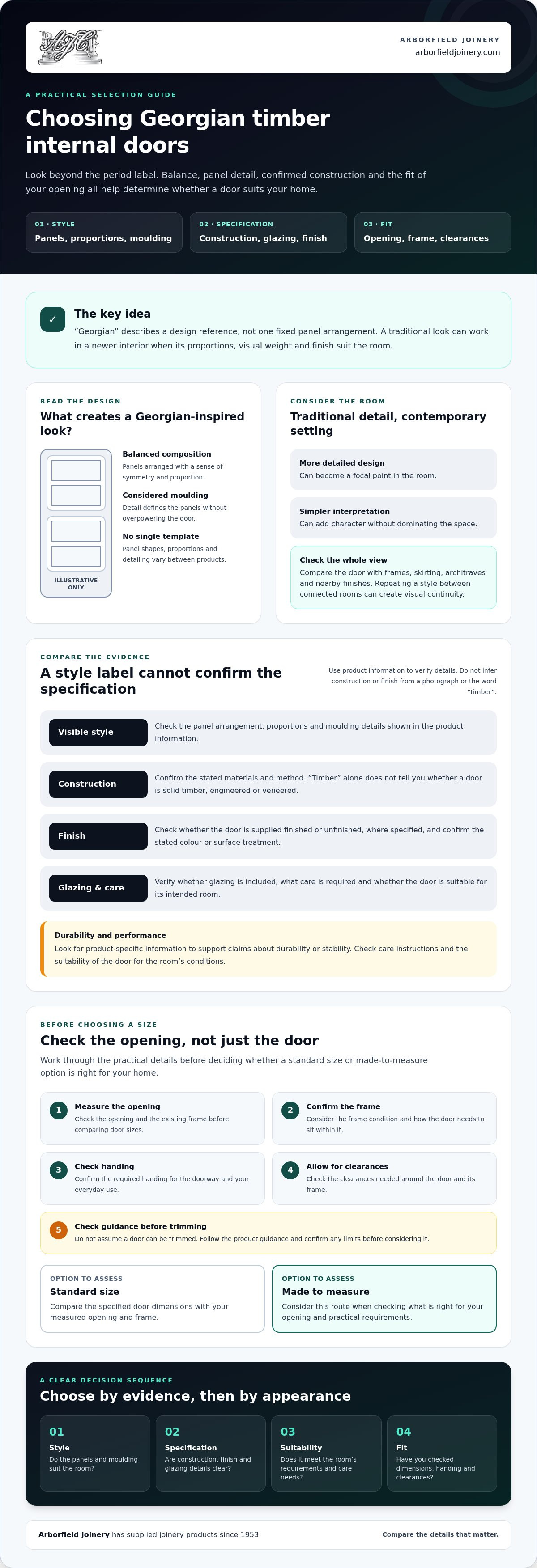
Georgian timber doors versus other traditional internal door styles
Traditional door styles can share panelled surfaces but create different impressions. Georgian-inspired designs tend to look orderly and balanced, while simpler panelled doors often have cleaner outlines and less emphasis on moulding. Other traditional designs may have more pronounced detailing or a more rustic character. These are broad visual comparisons, not fixed definitions: products vary, and a style label does not guarantee a particular layout.
Compare the door itself rather than relying on its category name. Decide how much detail you want in the room, whether the panels appear in proportion to the opening and how prominently you want the door to feature. Look at current product images and specifications to confirm the exact style and configuration.
How do Georgian-inspired and simpler panelled doors differ visually?
A Georgian-inspired door may have a more formal, balanced appearance, with panel proportions and moulding that define the design. A simpler panelled option can feel quieter, especially in an interior with plain surrounding finishes. Neither description guarantees a standard arrangement. Compare product images side by side, then check the specifications to make sure the panel design and other details match your expectations.
Will a traditional timber door suit your home’s existing joinery?
Assess the whole view, not just the doorway. Skirting boards, architraves, flooring and existing doors all contribute to a room’s character. A detailed door may suit traditional joinery, while a simpler panelled design could be a gentler fit with pared-back finishes. Contrast can work in a contemporary interior, but consider whether the door’s profile and visual weight feel at ease with the rest of the scheme.
The right choice depends on the character you want and the details available from the supplier. Check the current listing for each door’s design and configuration before ordering. Products with similar traditional labels may not look alike.
Checking the details before ordering can help you avoid choosing a door that looks right but does not suit the opening or room. Use this checklist to move from style choice to product requirements, and confirm measurement and preparation instructions with the supplier.
- 1. Settle on the look. Decide how much panel detail and visual character you want. Compare the actual door design with your existing joinery and the rooms it will connect.
- 2. Measure the opening and frame. Follow the supplier’s measuring instructions for the exact product. Measure the opening and existing frame rather than assuming a standard size. Record the measurements requested, and clarify anything you are unsure about before ordering.
- 3. Confirm frame compatibility. Ask whether the door suits your existing frame and whether the frame’s condition or dimensions affect the choice. If the opening or frame may need altering, seek appropriate professional advice before placing your order.
- 4. Check handing and clearances. Confirm which way the door needs to open and how the supplier defines handing. Consider nearby walls, furniture and other doors, then check the product guidance for clearance requirements.
- 5. Verify trimming limits. Don’t assume a door can be trimmed to fit. Check the permitted trimming allowance for that specific product and follow the supplier’s instructions. If no allowance is stated, ask before ordering.
- 6. Match the door to the room. Consider privacy, light transfer and how the room is used. If glazing matters, confirm that the specific door is offered with the option you need rather than assuming this from its style description.
- 7. Confirm finish and care. Check whether the product is supplied finished or unfinished, if stated, and review its care requirements. Consider how the finish will sit alongside the room’s other colours and surfaces.
- 8. Check hardware, components and delivery. Confirm hardware compatibility, what is included in the listing and any delivery details you need before completing your order.
Specifications can vary between products, even when their descriptions sound similar. Before ordering georgian timber internal doors, make sure the measurements, configuration and practical details are confirmed for your chosen door.
Ready to compare options? Explore Arborfield Joinery’s door range.
Buying Georgian timber doors from Arborfield Joinery
Choosing a door means balancing appearance with practical details. Before deciding, bring together the design you want, the verified construction, the dimensions and frame, the finish and the room’s requirements. Then check that the specific product information supports your choice. A Georgian-style description alone does not confirm a particular layout or specification.
Arborfield Joinery is a family-run joinery supplier established in 1953, with internal doors available through its online shop. Its showroom displays more than 120 doors, giving you a sense of the wider range. This does not confirm that a particular Georgian-style option is on display or available, so ask the team to confirm current options before proceeding.
What can Arborfield Joinery help you explore?
Arborfield Joinery’s joinery range offers a starting point for comparing door choices. Explore the available internal doors online or in the showroom, and ask whether an option matching your preferred Georgian-inspired appearance is available. Check the details for the exact product rather than assuming a style, material or configuration is offered because it appears in a general description.
What should you ask before placing an order?
Have your preferred look and opening details to hand, then ask the supplier to confirm the product’s current availability and specification. In particular, clarify:
- the actual panel design and whether it matches the style you’re seeking;
- the stated timber species and construction;
- available dimensions and compatibility with your frame;
- the finish, glazing and hardware options, if offered; and
- delivery arrangements and any product-specific requirements to consider before ordering.
Confirm the answers against the current product listing or supplier guidance, especially if a detail affects fit or preparation. If you’re unsure whether an option suits your opening or room, ask for clarification before completing your order. For UK customers, mainland shipping is free on orders over £900; check the applicable delivery details when ordering.
Explore the internal door range and ask Arborfield Joinery to confirm whether Georgian-style options are currently available and which specifications apply.
Choose a door that feels right for your home
A good choice depends on more than a traditional label. Look for balanced design details that suit your interior, then check the actual timber construction, finish and configuration in the product information. Before ordering, confirm the measurements, frame compatibility, handing, clearances and any trimming guidance for the specific door.
These checks help you choose georgian timber internal doors with confidence, whether your home has period character or a more contemporary feel. Consider how the door will sit alongside existing joinery and meet the practical needs of its room. Ask the supplier to clarify any details that are not clear.
Arborfield Joinery is a family-run business supplying doors since 1953, with a showroom displaying more than 120 doors. This reflects the breadth of its range, not guaranteed availability of a Georgian-style option, so ask about current choices and specifications. Explore Arborfield Joinery’s internal door range and confirm which options suit your requirements.
Frequently Asked Questions
What is a Georgian timber internal door?
A Georgian timber internal door is a timber door with design details intended to evoke Georgian style, often through balanced proportions, symmetry and considered panel mouldings. The term describes an appearance, not a guaranteed panel arrangement or construction method. Check the product specification for the actual materials, panel layout, finish and any glazing. The label alone does not confirm the timber species or whether the door is solid, engineered or veneered.
Are Georgian-style internal doors suitable for modern homes?
Yes, Georgian-inspired doors can complement modern homes as well as period interiors. Traditional detailing can add character to a simple room, while a restrained design may sit quietly alongside contemporary furnishings. Consider the door’s proportions, colour and level of detail in relation to your skirting, architraves and other finishes. Comparing the actual design with the room helps you decide whether it will feel harmonious or deliberately contrasting.
What timber is best for a Georgian-style internal door?
There isn’t one timber species that is best for every home or door. Start with the appearance you prefer, then compare the product’s stated species, construction and care requirements. Arborfield Joinery sells oak and walnut doors, but that does not confirm a Georgian-style design is available in either timber. Ask the supplier to verify the materials and construction of the specific door you’re considering, rather than relying on a general style description.
How do I measure for a replacement internal door?
Follow the supplier’s measuring instructions for the door you intend to buy. Check whether you’re asked to measure the existing door, the frame or the opening, as these measurements are not interchangeable. Record the requested width, height and thickness, and check the frame’s condition and compatibility. If the opening is uneven, the frame needs alteration or you’re unsure how to measure, seek appropriate professional advice before ordering.
Can a timber internal door be trimmed to fit?
Only trim a door if the product guidance explicitly allows it, and follow the stated limits and method for that particular model. Timber doors can differ in construction, so appearance alone will not tell you whether or how much material may be removed. If the product information does not specify a trimming allowance, ask the supplier before buying or cutting the door. Don’t assume trimming will resolve a size or frame mismatch.
Do Georgian internal doors come with glazing?
Some internal doors are glazed, but the Georgian-style label does not confirm that glazing is included or available in a particular design. Check the current product listing for the exact configuration, glass details and finish, and confirm anything unclear with the supplier. If you’re choosing a glazed option, consider how much light and privacy you need in that room before settling on a specification.
How can I check whether Georgian-style timber doors are available?
Check the supplier’s current listings, then ask directly whether a Georgian-style timber door is available and request its specific details. Confirm the panel design, timber species, construction, dimensions, finish and any glazing options before ordering. Arborfield Joinery is a family-run joinery business supplying doors since 1953, with more than 120 doors on display in its showroom. This represents the wider door range, not guaranteed Georgian-style availability, so verify current options with the team.
Share:
Georgian vs Edwardian Doors: Key Style Differences
Glass Staircase Balustrade Kits: A UK Buyer’s Guide for 2026