
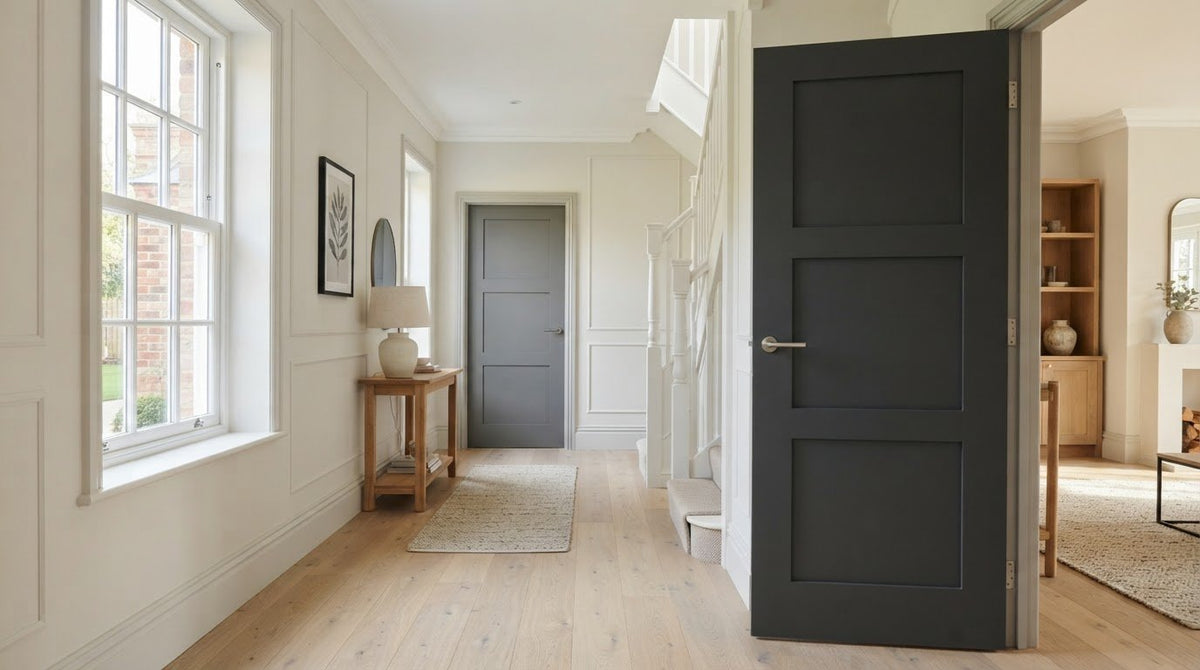
Charcoal grey internal doors can feel timeless when their shade and finish suit your home, rather than simply follow a trend. Choose a grey that works with your existing colours, flooring and furniture.
It’s understandable to hesitate before choosing a darker door colour. Grey makes a confident statement, and the wrong undertone or finish can feel out of place. The right one can bring definition and quiet sophistication to a room.
This guide will help you decide whether grey doors suit your home, compare light, mid-grey and charcoal tones, and consider how different finishes shape the overall look. You’ll also find practical ideas for pairing grey with wall colours, timber and door hardware, so you can make a considered choice for your space.
Key Takeaways
- Grey doors can feel timeless when their shade and design complement your home, rather than simply follow a trend.
- Compare laminate, primed and prefinished surfaces to find an option that suits the look you want and the finish you prefer.
- Choose a lighter, mid-tone or darker grey by considering the room’s natural light and the visual weight of nearby finishes.
- Pair grey with wall colours, timber tones and door hardware that create a considered, cohesive scheme.
- Weigh the practical differences between grey and white, including how visible fingerprints and marks may be.
What are the benefits of choosing a grey internal door over a standard white option?
Grey internal doors are available with FD30 and FD60 fire ratings. These are product options; the appropriate specification for an opening follows the building’s fire-safety design and the door’s position.
Colour changes the character of a doorway, but construction affects how it performs in everyday use. A charcoal grey door creates a defined contrast against pale walls, while a lighter grey can sit more quietly alongside white paint. Solid-core or dense-material doors are described as more resistant to dents, warping and wear than hollow-core styles. If a hallway door sees frequent knocks, consider its core as well as its finish.
Grey doors range from smooth, plain faces to panelled styles. For example, the Alabama Dark Grey internal door has a subtle recessed centre panel that adds depth without an elaborate profile. A solid door offers privacy between rooms, while a glazed design lets natural light pass between spaces while maintaining a clear division. Glazing can be useful between a darker hallway and a brighter living room.
Check dimensions before ordering or fitting any internal door. A standard grey door is 35 mm thick, while a fire-rated grey door is 44 mm thick. Imperial widths of 686 mm and 762 mm at 1981 mm high cover many rooms; newer housing commonly uses metric doors with a 2040 mm height. Measure the existing frame, including its height, width and depth, then match the door’s specification. Trimming can affect a door’s fit and finish, so follow the manufacturer’s limits and instructions rather than cutting first.
For a fire-door assembly, the research facts specify three fire-rated hinges. Keep the door, frame, hinges and other components compatible with the required rating. A fire-rated door leaf on its own does not establish that the complete assembly meets the intended specification.
Care for each surface according to its finish. On a grey glazed door, clean the frame with mild soap and a microfibre cloth, then use glass cleaner on the glazed panel. Don’t let cleaner residue collect around the glazing edges. On a solid grey door, dust the panels and edges, and wipe marks promptly with a soft, lightly damp cloth to protect the finish.
Grey can work with both light and dark décor and may show fingerprints and marks less readily than white. Brushed nickel, chrome and matte black handles each create a different effect, so choose one that echoes hardware elsewhere in the room. Balance the door’s core, glazing, measurements and colour with how each room is used.
Laminate, primed and prefinished options
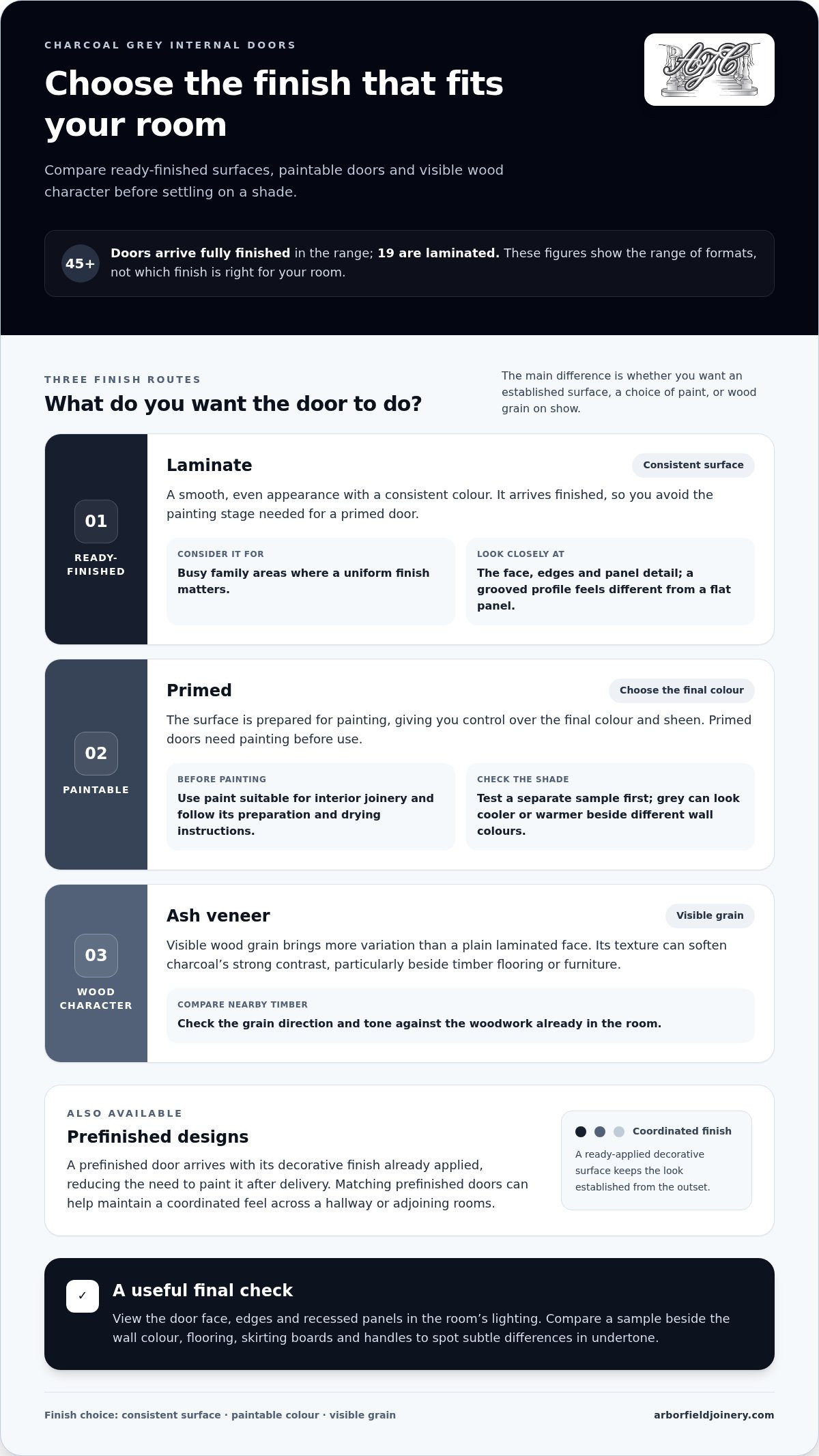
With charcoal grey internal doors, the right finish depends on your priorities: a consistent surface, natural wood character or the freedom to choose your paint. Laminate offers a ready-finished look, while a primed door is prepared for painting. A prefinished door arrives with its decorative finish already applied, reducing the need to paint it after delivery.
More than 45 doors in the range arrive fully finished, and 19 are laminated. These figures show the breadth of those formats, but the right choice still depends on the room and the look you want. A smooth laminate can create a clean, even appearance across several doorways. A prefinished design can also help maintain a coordinated feel when matching doors in a hallway or adjoining rooms.
Laminate offers a consistent colour and surface. It can suit busy family areas where a uniform finish matters, and avoids the painting stage required by a primed door. Look closely at the face, edges and panel detail: a grooved cottage-style design creates a different impression from a flat, uninterrupted panel. Match the profile to your home, not just the colour.
An ash veneer shows visible wood grain beneath its finish, bringing more variation than a plain laminated face. This texture can soften charcoal’s strong contrast, particularly beside timber flooring or furniture. Compare the grain direction and tone with nearby woodwork. If you prefer a painted look without visible grain, a primed surface gives you more control over the final colour and sheen.
Primed doors need painting before use. Choose paint suitable for interior joinery and follow its preparation and drying instructions. Test the colour on a separate sample first: grey can look cooler or warmer beside different wall colours. A neutral shade keeps the scheme flexible, while deeper charcoal creates a stronger outline against pale walls.
Before choosing, decide whether you want to paint the door, preserve a factory finish or show its wood character. Check the face, edges and recessed panels in the lighting where the door will be fitted. Consider how the finish will sit alongside skirting boards and handles. A sample viewed beside these details can reveal subtle differences in undertone.
Explore laminate and white primed doors if you’re comparing a consistent finished surface with a paintable option. The distinction is simple: laminate and prefinished designs arrive with their appearance established, whilst primed doors let you choose the final paint colour. That makes the intended finish, not just the grey shade, a useful starting point.
Light, medium, dark and anthracite grey shades
Charcoal sits between lighter grey and black, creating strong contrast without appearing fully black. White gives the brightest contrast; light grey creates a softer, less defined effect.
Light, medium and dark grey shades
Light grey doors keep the doorway visually gentle, especially beside pale walls. Medium grey gives more definition without the depth of charcoal. Dark grey creates a stronger focal point, so compare it with nearby flooring, skirting and furniture. A collection includes 44 light grey doors and 12 noticeably darker grey doors, offering a practical starting point for comparing these ends of the tonal range.
To judge a shade, place a sample beside the wall colour and flooring in the room. Check it in daylight and under the room’s evening lighting, because surrounding colours affect how grey appears. A pale grey beside white paint may look subtle, while the same door beside lighter timber flooring may stand out more.
Anthracite grey shades
Anthracite is a deep grey with a pronounced, architectural character. It can define a doorway against pale walls or connect with dark details such as a black handle or charcoal-coloured furniture. Compare its undertone with other finishes in the room: a cool-looking grey may feel distinct beside warm wood. A recessed panel, such as the Alabama Dark Grey door’s subtle centre detail, adds shadow and depth.
Consider how often the door will be in view. An anthracite door at the end of a pale hallway becomes a clear visual feature, while several doors in the same shade can create a more continuous dark line. Look at the full run of doorways before settling on a colour, especially where rooms share a sightline.
Light and dark finish comparisons
Light grey reflects more of the room’s visual brightness, while dark grey frames the doorway more strongly. Neither shade automatically makes a room feel larger or smaller: wall colour, natural light and the number of visible doors all play a part. Compare light and dark samples against the same wall rather than judging them separately.
White creates a crisp, high-contrast edge beside charcoal. Black looks deeper and more graphic, while charcoal retains a visible grey quality. Light grey softens the difference between door and wall. To choose, view samples beside the room’s existing trim and furniture, then decide whether the door should blend in or draw attention.
The finish also changes how a shade looks. A smooth, plain face makes the colour appear more uniform; recessed panels create darker lines through natural shadow. Compare both details in the doorway, where changing light reveals their shape. This helps you distinguish the effect of the grey from the effect of the door’s profile.
Colour schemes to pair with grey doors
Grey doors can complement light and dark wood finishes, including pale oak, ash, walnut and mahogany. Build your colour scheme around the materials already in the room, then decide whether the door should blend in or provide contrast. A charcoal door beside pale oak creates a distinct edge, while a lighter grey sits more quietly alongside it.
Start with the largest surfaces: walls, flooring and fitted furniture. With pale walls, a deep grey door creates definition without introducing another colour family. In a room with darker walls, lighter grey can distinguish the doorway from its surroundings. Consider the full combination together, rather than choosing a door colour from a small sample viewed alone.
Wood tones offer a useful guide. Pale oak and ash bring a light, natural counterpoint to grey, while walnut and mahogany create a deeper, more enveloping scheme. Where possible, choose one dominant timber tone and repeat it through furniture or trim. If the room already mixes wood finishes, compare the door sample beside each one before choosing its undertone.
For a calm, neutral palette, pair grey with soft white, warm beige or muted stone walls. The door remains noticeable without becoming the room’s only strong feature. Cooler whites and blue-toned greys create a sharper, more contemporary effect; warmer off-whites soften charcoal. Check paint swatches against the door in daylight and evening lighting.
For a more expressive scheme, use one accent colour in cushions, artwork or a rug. Muted green beside grey and pale timber can feel grounded, while a deep blue accent strengthens a cooler palette. Keep large areas restrained if the door is already dark. Repeating the accent in a few smaller details helps it feel deliberate rather than isolated.
Hardware and trim connect the door to the room. Brushed nickel or chrome can sit neatly within a cool grey scheme; matte black echoes dark furniture and creates a stronger outline. If the skirting is white, decide whether to keep it consistent throughout or match it to the walls. Applying the same approach across visible doorways can make a hallway feel more considered.
Paint brands present colours differently, so compare physical swatches rather than relying only on screen images. Place a swatch beside the door, skirting and flooring, then view it at different times of day. This reveals undertones that may be easy to miss under showroom lighting. Make your final choice based on the room’s existing materials and the atmosphere you want to create.
Benefits of grey compared with white doors
Grey sits between the crisp brightness of white and the stronger contrast of black. It can work with both light and dark décor, making it a flexible choice for homes with varied finishes. White remains a familiar option, but a grey door gives the doorway its own colour without introducing a vivid accent.
Marks are another practical consideration. Grey internal doors may hide fingerprints and everyday marks better than white doors, which can be useful in busy areas such as a family hallway or kitchen entrance. They are not mark-proof: handprints can still show, particularly on a smooth, dark finish. Think about who uses each doorway and how often it needs wiping.
White can brighten a pale room and blend with white skirting, creating a continuous line around the walls. Grey adds definition. A medium-grey door against soft-white walls, for example, makes the opening noticeable without the stark edge of black. Charcoal creates greater contrast, while light grey keeps the transition gentler. Choose according to whether you want doors to recede or contribute to the room’s visual design.
Consider the view from the hallway. If several doors sit together, white can make them read as a consistent backdrop; grey gives each opening more presence. In a room with pale walls and timber flooring, a grey door can link darker furniture to lighter architectural details. If the room already has strong colour or patterned wallpaper, white may keep the overall scheme quieter.
Try this comparison before deciding:
- Look at the door beside the wall, skirting and flooring, not in isolation.
- View white and grey samples in both daylight and evening lighting.
- Consider visible fingerprints around handles and along the door edge.
- Check whether nearby doors should match or provide contrast between rooms.
Finish also affects the comparison. A panelled grey door creates shadows that add detail, while a plain white door may feel more discreet. Conversely, a smooth grey face can look understated beside detailed mouldings. Match the door profile to the room’s existing joinery, then judge the colour against those lines.
Neither colour is universally better. Choose white if you want the door to blend with pale trim; choose grey if you want a distinct but adaptable feature. To compare timber character with a classic pale finish, explore oak and white primed doors as contrasting directions for your interior scheme.
Brushed nickel, chrome or matte black handles are recommended for a sleek, contemporary look with grey internal doors. Many grey internal door styles are available with FD30 or FD60 fire ratings.
Arborfield Joinery: Oak Doors
Arborfield Joinery can help you compare door styles and materials once you’ve settled on the look your home needs. If charcoal feels too strong, Oak Doors or Walnut Doors offer a natural timber alternative; White Primed Doors provide a lighter starting point, while Urban Doors suit a contemporary interior. Compare each option with your flooring, wall colour and existing joinery to keep the overall scheme cohesive. Explore the range and get in touch with Arborfield Joinery to discuss your options.
Choose a finish that feels at home
Before settling on charcoal grey internal doors, picture the view from one room into the next. A doorway is part of a wider composition, so consider how its colour will look alongside the objects and finishes you plan to keep. This helps you choose a design that feels personal, rather than simply matching a trend.
If you’re still weighing up the overall mood, compare grey with natural timber or a lighter painted finish. Arborfield Joinery offers Oak Doors, Walnut Doors and White Primed Doors, giving you different directions to consider as you shape your interior.
Make your next step a considered one: bring together the colours and materials you’re working with, then explore which door style best suits your home. Contact Arborfield Joinery to discuss your options and move your plans forward with confidence.
Frequently Asked Questions
Will grey doors date?
Grey doors can remain part of a considered scheme when chosen to suit your home, rather than a passing fashion. Keep surrounding finishes adaptable: neutral walls, natural timber and simple hardware let you refresh soft furnishings without changing the doors. A charcoal door can feel cohesive in a period home with traditional panelling or a modern interior with clean-lined furniture. Your room’s overall style matters more than the trend cycle.
What styles of charcoal grey internal doors are available in the UK?
UK options include plain, panelled and glazed designs, with finishes such as laminate, painted surfaces and wood veneer. A glazed door can suit a room that benefits from borrowed light, while a solid panelled style offers a more substantial visual presence. You can also choose hinged, bi-fold or pocket formats, depending on the doorway and how you use the adjoining rooms. Compare the door’s profile and finish with your existing joinery.
How do I fit a charcoal grey internal door, and can it be trimmed to size?
Measure the frame and check the door’s dimensions, thickness and hinge positions before fitting. Some doors can be trimmed, but the permitted amount depends on the construction and manufacturer’s guidance. Check those limits before cutting, as trimming too much can affect the door’s structure or finish. Fit the hinges and handles to suit the door and frame, then check that it opens and closes freely.
How do I clean and maintain charcoal grey painted or finished internal doors?
Dust the door regularly with a soft cloth, then gently wipe marks with a slightly damp cloth. Avoid abrasive pads and harsh cleaners, which can scratch or dull painted and finished surfaces. Dry the door after wiping, especially around panel edges and handles. For a glazed design, clean the glass separately with glass cleaner, taking care not to leave residue on the surrounding frame or finish.
How much do charcoal grey internal doors cost in the UK?
The cost of charcoal grey internal doors varies depending on the materials, glazing options and manufacturing quality. Standard hollow-core internal doors are generally the most affordable, whilst solid wood or engineered timber designs with factory finishes sit at a higher price point. At Arborfield Joinery, we offer transparent pricing to help you find durable, stylish doors that suit your home improvement budget without compromising on quality.
Share:
Eco-Friendly and Sustainable Window Materials UK: A Buying Guide
Double vs Triple Glazing: Which Saves More?