

When asking, “are aluminium bifold doors better than timber?”, start with what you want from the door, not the material alone. Aluminium may appeal for its clean, contemporary look, whilst timber brings natural character and a sense of craftsmanship. The right choice depends on how each option suits your home, the opening and the level of upkeep you’re comfortable with.
Appearance is only part of the decision. Performance depends on the specification and intended use of the specific door, while maintenance needs and how the frame sits within your home matter too. Broad claims about either material won’t tell you which will work best for your space.
This comparison covers practical differences, from finish and architectural fit to thermal performance and ongoing care. You’ll learn what to weigh up when choosing between aluminium and timber, and which details to assess when considering timber bifold doors. The aim is a clear decision based on your priorities, rather than material reputation alone.
Key Takeaways
- Neither frame material is automatically best. Start with your home, the opening and the finish you want.
- To decide whether are aluminium bifold doors better than timber for your project, compare evidence for the specific doors rather than relying on broad material claims.
- Consider how each material’s appearance and upkeep fit your interior style and maintenance preferences.
- Use a simple decision sequence to weigh the setting, priorities, product evidence and finish before choosing.
- Explore timber bifold doors and folding systems if natural materials and joinery appeal to you.
Are aluminium bifold doors better than timber? Start with what matters at home
Neither material is automatically better for every home or opening. Aluminium and timber are alternative frame-material choices for a bifold door. The panels fold to one side, but the frame material, finish and product specification vary. A general overview of the folding door explains the wider category; for your decision, the key is comparing products intended for the same use.
So, are aluminium bifold doors better than timber? It depends on what “better” means for your project. A sleek frame may suit one design brief, while the grain and warmth of timber may be more appealing in another. Upkeep and the verified specifications of the individual doors matter too. Material alone can’t establish how a particular product will look or perform.
Set your priorities before weighing up claims. Consider the appearance you want, how much maintenance you’re willing to take on, the performance evidence available for the specific doors, and whether each product suits the opening. Keep these factors distinct: a strong result in one area doesn’t automatically make a door the right choice overall.
What does better mean for your bifold door?
Rank your priorities rather than looking for a universal winner. For instance, a homeowner updating an existing room might put a complementary finish and ease of everyday care first. Someone planning a new opening may need to focus more on the project’s dimensions and the door’s relevant specifications. These are different decision contexts, not proof that one material always outperforms the other.
Write down your main considerations, then compare each product against them. This makes trade-offs visible and keeps the choice grounded in your home, rather than broad promises about aluminium or timber.
Which kind of opening are you comparing?
First establish whether the bifold is for an internal or external opening. The setting changes which information is relevant, so don’t transfer claims about one application to another. For an internal door, focus on evidence and details that relate to internal use; for an external door, assess specifications for an exterior setting.
Keep the comparison fair by matching products intended for the same application and checking their documentation. The next sections explain how to compare materials, appearance and maintenance without treating unlike products as equivalents.
Aluminium vs timber bifold doors: compare the specifications, not just the material
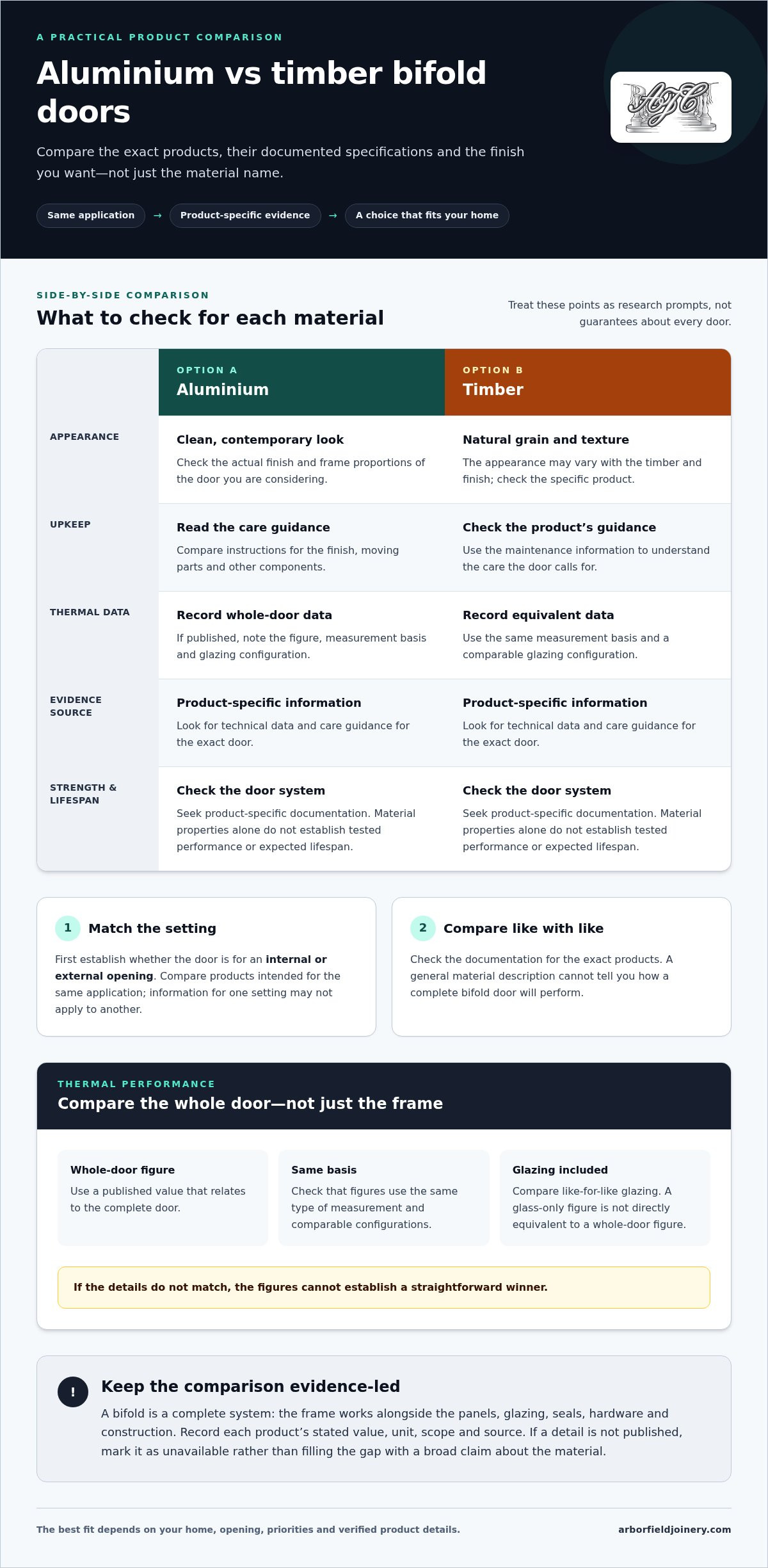
Material names offer a useful starting point, but they don’t tell you how a complete bifold door will perform. The frame is one part of a system that includes the panels, glazing, seals, hardware and construction. A fair comparison is simple: match the application and compare documented specifications for the exact products you’re considering.
Use the table to organise your research. Treat each description as a prompt, not a guarantee. Check the product literature and note where each claim comes from.
| Material | Appearance | Upkeep | Thermal data | Evidence source |
|---|---|---|---|---|
| Aluminium | Often associated with a clean, contemporary frame. Check the actual finish and frame proportions. | Compare the care instructions for the finish, moving parts and other components. | Record the whole-door figure, if published, with its measurement basis and glazing configuration. | Product-specific technical data and care guidance. |
| Timber | Natural grain and texture may be visible. Appearance varies with the timber and finish. | Use the product’s maintenance guidance to understand the care it calls for. | Record the equivalent whole-door figure, using the same measurement basis and glazing configuration. | Product-specific technical data and care guidance. |
If a value or detail isn’t published, mark it as unavailable rather than filling the gap with a general claim about the material. That keeps the comparison honest and makes it easier to spot where the products’ information differs.
How should you compare thermal performance?
Thermal performance relates to the complete door, not simply whether its frame is aluminium or timber. Compare published whole-door data on a like-for-like basis: check that the figures use the same type of measurement and refer to comparable door configurations, including glazing. A glass-only figure isn’t directly equivalent to a whole-door figure. Verify any claim that one material is warmer against the exact products being compared.
For a practical comparison, note each door’s stated value, unit, scope and source. If those details don’t match, the figures can’t establish a straightforward winner.
What should you check about strength and lifespan?
A material’s general properties don’t establish the tested performance or expected lifespan of a complete door system. Look for product-specific documentation describing the door being compared, and avoid treating a broad material description as proof of strength, security or longevity. For insight into how professionals assess rigorous engineering data and environmental resilience in architectural openings, technical guides published by Hawaii Architectural Sales highlight the importance of verified product specifications over generic assumptions. Don’t rely on lifespan promises without evidence that applies to the actual product and its intended use.
Are aluminium bifold doors better than timber? The specifications provide a sounder answer than reputation alone. If natural material is a priority, timber bifold doors from Arborfield Joinery are one option to explore. Assess their published details against the same checklist you use for other products.
Appearance and maintenance: where aluminium and timber bifold doors differ
A bifold door becomes part of a room’s visual character, whether it’s open or closed. Aluminium is often chosen for a crisp, contemporary frame, whilst timber offers natural grain and texture. Neither look is right for every home. The best fit depends on how you want the frame to sit alongside the architecture, furnishings and surrounding colours.
Choose a material with the finish you want to live with. Think about the view from both sides of the opening, not just the door’s appearance in a brochure. A frame can blend into a restrained palette or create a deliberate contrast. Timber’s visible grain may bring warmth to a room with natural finishes; a smooth, coloured frame may suit a more pared-back scheme. These are aesthetic preferences, not measures of performance.
Which material best suits your preferred look?
Look at frame proportions and sightlines as well as material. How much of the frame will be visible when the panels are closed? Will its colour work with your walls, flooring or exterior finish? Compare actual samples or finished examples in similar lighting where possible. A colour shown on a screen may appear different at home, so judge the full combination rather than choosing by material label alone.
Consider the view when the doors are folded back too, especially how the opening frames your outdoor space. If your bifold doors open out onto a landscaped patio or garden building, styling the surrounding exterior with outdoor living features from Garden Chic can help tie the interior and exterior together. The frame remains part of the room, but its visual impact changes as the panels gather to the side. Picture the door both ways before settling on a finish.
How much maintenance should you expect?
Don’t assume every aluminium or timber door has the same care needs. Read the manufacturer’s instructions for the specific frame finish and components, and distinguish routine cleaning from refinishing or repair. The product’s setting and exposure can affect the care required, particularly for an external opening. Avoid fixed maintenance schedules unless they’re stated in the relevant guidance.
Before choosing, read the care instructions and note what they say about:
- Cleaning products or methods recommended for the frame and finish.
- Care of moving parts and other door components.
- Whether the finish has separate maintenance or refinishing guidance.
- Any differences the manufacturer identifies for internal and external use.
This makes the upkeep comparison practical: you can see what routine care involves and whether the product calls for additional attention. If guidance is unclear, don’t substitute a rule of thumb about the material. Base your expectations on the product instructions.
So, are aluminium bifold doors better than timber for appearance and maintenance? There’s no universal answer. A homeowner who wants a particular contemporary finish may favour one option, while someone drawn to visible natural grain may prefer another. The sound choice is the door whose look complements the home and whose documented care requirements feel manageable over time.
How to choose between aluminium and timber bifold doors for your project
There’s no reliable shortcut based on material reputation alone. The right choice depends on how the door will be used, what you want it to look like and how its documented performance and care requirements fit your plans. Work through these steps to turn a broad comparison into a practical shortlist.
- Identify the setting. Establish whether the door is for an internal or external opening, and whether you’re replacing an existing door or creating a new opening. These details shape which products are relevant and which specifications you’ll need to compare. Don’t use information for an internal door to judge an exterior product, or vice versa.
- Rank your priorities. Put appearance, upkeep, documented performance and project context in order of importance. If visible grain is central to the design, timber may deserve a place on your shortlist; if a particular frame finish matters most, compare products that offer the look you want. A priority can make one option a poorer fit for your project without making it universally inferior.
- Compare evidence. Select products designed for the same application and type of opening. Record their published specifications, care guidance and the source of each claim. Note where information is missing, and don’t treat broad statements about a material as proof of a particular door’s performance.
- Assess the finish. Consider the frame alongside the room or exterior palette, surrounding joinery and the view when the panels are folded back. If you’re considering timber in an exterior joinery scheme, the guide to external oak doors offers related context for thinking about material and appearance.
- Decide for the long term. Revisit your priorities and ask whether you’ll be happy with the door’s appearance and the care described in its product instructions over time. Consider budget as part of the project, but weigh it alongside the finish, evidence and suitability rather than letting one factor decide in isolation.
Which priorities should shape your shortlist?
Use your ranking to make trade-offs clear. For example, a particular finish may matter more to you than minimising routine care, or the opening’s intended use may narrow the products worth considering. Neither result means a material is always better or worse. It shows which option aligns more closely with your home, opening and preferences.
How can you make a like-for-like comparison?
Keep a short record for each candidate: application, opening type, finish, stated specifications, care guidance and evidence source. Compare equivalent information, not a general claim for one material against a technical figure for another. Where exterior timber joinery is part of the wider design, the guide to timber windows may help frame that context, though window details aren’t a substitute for bifold-door specifications.
So, are aluminium bifold doors better than timber? Your shortlist should answer that for your project, based on comparable evidence and the finish you want to live with. Timber bifold doors are one option if you’re considering a natural-material finish.
Explore timber bifold doors with Arborfield Joinery
After weighing appearance, care and product information, timber bifold doors may be worth considering if you value natural material and joinery. Arborfield Joinery offers timber bifold doors and folding systems, giving you a relevant option to consider as you shape your shortlist. The right choice still depends on your project and the details of the individual door, not a general promise about timber.
What can Arborfield Joinery bring to your decision?
Arborfield Joinery is a family-run business that has supplied joinery products since 1953. Its heritage is captured in the phrase 70+ Years Family Run Business, alongside a personal approach to helping homeowners enhance their homes. That history offers context, but it doesn’t replace assessing product details against your intended use and priorities.
The showroom displays more than 120 doors, offering an opportunity to view a range of designs and finishes in person. Not every displayed door is a bifold, but seeing different doors can help you consider how materials and details might work with your home. Pair that visual impression with the relevant product information before settling on a choice.
What is a useful next step?
Start with the priorities you’ve identified: the finish you want, the opening’s setting and the level of care you’re comfortable with. As you explore timber bifold options, note the details that matter to your project, such as how the door is intended to be used and what its product information says. This keeps the decision focused without assuming one material must suit every home.
Are aluminium bifold doors better than timber? For some projects, aluminium may fit the desired look or preferences; for others, timber’s natural character may be more compelling. Compare actual options in context. Arborfield Joinery’s personal service and showroom can help you consider the available designs and finishes in person.
Explore Arborfield Joinery’s timber bifold range and consider how it fits your home and priorities.
Choose a door that feels right for your home
The decision becomes clearer when you picture the door as part of everyday life: how its finish will sit in the room, how it will feel to use and whether its care requirements suit your routine. So, are aluminium bifold doors better than timber? The answer is the material that fits your home and priorities, supported by product details you can rely on.
If timber’s natural character appeals, Arborfield Joinery offers a considered next step. The family-run business emphasises craftsmanship and personal service as you explore joinery options. Take time to consider how the available designs might work in your space.
Explore timber bifold doors from Arborfield Joinery and take the next step towards a finish that feels right for your home.
Frequently Asked Questions
Are aluminium bifold doors better than timber bifold doors?
Neither material is the better choice for every project. Aluminium may appeal if you want a clean-lined frame, while timber can bring natural grain into the design. Consider the room or exterior, the finish you prefer and the care guidance for the actual door. For example, a frame chosen to complement existing timber joinery may suit your plans better than one selected simply because it is aluminium.
Do timber bifold doors need more maintenance than aluminium?
That depends on the individual door, its finish and where it is used. Some timber finishes may require attention to preserve their appearance, whilst aluminium doors also need care in line with their product instructions. Compare the manufacturers’ guidance for cleaning, refinishing and components before deciding. A door in a more exposed position may have different care considerations from an internal one, so don’t rely on a fixed schedule for either material.
Are aluminium bifold doors more energy efficient than timber?
Not necessarily. Energy performance depends on the complete door, including its glazing and construction, rather than the frame material alone. Compare whole-door thermal figures for the exact products, and check that they use the same measurement basis and refer to comparable configurations. For instance, a figure for glazing alone shouldn’t be weighed against a whole-door value. If equivalent evidence isn’t available, a material label can’t settle the comparison.
Which bifold door material lasts longer?
There isn’t a dependable material-only answer. The useful evidence is specific to the door system and its intended setting, with care and exposure also relevant to how it holds up over time. Look for product documentation that supports any lifespan or durability claim, and read the care instructions alongside it. Be wary of a precise lifespan promise that doesn’t identify the product or explain the conditions it assumes.
Are timber bifold doors suitable for a contemporary home?
Yes. Timber can work in a contemporary interior or exterior, particularly if its grain and finish complement the wider palette. For example, it may soften a room with simple lines, or connect a new opening with existing timber details. Consider the frame colour, surrounding materials and appearance with the panels both open and closed. The overall design matters more than a rule that timber belongs only in traditional homes.
What should I compare before choosing aluminium or timber bifold doors?
Compare doors intended for the same setting and opening, then note each product’s dimensions, configuration, finish, published thermal data and care instructions. Record where the information comes from, and check that technical figures describe equivalent measurements. You could also view how the finish relates to nearby flooring, walls or joinery. This gives you a practical basis for weighing suitability and everyday care, rather than relying on general claims about either material.
Share:
Best Wood for Exterior Staircases: A Selection Guide
5 Best Soundproof Internal Doors for Home Offices