
Table of Contents
- Why Full Replacement Is Rarely the First Answer for Listed Building Windows
- Listed Building Consent for Window Repairs: What You Need to Know
- Repairing and Overhauling Original Timber Sash and Casement Windows
- Draught Proofing Historic Windows Without Damaging Original Character
- Secondary Glazing for Listed Buildings: A Reversible Retrofit
- Thermal Performance, U-Values and What You Can Realistically Achieve
- Cost, Insurance and Warranty: Weighing Repair Against Replacement
- Frequently Asked Questions
Last Updated: September 21, 2026
Why Full Replacement Is Rarely the First Answer for Listed Building Windows
Alternatives to full window replacement for listed buildings exist because the planning system treats original windows as historic fabric, not disposable components. At Arborfield Joinery, we have supplied and manufactured timber windows since 1953, and the pattern is consistent: most listed windows are repaired, not ripped out.
What Counts as Historic Fabric
Historic fabric is any original or early material contributing to a building's special architectural or historic interest, in a window, the timber frame, glazing bars, sash boxes, original glass, putty glazing and ironmongery.
The Repair vs Replacement Decision
The decision hinges on how much sound original material survives. Where the frame is largely intact and only sections have decayed, splicing in new timber preserves the window and satisfies the conservation argument.
Listed Building Consent for Window Repairs: What You Need to Know
Listed Building Consent is the formal permission required before altering a listed building in a way that affects its character as a building of special architectural or historic interest. The Planning (Listed Buildings and Conservation Areas) Act 1990 sets out the statutory framework, and carrying out works without consent is a criminal offence.
When Consent Is Required and When It Is Not
Routine maintenance and like-for-like repair do not normally need consent: repainting in the same colour, replacing broken glass with matching glass, and re-puttying generally fall outside it.
How to Prepare a Heritage Statement and Application
A heritage statement explains what is significant about the building, what you propose to do, and why the impact is acceptable. For windows, it should include photographs of each window, a schedule of condition, and a clear justification for the chosen approach.
A workable sequence:
- Photograph every window and note its condition
- Confirm the listing grade and any conservation area designation
- Commission a joinery survey to establish what can be repaired
- Draft the heritage statement with the repair schedule
- Submit the application and respond to the planning officer's queries
- Wait for written consent before ordering or installing anything
The Application Checklist Most Guides Skip
Missing any one of these is the most common reason an application is bounced back as invalid rather than refused on merit, and an invalid application restarts the clock.
- Application form: the standard listed building consent form, submitted through the Planning Portal or the local authority's own portal.
- Location plan: usually at 1:1250, with the site outlined in red.
- Site plan and elevations: showing the windows affected, at a scale the officer can read (1:50 or 1:100 for elevations).
- Photographs: one general view of each elevation plus a close-up of each window, dated.
- Schedule of works: a written description of what will be done to each window, matched to the photographs.
- Heritage statement: the justification document described above.
- Joinery details: profiles, sections and glazing bar layouts for any new timber, drawn to match the original.
- Fee: listed building consent is normally free of charge in England. Do not send a fee unless your local authority tells you otherwise, sending one can cause an administrative delay.
Timelines, Determination and What Happens Next
Once validated, most local planning authorities determine listed building consent applications within eight weeks, though complex cases run longer. A repair-led application with a clear schedule is usually decided faster than a replacement application, because there is less for the officer to interrogate.
Conservation Area Controls on Top of Listing
If the building sits in a conservation area, a separate set of controls applies. Conservation area consent is no longer required for demolition in England, but conservation area policies still shape what the authority will accept on windows, and permitted development rights are more restricted than on an unlisted property.
Repairing and Overhauling Original Timber Sash and Casement Windows
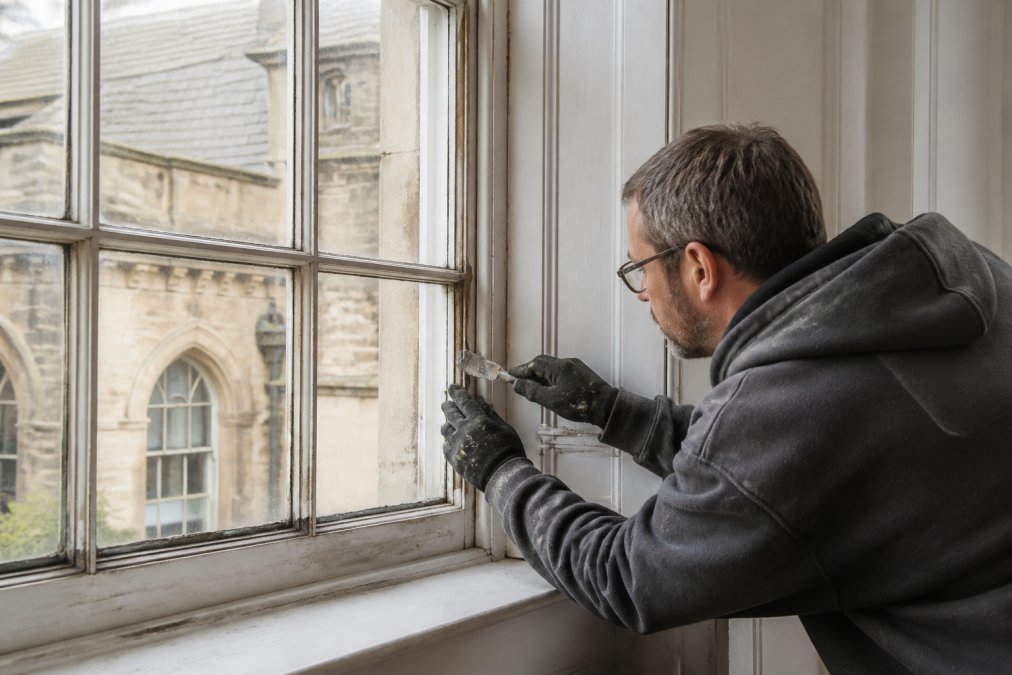
Overhauling means stripping a window back to its frame, repairing what has failed, and rebuilding it to work properly. It is the single most effective alternative to full replacement, keeping the original timber, glass and ironmongery in place.
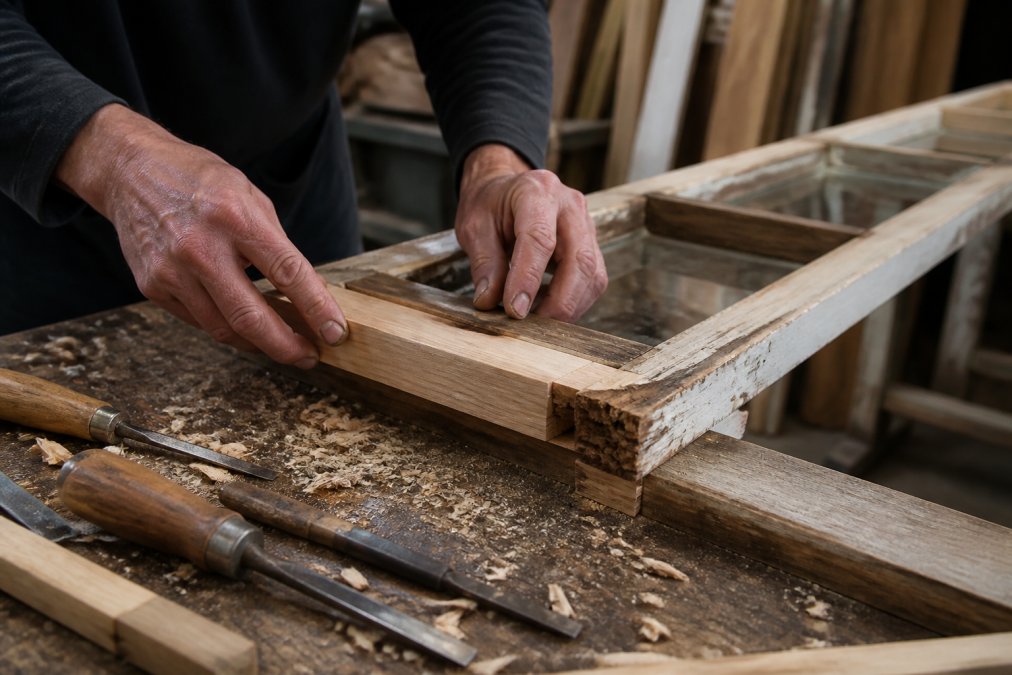
Splicing, Overhauling and Bead Adjustment
Splicing is cutting out decayed timber and letting in a matching section, glued and pinned so the repair is invisible once painted. It works on sills, bottom rails and meeting rails, which rot first.
Replacing Ironmongery on Original Frames
Original ironmongery is often seized, painted over or missing. Replacing it with period-correct fittings restores function without compromising the window's character. The Society for the Protection of Ancient Buildings guidance on windows recommends retaining original fittings wherever possible and matching replacements to the original pattern.
| Fitting | Best For | Price |
|---|---|---|
| Brighton Fastener | Traditional sliding sash locking | £12.21 |
| Fitch Fastener | Sash or hung windows, rotating action | £12.21 |
| Quadrant Sliding Arm Fastener | Sash windows needing a firm grip | £12.21 |
| Silent Cabin Hook | Restricting movement as a privacy hook | £7.77 |
Draught Proofing Historic Windows Without Damaging Original Character
Draught proofing historic windows is the highest-return, lowest-risk improvement available, and it is almost always reversible. The goal is to stop air moving through the gaps around sashes, beads and meeting rails without sealing the window shut or trapping moisture.

Secondary Glazing for Listed Buildings: A Reversible Retrofit
Secondary glazing for listed buildings is a separate glazed panel fitted inside the existing window, leaving the original frame untouched. Because it is reversible and does not alter the historic window, it is usually the easiest thermal upgrade to get through consent. While this approach preserves the aesthetic integrity of the original joinery, it remains only one component of a broader strategy for effective insulation for historic buildings that addresses the thermal performance of the entire envelope.
Secondary Glazing vs Slimline Double Glazing
Slimline double glazing replaces the glass in the existing frame with a sealed unit, improving thermal performance without changing the window's outward appearance. It is a bigger intervention than secondary glazing, and depends on the frame being deep enough and sound enough to take a sealed unit.
Brighton Fastener Polished Chrome →
| Approach | Reversibility | Consent Risk | Best For |
|---|---|---|---|
| Secondary glazing | Fully reversible | Low | Original windows, minimal alteration |
| Slimline double glazing | Partly reversible | Medium | Sound frames, deeper reveals |
| Vacuum glazing | Partly reversible | Medium | Slim profiles, high thermal targets |
Where Vacuum Glazing Fits In
Vacuum glazing uses two panes separated by a vacuum rather than a gas-filled cavity, achieving strong thermal performance in a very slim unit, attractive where frame depth rules out a conventional sealed unit.
Thermal Performance, U-Values and What You Can Realistically Achieve
U-values measure how quickly heat passes through a material, and lower is better. Original single glazing performs poorly by modern standards, and no amount of draught proofing changes that fundamental figure.
Cost, Insurance and Warranty: Weighing Repair Against Replacement
The honest answer is that repair is usually cheaper, but not always, and not by as much as owners expect once consent, surveys and specialist labour are counted.
Where the Money Actually Goes
A full replacement project on a listed building carries costs a repair project does not:
- Heritage statement and drawings, a professional statement with measured elevations typically runs into the low hundreds of pounds per application.
- Joinery survey, a condition survey of every window, priced per window, determines whether repair is viable.
- New timber windows to match, bespoke joinery to match original profiles, glazing bars and mouldings is made to order, not stock, and priced accordingly.
- Installation and making good, removal of original fabric, making good to reveals and plaster, and disposal.
- Consent risk, the fee, professional time and delay of a refused application are all sunk if the scheme is rejected.
The Long-Run Comparison
The upfront case for repair is strong; the long-run case is stronger, because the two options diverge on maintenance:
- A repaired original window needs redecoration roughly every five to seven years, plus occasional re-cording or re-beading, predictable, low-cost events.
- A replacement window carries a manufacturer's warranty on the unit, but that typically covers the sealed unit and frame against manufacturing defect, not installation error, not movement in an old opening, and not the consent problem if the installation was unauthorised.
Insurance: What Actually Changes
Building insurance on a listed property assumes the building is maintained lawfully. The risk is not that a repair raises your premium, it is that unauthorised alteration gives an insurer a reason to reduce or decline a claim, particularly one arising from the works or from water ingress afterwards.
The practical steps:
- Tell your insurer before any works begin, and confirm in writing that the policy is unaffected.
- Keep the consent decision, heritage statement and joinery survey on file as evidence the works were lawful.
- If you add secondary glazing or slimline units, check whether the policy treats them as buildings or contents.
- In a flat or shared building, check the freeholder's policy as well as your own.
Warranty: What Is and Is Not Covered
A reputable joiner will warranty workmanship on an overhaul, typically for a defined period, and new ironmongery such as a Quadrant Sliding Arm Fastener Polished Chrome at £13.32 or a Silent Cabin Hook 6" - 150mm Satin Chrome at £10.55 carries its own manufacturer guarantee.

DIY Versus Professional: Where the Line Sits
Within reach of a competent homeowner:
- Draught proofing with brush or wiper seals
- Re-puttying and re-glazing with matching glass
- Re-painting in the existing colour
- Cleaning and lubricating original ironmongery
- Fitting replacement fasteners and cabin hooks
Requires a certified heritage joiner:
- Splicing decayed timber into sills, bottom rails and meeting rails
- Re-cording and re-weighting sliding sashes
- Re-setting and adjusting beads
- Replacing sections of glazing bar
- Any work that changes the window's profile or appearance
The dividing line: if the work is reversible and cosmetic, DIY is defensible. If it removes original material or changes how the window operates, get a specialist, and get consent first if the change is visible.
Frequently Asked Questions
Can you change the windows on a listed building?
You can change listed building windows, but only with Listed Building Consent and only where you can justify the change. Consent is rarely granted for wholesale replacement of original windows because it removes historic fabric. Repair, overhaul or sensitive upgrading of the existing frames is usually the starting point. If you do replace, the new windows must match the originals in material, profile, glazing bars and finish, and you will need a heritage statement supporting the application.
Is it possible to replace sash windows in a Grade 2 listed building?
Yes, but replacement is the exception rather than the default. A Grade 2 listing covers the whole building, inside and out, so original sash windows are treated as historic fabric. If the frames are beyond repair, you can apply to replace them with like-for-like timber sash windows that match the originals. Many owners find that overhauling the existing sashes, splicing decayed sections and adding draught-proofing achieves most of what they wanted from replacement.
Can vacuum glazing be used in a listed building?
Vacuum glazing can sometimes be used in listed buildings because it is thin, often around 6 mm, which lets it sit inside existing rebates without changing the frame profile. That said, it is not automatically approved. Your planning officer will want to see that it does not harm the original character and that the frames can accommodate it. It is more expensive than secondary glazing, so weigh the thermal gain against the cost before applying.
Does the 10 year rule apply to listed buildings?
No. The 10 year rule, which limits enforcement action for unauthorised development, does not apply to listed buildings. Local planning authorities can take enforcement action against unauthorised works to a listed building at any time, however long ago the work was done. This is why getting Listed Building Consent for window repairs and alterations before you start is essential, even on small jobs.
What are the planning requirements for modifying historic windows?
Any alteration that affects the character of a listed building needs Listed Building Consent, and this includes changes to historic windows. You will usually submit a heritage statement explaining the proposed work, why it is needed and how it preserves the building's special interest. Conservation area restrictions may add further planning permission requirements. Speak to your local planning authority early, as the process varies between councils.
Share:
The Homeowner’s Guide to Oak Stair Cladding Kits: A 2026 Renovation Essential
Internal Pocket Doors: UK Homeowner Buying Guide 2026