
Table of Contents
- How Bespoke Doors Influence Property Value and Resale Appeal
- Curb Appeal and First Impressions: The Role of a New Front Door
- Craftsmanship, Materials, and Finish Quality in Bespoke Front Doors
- Energy Efficiency and Thermal Performance of Bespoke Exterior Doors
- Durability, Maintenance, and Long-Term Performance
- Understanding Bespoke Door Cost and Return on Investment
- Choosing Bespoke Doors for Different Property Types
- Frequently Asked Questions
Last Updated: October 21, 2026
How Bespoke Doors Influence Property Value and Resale Appeal
Why bespoke doors increase property value is a question more homeowners are asking as they plan renovations.
A new front door is often the first thing potential buyers notice, shaping their impression before they step inside.
At Arborfield Joinery, we understand how the right door transforms both the appearance and perceived value of a home, whether you're upgrading a Victorian terrace, a modern extension, or a period cottage.
Door quality affects property value through several channels: better craftsmanship means doors last longer and need less maintenance; custom sizing eliminates the gaps and drafts that plague standard doors; and aesthetic fit makes the whole property feel more cohesive.
Curb Appeal and First Impressions: The Role of a New Front Door
Your front door is the focal point of your home's exterior, the first thing visitors see and the detail that shapes buyer perception in the crucial first 30 seconds of a viewing.
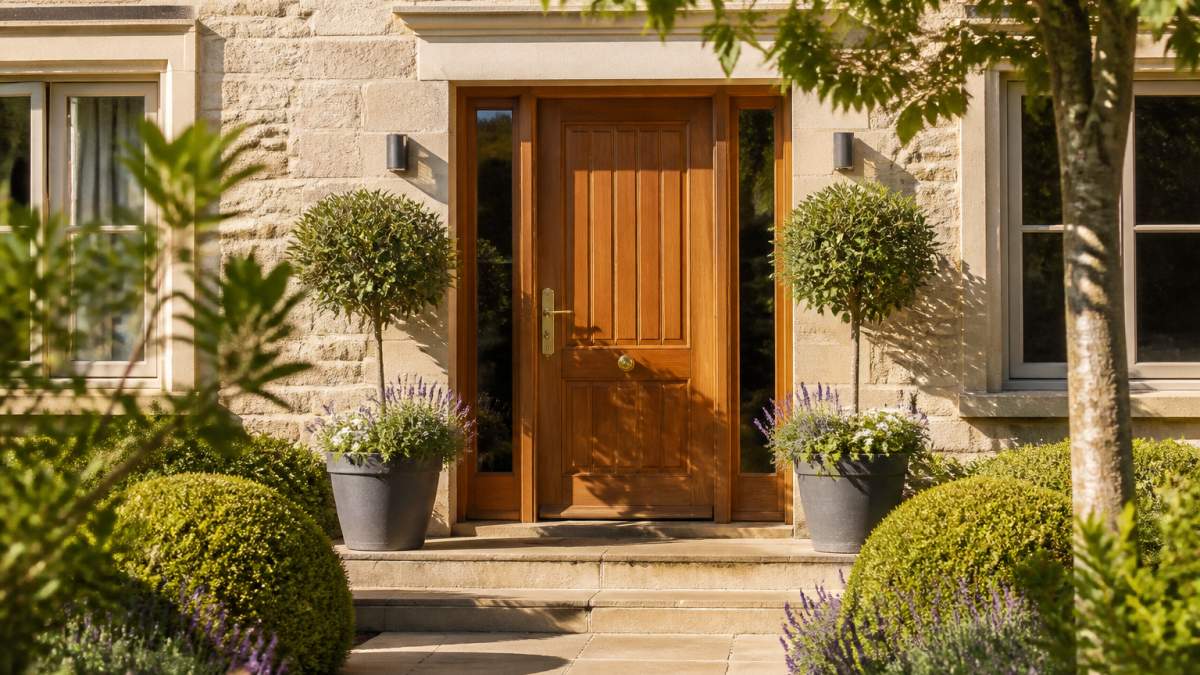
Bespoke front doors deliver impact mass-produced alternatives cannot: a custom door fits perfectly, hangs cleanly, and reveals quality craftsmanship. Standard doors often sit slightly crooked or leave visible gaps, details buyers read as poor maintenance.
The aesthetic fit matters enormously. A bespoke front door can be designed to complement your home's architectural period: period-appropriate proportions for a Victorian terrace, clean lines and contemporary hardware for a modern home, traditional timber finishes for a period cottage.
Curb appeal translates directly into buyer behaviour: properties with strong first impressions attract more interest, generate more viewings, and command higher offers. Unlike structural work, a bespoke door is quick to install and immediately noticeable.
Craftsmanship, Materials, and Finish Quality in Bespoke Front Doors
The difference between a bespoke door and a standard one lies in how it's made and what goes into it.
Bespoke doors are built to order using solid timber cores, premium glazing, and durable hardware, unlike mass-produced doors that prioritise speed and cost over longevity.
Materials matter because they age visibly. A cheap door will show wear within five years. Paint peels, timber swells and shrinks with moisture, and hinges loosen.
Finish quality matters equally. Hand-finished doors show attention to detail machine-finished alternatives lack: sealed edges, tight joints, carefully set glazing.
The Shoreditch White Primed Urban Internal Door exemplifies this approach.

Energy Efficiency and Thermal Performance of Bespoke Exterior Doors
Energy efficiency increasingly influences property valuation. Buyers expect modern homes to minimise heat loss and reduce energy bills.
Bespoke exterior doors are designed for thermal performance from the ground up. Proper frame sealing eliminates draught paths that standard doors often leave open. Glazing can be upgraded to low-emissivity glass that reduces heat transfer.
This matters financially. A home with poor thermal performance costs more to heat and cool. Buyers calculate this into their offer.
Draught reduction is particularly noticeable. A bespoke door fitted to exact specifications sits flush in its frame, eliminating the cold air leakage that makes rooms feel uncomfortable near doors.
Durability, Maintenance, and Long-Term Performance
A door that lasts is a door that protects your investment.
Standard doors often fail within 10-15 years as hinges wear, paint deteriorates, and timber swells or shrinks.
Low maintenance is another advantage: a well-made bespoke door needs only occasional repainting or resealing, while cheap doors demand frequent attention and often fail despite effort.
Weather resistance is built in: proper timber selection, careful sealing, and quality hardware resist rain, wind, and temperature swings, so the door keeps its appearance and function year after year.
This reliability translates into perceived value: a buyer viewing doors that visibly perform well, no sticking, no drafts, no deterioration, feels confident in the property's overall condition.
Understanding Bespoke Door Cost and Return on Investment
Cost is the primary concern for most homeowners considering a bespoke upgrade, so understanding the investment, and what the evidence can and cannot tell you, is essential.
Bespoke doors cost more than standard options. A custom steel door from Arborfield Joinery, for example, starts at £1,045.00; timber alternatives vary by specification, sizing, and finish.
What the money actually buys
A bespoke door quote typically bundles several distinct costs, and separating them helps you compare like with like:
- Design and survey: measuring the opening, agreeing proportions, panel layout and glazing, and producing a specification. Non-standard openings and period properties usually need more time here.
- Materials: solid timber cores, engineered timber, steel, glazing units and ironmongery. Upgraded glazing and premium hardware are the most common cost drivers.
- Manufacture: joinery labour, finishing and any specialist treatments. Hand-finished doors carry more labour than machine-finished equivalents.
- Installation: removing the old door, making good the frame and surrounding masonry, fitting, and adjusting. Fitting quality has a direct bearing on draughts, weather performance and how long the door performs.
- Ongoing maintenance: periodic repainting or resealing, and occasional hardware adjustment.
The door itself is only part of the outlay; frame preparation, making good and professional fitting can add a meaningful proportion. Ask for a fully itemised quote.
A realistic cost-versus-benefit framework
Rather than relying on a single headline percentage, work through the following questions:
- What is the door replacing? If the existing door is failing, draughty or visibly deteriorating, a replacement removes a buyer objection as well as adding appeal. If the existing door is sound and period-appropriate, the uplift is mostly aesthetic.
- How does the property compare with its neighbours? In streets where quality doors are the norm, a poor door stands out negatively. In a street of modest properties, an elaborate bespoke door may not be rewarded at resale.
- What else is being upgraded? A door contributes most when it is part of a coherent programme of works. A single upgrade in an otherwise tired property tends to be absorbed into the general condition rather than priced separately.
- How long will you stay? The longer the ownership period, the more the day-to-day benefits, thermal comfort, security, low maintenance, offset the upfront cost, independently of resale.
- What is the local market doing? In a strong market, quality upgrades are more readily reflected in offers. In a softer market, buyers are more price-sensitive and the door is more likely to influence speed of sale than headline price.
Setting a budget scenario
A practical approach is to set a total budget covering the door, fitting and making good, then hold back a contingency for unexpected frame or masonry work, which is common in older properties. Compare two or three itemised quotes on the same specification rather than comparing headline prices for different products. Where budget is tight, prioritise the front door, it carries the greatest first-impression weight, and treat internal doors as a later phase.
Be sceptical of any claim that a door will reliably add a specific percentage to your sale price. Valuation uplift depends on condition, local comparables, overall renovation quality and buyer perception. Treat any figure as an illustration, not a guarantee, and ask an estate agent for a local view before committing.
| Factor | Likely influence on resale | When it matters |
|---|---|---|
| Quality front door | Moderate, removes an objection and lifts first impressions | Viewings and negotiation |
| Thermal efficiency | Moderate, reflected in running costs and comfort | Long-term buyer appeal |
| Visible craftsmanship | Moderate, signals overall care | First impression |
| Durability and finish | Moderate, reduces buyer concerns | Survey and negotiation |
| Aesthetic fit to property | High when well matched to style | Emotional buyer response |
The return that isn't in the price
The real return often comes through faster sales and fewer price negotiations: properties with strong curb appeal and visible quality upgrades attract more serious buyers and firmer offers. Treat this as a contribution to saleability, not a guaranteed sum added to your asking price.
Choosing Bespoke Doors for Different Property Types
Not every bespoke door suits every home. Matching the door to your property type maximises both aesthetic impact and resale value, but the choice is also constrained by regulation, installation practicalities and the condition of the existing opening. Work through style and compliance together.
Period properties (Victorian, Georgian, Edwardian)
These homes benefit enormously from doors that reflect their original era. A traditional timber door with period-appropriate proportions, panels and hardware looks authentic and increases perceived historical integrity, and buyers of period properties actively seek homes that preserve character. Match the door's proportions to the opening rather than forcing a standard size.
Modern homes (built post-1990)
Contemporary properties call for clean lines, minimal detailing and materials such as steel or engineered timber. The OTIF Steel Hinged Door exemplifies this: slimline frames, modern finish options and customisable glazing create a contemporary statement that adds value in the modern market.

Period cottages
These properties suit traditional timber doors in natural finishes or subtle colours. Heavy timber, traditional hardware and simple detailing preserve cottage charm while signalling quality and care. Watch for low head heights and uneven openings, which usually require bespoke sizing.
Extensions and conversions
Non-standard openings are common in extensions. A bespoke door made to exact dimensions eliminates the gaps and compromises standard doors create, a custom fit that signals the extension was properly planned and executed.
Listed buildings and conservation areas
These properties face strict planning controls. In England, listed building consent is normally required for works that affect the character of a listed building, and conservation areas have their own controls on demolition and alteration. Bespoke doors allow you to meet conservation requirements while maintaining quality and aesthetics, but agree the design with the local planning authority before ordering. This is where custom manufacturing becomes essential rather than optional.
Regulation and installation considerations
Style is only half the decision. Before you order, check the following:
- Fire doors: Doors between a house and an integral garage, and doors onto certain communal areas, are typically required to be fire doors with appropriate certification and self-closing hardware. Confirm the requirement for your specific situation with your local building control body.
- Energy standards: Replacement doors and glazing are subject to the thermal requirements in the building regulations. Your supplier should be able to confirm the performance of the door and glazing unit you are specifying.
- Escape and access: External doors need to open safely and provide adequate means of escape. Avoid configurations that obstruct escape routes.
- Measuring and survey: Ask for a site survey rather than relying on your own measurements. Out-of-square openings, thresholds and masonry condition all affect the specification.
- Lead times: Bespoke manufacture typically takes longer than buying off the shelf. Build lead time and fitting into your renovation programme, and avoid ordering before planning or consent issues are resolved.
- Professional fitting: Use an experienced fitter. Poor fitting undermines thermal performance, weather resistance and security, and can invalidate guarantees.
For any property in a conservation area or with a listing, keep a written record of the design agreed with the planning authority and pass it to your buyer. It reassures them that the work was properly authorised.
The key principle
Choose a bespoke door that complements your home's architectural language and satisfies the regulations that apply to it. A well-matched, compliant door feels inevitable, and that coherence increases perceived value and buyer appeal.
Frequently Asked Questions
Do bespoke doors actually increase property value?
Yes, bespoke doors add measurable value through improved curb appeal, enhanced durability, and better energy efficiency. Buyers perceive custom doors as a sign of quality craftsmanship and attention to detail. The increase depends on property type, location, and how well the doors match the property's architectural style. A new front door creates an immediate positive first impression that influences buyer perception before viewing the interior.
How much does a bespoke door cost compared to standard options?
Bespoke doors typically cost more than mass-produced alternatives because they're made to your exact specifications. The OTIF Steel Hinged Door, for example, starts at £1,045, while the Shoreditch White Primed door begins at £219.50. Costs vary based on size, materials, glazing, finish, and customisation. Lead times are usually 6-14 weeks, depending on complexity.
Are energy-efficient exterior doors worth the investment for property value?
Energy-efficient exterior doors appeal to modern buyers concerned about running costs and environmental impact. They reduce draught, improve thermal insulation, and lower heating bills, benefits that resonate during property viewings. While the upfront cost is higher, the combination of lower utility bills and enhanced buyer appeal makes them a sound investment, especially in period properties or homes being renovated to modern standards.
What should I consider when choosing a bespoke front door for my property?
Consider your property's architectural style, period, and current condition. Victorian terraces suit traditional timber doors, while modern homes benefit from steel or contemporary designs. Evaluate functionality (security, insulation, light), materials (oak, steel, softwood), and how the door complements your exterior. Measure carefully, bespoke doors are made to fit your exact opening, eliminating gaps and draught issues. Professional advice ensures the door enhances rather than clashes with your property's character.
Share:
Hardwood exterior door sill pricing and options
Wooden Spiral Staircase Kits for Loft and Home Projects