
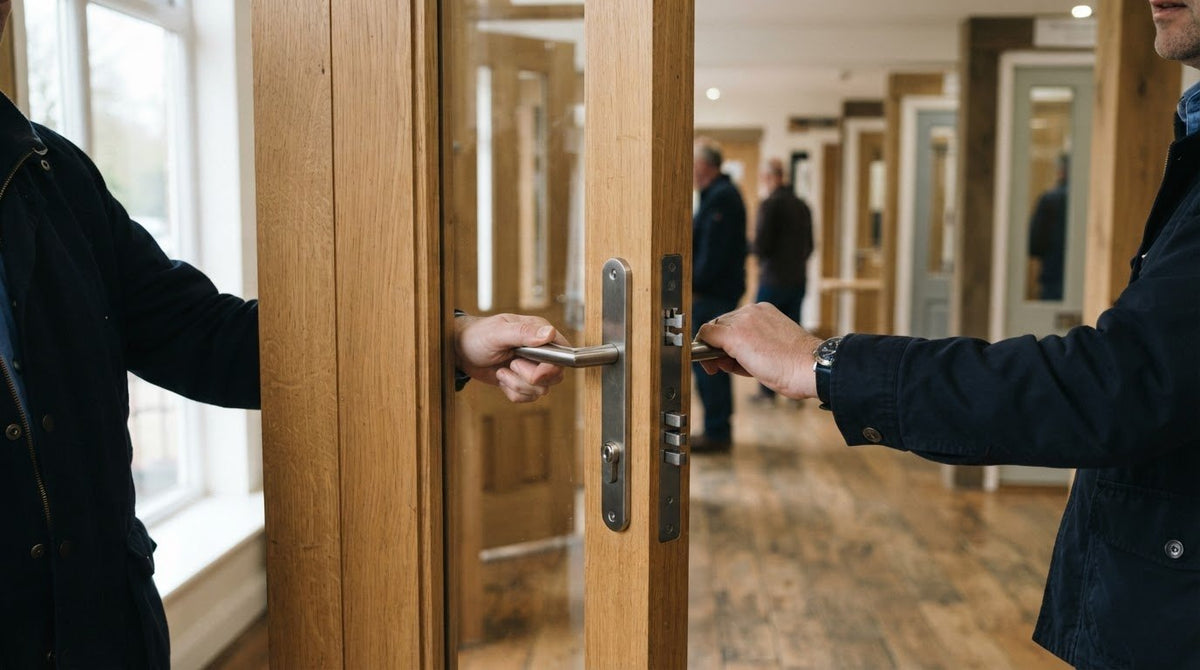
A timber front door is only as secure as its weakest point. For timber front door security in the UK, look for a door that meets PAS 24 or Secured by Design standards, supported by a multi-point locking system, a reinforced frame and impact-resistant glass where fitted. Poor-quality or poorly maintained locks and hinges can leave even a solid door vulnerable.
It’s understandable to focus on the door itself, but the lock, frame and hinges all affect how well an entrance resists an attempted break-in. Timber can make a strong, attractive front door, provided you assess its security features and condition together.
This guide explains what recognised standards mean, how high-security cylinders can strengthen a door’s locking point and which weaknesses to look for in timber doors. You’ll also learn how to weigh security against appearance when choosing a front door for your home.
Key Takeaways
- Assess the whole entrance, not just the door leaf: locks, hinges and the frame all contribute to security.
- Learn what to look for in a five-lever mortice lock and a multipoint locking system when comparing options.
- Understand how anti-snap cylinders and recognised standards can help you evaluate a door’s security credentials.
- Spot how wear, moisture and poor maintenance can weaken timber doors, and which details deserve regular attention.
What is the most secure front door one can buy for a home?
Look for a robust timber door with effective locking, a sound frame and well-maintained hinges. Five-lever mortice locks and multipoint systems are two options to consider.
Mortice and multipoint locking
A five-lever mortice lock sits within the door and operates with a key. It appears on the list of locks approved by some home insurance policies, so check your policy’s requirements. A multipoint locking system engages the door at several positions when locked. The system described here has three locking points, extending the securing action beyond one point at the edge.
With a timber door, compare how the lock engages and whether it operates smoothly. A night latch can provide another locking position, but use it with another suitable lock, not on its own. The best arrangement depends on how the lock, door and frame work together.
Locks and reinforced frames
Multipoint locks are effective only when their locking points meet a frame that can resist force. A reinforced frame supports those points and helps prevent the lock from being the sole strong component. Inspect the frame around each point, along with the door edge and the strike plates that receive the bolts.
Security also depends on condition. Loose fixings, worn hinges or a door that no longer sits square can undermine the lock. Test the door while it is open, then closed, to see whether the mechanism engages cleanly without forcing the handle or key.
Door and frame security features
Door thickness alone doesn’t establish security. Construction, lock compatibility and frame strength all matter. Check that the hinges are secure and not excessively worn, and that the cylinder and other lock components fit the chosen system. A solid timber door can also be reinforced with a multipoint lock and reinforced frame. If the door is glazed, consider impact-resistant glass.
Fire performance is separate from security. For a flat entrance door, follow the fire-performance specification set for that building. A security feature alone does not establish fire performance. Purchase and fitting costs depend on the door, lock set, frame alterations and installation work, so assess those items together.
To reduce the risk of warping, swelling and gaps, inspect the door’s finish and condition regularly. Follow the manufacturer’s guidance for finishing an external timber door, and maintain paint or varnish where applicable. This helps limit moisture ingress, which can affect the door’s fit and security—a standard maintenance step that timber specialists such as Simply Log Cabins also recommend for keeping exterior wooden doors and structures secure.
Anti-snap and other high-security cylinders
A euro cylinder is the key-operated component of a compatible lock. For timber door security, compare its resistance features, rating and fit with the door handle.
Anti-snap and high-security cylinders
Snapping targets the exposed part of a euro cylinder, so an anti-snap design aims to resist this type of attack. Three-star-rated anti-snap euro cylinders are among the strongest types described for home security. Check the cylinder’s rating and ensure its length suits the door, without leaving it projecting beyond the handle. Even a high-security cylinder depends on correct fitting and a sound locking system. It cannot secure a weak door or frame on its own.
Handles and cylinder choices
The handle and cylinder work together: the handle surrounds the keyway, while the cylinder operates the lock. Check the cylinder’s position against the handle or protective furniture, and look for excessive projection that could leave it more exposed. On a wooden door, check that the key turns smoothly and the handle does not wobble. If either sticks or feels loose, the locking points may not engage reliably. Choose a replacement that matches the lock type and door thickness.
Kitemark and TS007 ratings
Kitemark and TS007 are markings homeowners may encounter when comparing euro cylinders. Read the product’s actual marking and documentation, rather than relying on a broad “high security” description. TS007 3-star is a specific rating: Ultion cylinders are tested to that standard and use 11 pins. These details describe the cylinder, not the security of every part of the entrance. Check the handle, lock and frame together, and make sure the rating applies to the exact cylinder being considered.
If you’re weighing a cylinder upgrade alongside a door choice, browse timber door options as part of your comparison.
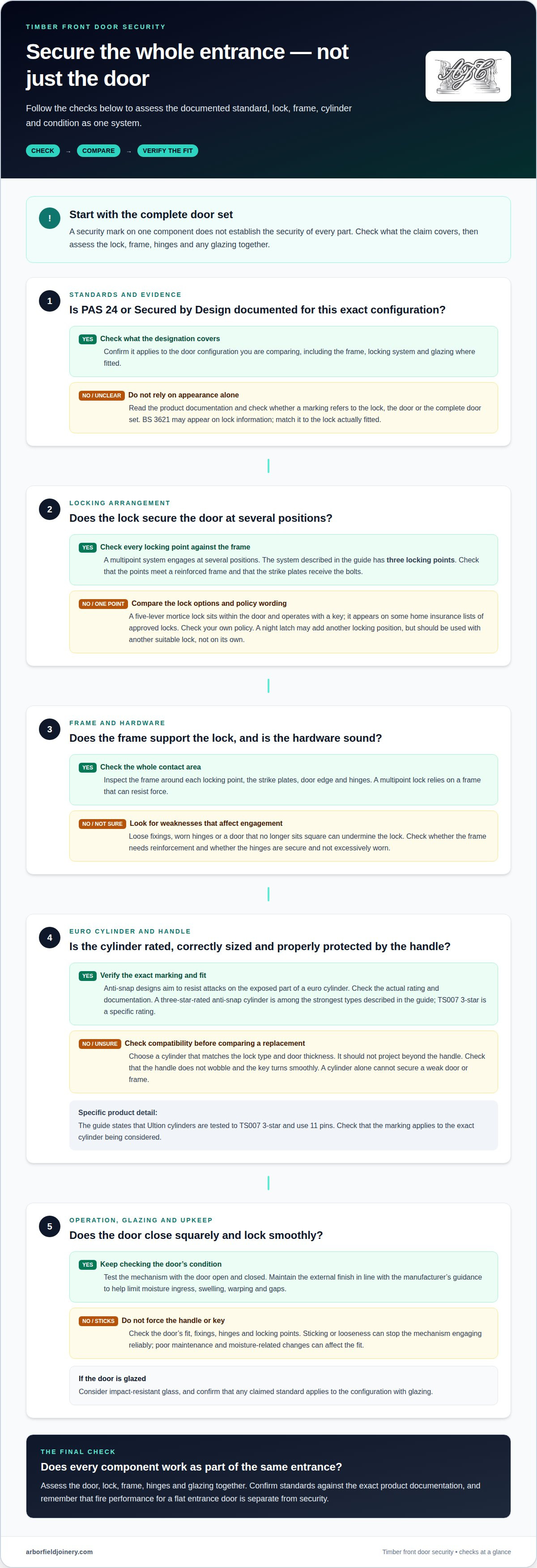
BS 3621, PAS 24 and Secured by Design
Security labels help you compare a door or lock, but they refer to different parts of the entrance. Check the exact marking and product documentation before choosing a residential style.
Door security standards
PAS 24 and Secured by Design are recognised benchmarks associated with secure front doors. Compare these claims against the exact door and configuration, including glazing where present. BS 3621 is another identifier homeowners may encounter when checking lock information. Look for it on the lock documentation, then match the stated product with the lock fitted to the door.
Assess panelled, glazed and contemporary designs on their documented performance, not appearance alone. Check what the stated standard applies to: the lock, the door or the complete door set.
Secured by Design upgrades
Understand a Secured by Design upgrade by checking which product or assembly it covers. Check the stated designation and whether it applies to the complete door configuration. Changing the lock or frame can alter that configuration, so compare the final specification with the original documentation.
For example, consider a timber door with glazing, its frame and its locking system. Confirm that the claimed designation applies to that combination, rather than assuming a mark on one component establishes the security of every part.
Insurance requirements for locks and standards
UK home insurance requirements vary by policy, so no single lock standard applies to every household. A five-lever mortice lock appears on some policies’ lists of approved locks, but check your own policy wording for specific conditions.
Note the required lock type and any instructions about using it when the home is empty. Compare those details with the lock fitted to your timber door. Keep the product information with your household records, especially if you have upgraded a lock or door.
Security benefits and weaknesses of timber doors
A timber front door can be robust, but its security depends on its condition and supporting components. Hinges, locks, the frame and moisture protection all matter. For timber front door security in the UK, assess how these parts work together rather than judging the door by its material alone.
Timber door security compared with other materials
Timber, uPVC and composite front doors can’t be ranked by material alone. Compare the construction, locking system, frame and condition of each door. A solid external door should resist breakage, while secure locks and sound hinges help keep it in place.
When comparing a timber door with a composite alternative, look at each door’s full specification and condition. Material labels and appearance don’t show how well a particular entrance resists force. Timber front door security in the UK depends on the complete door assembly, its fitted components and how well they are maintained.
Break-in methods and prevention
Force against a door can exploit weak, worn or ineffective hinges and potentially allow it to be kicked off. Moisture can also make timber swell or warp, compromising the seal and creating gaps. These are practical warning signs, not reasons to assume every timber door is vulnerable.
Inspect the hinge fixings and door fit regularly. Replace hinges that are beyond repair, and maintain the external finish to help limit moisture ingress. A deadbolt positioned near the top of the door, away from the letterbox and windows, can add strength against attempted entry.
Keep valuables out of view from the letterbox and consider an internal draught excluder. Check that the door closes squarely and the lock engages without force. These checks can reveal maintenance problems before they affect the entrance. Timber front door security improves when you treat the door, frame, hinges and locking as one system.
Explore timber door options as you consider the style and construction that suit your home.
Arborfield Joinery: Oak Doors
Arborfield Joinery sells Oak Doors for homeowners considering a timber entrance that suits their home’s style. The right choice still depends on the complete door assembly: assess its lock, frame, hinges and condition, and check any security claims against the relevant documentation.
Oak is one option alongside Walnut Doors, White Primed Doors and Urban Doors. Consider how each finish and design will suit your property, then weigh appearance against the practical security checks above. Material alone doesn’t establish how secure a door is.
Explore the range at arborfieldjoinery.com and contact Arborfield Joinery to discuss your door choice.
Make your next door decision with confidence
Turn your timber front door security choices in the UK into a practical shortlist. Note your preferred style, the condition of your existing entrance, any requirements in your insurance policy and the security documentation you want to see. This gives you a clearer basis for comparing options than appearance alone.
Before deciding, consider how the door will suit your home over time. A finish that complements the property and a door that can be maintained as intended both matter in everyday use. Keep your priorities together to guide your conversation about the right design.
Arborfield Joinery can help you explore its door range as you consider your next step. Contact Arborfield Joinery today, and take the next step towards a front door that feels right for your home.
Frequently Asked Questions
Are wooden doors secure?
Yes, a wooden door can provide a secure entrance when its construction, lock and overall condition work together. Material alone can’t establish how resistant a particular door is. A solid timber door with a lock that engages correctly, for example, is different from one with a poor fit or damaged components. Assess the individual door and its supporting parts rather than judging it by appearance.
How do I identify which type of lock is currently installed on my timber door?
Look for a brand or model number on the lock, note the keyhole shape, then inspect the mechanism on the door’s edge. These clues can help identify lock types without dismantling the door. Take a clear photo of the lock face and edge mechanism, keeping any identifying marks legible. If there is no visible label, record the lock’s shape and operation so you can compare them with its product information.
What security standards should a timber front door meet in the UK, such as PAS 24 and Secured by Design?
PAS 24 and Secured by Design are recognised security benchmarks associated with secure front doors. Look for documentation identifying the exact door or configuration covered by the claim, rather than relying only on a general description. If glazing or other components are part of the door set, check which parts the documentation covers. The stated standard helps you compare products, but doesn’t replace checking the lock and door condition.
Which locks are best for a timber front door in the UK, including BS 3621 mortice locks and multipoint locks?
A five-lever mortice lock and a multipoint locking system are options to consider. The described multipoint system secures the door at three points, while a five-lever mortice lock is on the list of approved locks for home insurance policies. BS 3621 is a lock identifier to look for in product information. Compare the lock with your policy wording and the door’s existing preparation.
How can I upgrade the security of an existing timber front door?
Start by identifying the existing lock and checking how the door closes. Possible additions include a strike plate, peephole, door chain or night latch. Use a night latch with another suitable lock, not on its own. An internal letterbox draught excluder can limit visibility through the letterbox. For an external timber door, follow the manufacturer’s finishing guidance to help limit moisture ingress.
How much does a secure timber front door cost to buy and install in the UK?
The total also depends on the lock set, frame alterations and installation work.
Share:
7 Steps to Repairing Cracks in Solid Wood Doors
How Do You Choose Stable Timber for Doors?