
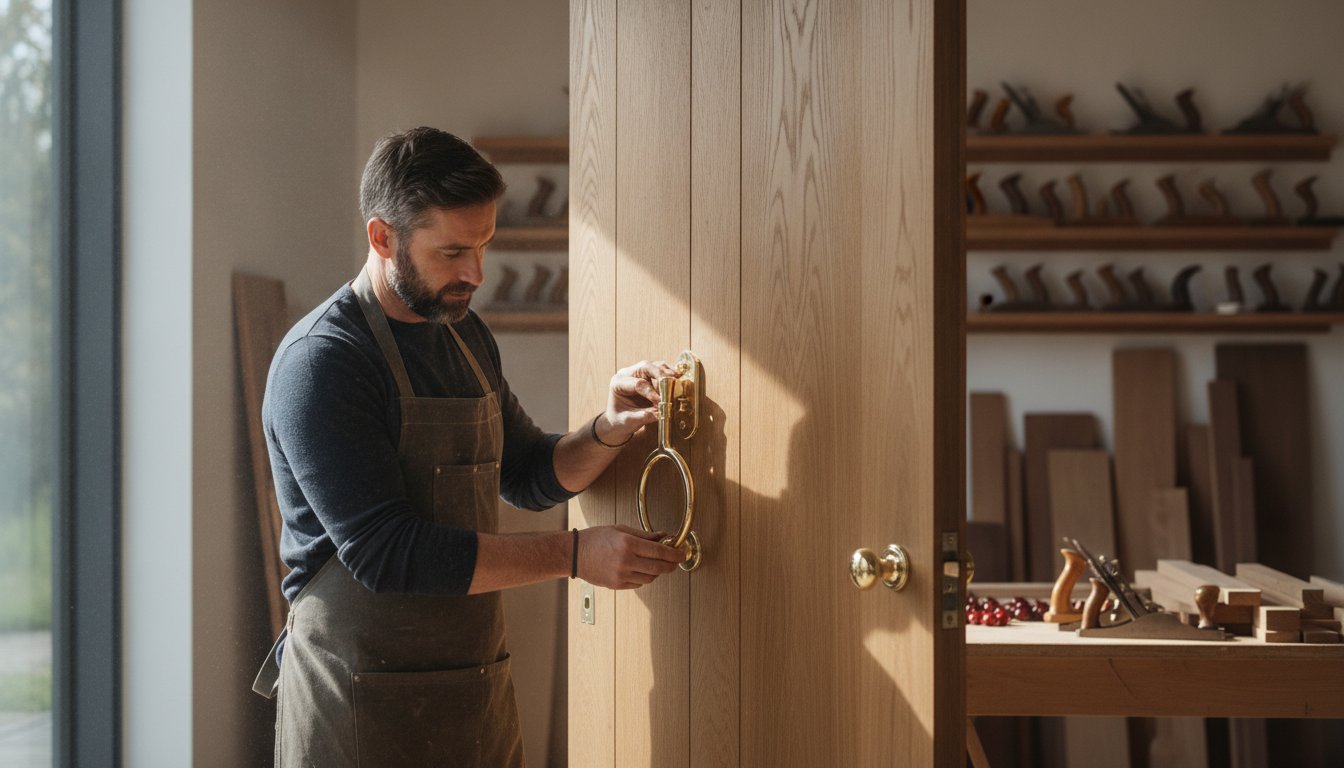
A wooden door is far more than a simple barrier between rooms; it's a vital piece of furniture that defines the very soul of your home's architecture. Whilst many homeowners focus on paint colours or soft furnishings, the choice of timber at eye level often dictates the entire atmosphere of a living space. You likely understand that a premium entrance should feel substantial and welcoming, yet the reality of modern manufacturing often leaves people feeling overwhelmed by choice and underwhelmed by quality.
It's common to worry about external doors warping in the British weather or losing precious heat through poor insulation, especially when technical terms like solid core and solid wood are used interchangeably. This masterclass will help you discover how selecting the right wooden door transforms a home's character, durability, and value through expert joinery insights. We'll examine which timbers suit your specific interior style and explain why the right construction methods ensure your doors remain a beautiful, functional part of your home for decades to come.
Key Takeaways
- Distinguish between solid timber, solid core, and veneers to ensure your chosen door provides the structural integrity and longevity your home deserves.
- Learn why selecting the right species for your wooden door, such as durable oak or sophisticated walnut, is essential for matching your home's aesthetic.
- Discover how bespoke joinery can resolve common household issues like draughts and warping, particularly within the unique architecture of heritage properties.
- Master the essentials of timber maintenance to protect your investment against the British climate through proper finishing and seasonal care.
- Understand how 70 years of craftsmanship expertise helps you move away from disposable materials toward sustainable, long-lasting timber solutions.
The Anatomy of a Premium Wooden Door: More Than Just a Slab
To the untrained eye, every wooden door looks similar on a showroom floor. However, the difference between a door that lasts seventy years and one that warps within two seasons lies entirely beneath the surface. A premium door is not a single piece of timber; it is a precise assembly of components designed to work in harmony with the natural characteristics of wood. Quality is found in the "skeleton" of the door, specifically the stiles, which are the vertical side sections, and the rails, the horizontal pieces at the top, middle, and bottom. These components must be perfectly aligned to hold the panels in place whilst allowing the timber to breathe.
Since 1953, we've maintained that the joinery element is what separates a lifetime investment from a temporary fixture. A high-quality door allows for the natural movement of timber without compromising the structural integrity of the unit. This is why the door frame is equally important. A frame that is poorly constructed or made from inferior materials will fail to support the weight of a substantial timber door, leading to dropped hinges and draughts. When you examine a door, look at the depth of the panels and the crispness of the mouldings. These details indicate a level of precision that mass-produced alternatives simply cannot match.
Solid Wood vs. Engineered Timber Cores
Whilst "solid wood" is often perceived as the gold standard, the reality of the British climate requires a more sophisticated approach. Most UK homes now use central heating, which creates a very dry internal environment that can cause traditional solid planks to shrink, twist, or split. Engineered timber is a solution to natural wood movement, created by bonding layers of wood in opposing grain directions to cancel out internal stresses. We use these stable cores and finish them with thick natural timber veneers of oak or walnut. This provides the heavy, premium feel of a traditional wooden door with the structural reliability needed for modern living.
The Importance of Precision Joinery
The strength of any door depends on how its components are bonded together. We rely on traditional joinery techniques such as mortise and tenon joints to provide a mechanical lock that glue alone cannot replicate. This is particularly vital for external doors that must withstand wind and rain. To ensure this longevity, timber must be kiln-dried to a specific moisture content, typically between 8% and 12% for the UK market. This prevents the wood from "shocking" when it's first installed in a heated hallway. For a deeper look at how these elements come together, you can read The Complete Guide to Internal Doors and Door Frames.
Selecting the Right Species: Oak, Walnut, and Beyond
Choosing the right species for your wooden door is a decision that balances aesthetic preference with functional requirements. Whilst colour is often the first consideration, the grain pattern and density of the wood determine how it ages and how much light it reflects into a room. We curate our range to ensure that every timber type meets our standards for stability and visual appeal. For those working on older buildings, following heritage property restoration guidelines ensures that the species chosen respects the building's historical narrative whilst providing modern performance.
Oak: The Timeless All-Rounder
Oak remains the quintessential choice for British homes, valued for its prominent grain and incredible durability. It's particularly suited for period properties and barn conversions where the natural, rustic texture complements exposed beams and stonework. Because oak is a dense hardwood, it handles the knocks of a busy household with ease. If you are looking for a cohesive look throughout your home, you might explore The Ultimate Guide to Internal Oak Doors for more specific styling advice.
Walnut and Urban Styles
For a more sophisticated, contemporary feel, walnut offers a richer, darker palette that serves as a natural focal point. Its smoother grain and deep chocolate tones are perfect for minimalist interiors where the door itself acts as a piece of art. We've also seen a significant rise in our Urban Doors range, which often pairs industrial black finishes with slim profiles and glass. These designs offer a sharp contrast to traditional timber whilst maintaining the solid feel of a quality wooden door. When comparing hardwoods, walnut is slightly softer than oak but offers a unique depth of colour that requires very little staining to look premium.
Of course, not every project requires the raw texture of natural grain. White primed doors provide a versatile canvas for those who want the weight of a timber door with a clean, painted finish. Similarly, our laminate doors offer exceptional dent-resistance and consistency for high-traffic areas. Regardless of the material, sustainability is at the heart of what we do. By 2026, ensuring your timber is FSC-certified is the only way to guarantee your home improvement is ethical and environmentally responsible. If you're unsure which timber best suits your space, our team at Arborfield Joinery can provide tailored advice based on your home’s lighting and layout.
Just as selecting high-quality, natural materials like oak and walnut improves your living environment, you can also discover Aarding to see how their grounding products can further enhance the natural balance and well-being within your home.
Case Study: Transforming a Heritage Property with Bespoke Joinery
In a recent project involving a 1920s property, the homeowner struggled with mismatched internal doors that had bowed significantly over several decades. They were draughty. They rattled. They looked tired. The challenge was to replace these failing units with something that respected the building's history whilst providing the thermal and acoustic performance expected in a modern home. Understanding the natural properties of wood is vital when diagnosing why heritage doors fail; often, it's a combination of poor original seasoning and decades of fluctuating humidity.
For the kitchen and utility areas, the selection process led us to the ledge and brace design. This style offers a rugged, traditional aesthetic that fits perfectly with the era of the house. However, the installation was far from straightforward. Older British houses are rarely "square," and these wonky frames required careful scribing to ensure a flush fit. Replacing a single wooden door can improve the feel of a room, but a whole-house approach is transformative. The final result was a unified aesthetic that provided immediate improvements in thermal efficiency and acoustic insulation, effectively silencing the echoes in the tiled hallway.
Problem Awareness: When Doors Fail
Identifying the signs of "end-of-life" for old timber is essential for maintaining your home's value. If you notice daylight around the edges of a closed door or find that the latch no longer aligns, the timber has likely reached a point where adjustment is no longer enough. Draughty external doors are a significant drain on energy bills, often letting out as much heat as an open window. For those looking to replicate a period look, A Guide to Traditional Ledge and Brace Doors offers a deep dive into heritage styles that don't compromise on modern warmth.
The Impact of Coordinated Joinery
There is immense emotional value in a "solid" feeling door. The weight and sound of a premium wooden door closing provides a sense of security and quality that hollow alternatives cannot match. We often find that matching doors to existing stairs creates a powerful architectural flow throughout the property. In dark hallways, using glazed wooden doors can transfer light between rooms without sacrificing privacy, making the entire home feel more spacious and inviting. This coordination is the hallmark of a well-curated living space.

Performance and Maintenance: Protecting Your Investment
A premium wooden door is a living product that continues to respond to its environment long after installation. In the United Kingdom, our timber must withstand a unique set of challenges, from the persistent damp of winter to the dry, artificial heat of a centrally governed home. This constant fluctuation causes wood to expand and contract. Whilst modern engineered cores significantly reduce this movement, regular maintenance remains the key to ensuring your investment lasts for seventy years rather than seven. Neglecting the protective seal on your door allows moisture to penetrate the fibres, which eventually leads to the very warping and sticking that homeowners dread.
Security is another vital aspect of performance, particularly for external entrances. To meet modern standards, we recommend pairing your wooden door with multi-point locking systems and 3-star security cylinders. These features provide a level of protection that matches the physical strength of the timber itself. When it comes to daily care, simplicity is best. You should avoid harsh household chemicals or bleach-based cleaners that strip away natural oils. Instead, a soft, damp cloth and a pH-neutral soap are all that's required to keep the grain looking vibrant and healthy.
Finishing Touches: Pre-finished vs. Unfinished
Choosing between a factory-finished or unfinished door depends largely on your timeline and required level of customisation. Factory pre-finishing is often the superior choice for durability, as the seal is applied in a controlled, dust-free environment, ensuring every nook of the joinery is protected. However, unfinished doors allow for bespoke staining to match existing furniture or heritage woodwork. Natural oils penetrate the wood grain to allow the timber to breathe, whereas polyurethane creates a hard, plastic-like film on the surface. For the best results, always apply your finish in the direction of the grain to avoid unsightly streaks.
Long-term Durability in the UK
The weather seal on an external oak door is its first line of defence against the elements. You should inspect these seals annually for any signs of cracking or perishing. A common mistake occurs when a door is trimmed to fit a frame; if the newly exposed edges aren't immediately resealed with a matching treatment, moisture will quickly find its way into the core. This attention to detail is what ensures longevity across all timber products. If you are looking to upgrade other areas of your home, you may find our Homeowner’s Guide to Timber Windows equally useful for maintaining a consistent, high-performance exterior.
Ready to upgrade your home with joinery that stands the test of time? Browse our full range of premium oak and walnut doors to find the perfect match for your property.
The Arborfield Legacy: Why Quality Joinery Matters in 2026
Since our founding in 1953, Arborfield Joinery has witnessed a significant evolution in the UK housing market. Whilst the previous decade saw a surge in "disposable" synthetic materials, 2026 has marked a definitive return to long-lasting timber. Homeowners are increasingly prioritising sustainability and longevity over the temporary convenience of plastic alternatives. A high-quality wooden door is no longer seen as a mere utility; it is an investment in the architectural integrity of a property. Our seventy years of expertise allow us to act as a steady hand for our customers, ensuring they avoid the pitfalls of mass-produced, low-quality imports that fail within a few seasons.
We don't believe in a generic "add to cart" approach for something as vital as your home's joinery. Choosing the right wooden door requires a nuanced understanding of grain, core construction, and intended use. This is why we curate our collection from only the most reputable brands, including Deanta, to ensure that every product we supply meets our stringent standards for craftsmanship. Expert advice beats a generic checkout process every time. We help you navigate the technical details that big-box retailers often ignore, ensuring your choice is right the first time.
A National Service with a Family Heart
Although we operate a national delivery service across the UK, we remain a family-run business at our core, much like the ecclesiastical specialists at Mary Collings Church Furnishings who prioritise traditional craftsmanship. Our showroom houses over 120 doors, providing a tactile experience that digital images cannot replicate. You can feel the weight of the timber and see the true colour of the grain before making a decision. We manage our logistics with care to ensure your order arrives in perfect condition, whether you are in a city centre or a rural village. For those particularly interested in premium craftsmanship, The Essential Guide to Deanta Internal Oak Doors provides a detailed look at one of our most popular curated ranges.
Investing in Your Home's Future
High-quality joinery offers a tangible return on investment by enhancing the resale value and daily enjoyment of your property. Buyers today are well-informed; they recognise the difference between a hollow-core door and a substantial timber one. Before you make your final selection, run through our expert checklist to ensure every detail is considered:
- Species: Does the oak or walnut grain complement your existing furniture and flooring?
- Core: Is it engineered for maximum stability in a modern, centrally heated environment?
- Finish: Have you opted for factory pre-finishing to ensure a professional, durable seal?
- Ironmongery: Does your chosen hardware provide the security and aesthetic weight your home requires?
We invite you to explore our curated range of wooden doors online or visit our showroom to speak with a consultant who values quality as much as you do. Your home deserves the stability and elegance that only true British joinery expertise can provide.
Elevate Your Home with Timeless Joinery
Selecting a wooden door is an investment that bridges the gap between functional utility and architectural beauty. By understanding the intricate anatomy of premium joinery and choosing a species like oak or walnut that complements your home’s unique character, you move beyond mere home improvement into the realm of curation. Whether you’re restoring a heritage property or finishing a modern interior, the right timber provides a sensory warmth and structural reliability that synthetic alternatives simply cannot match. Proper maintenance ensures this elegance remains a permanent fixture of your living space.
At Arborfield Joinery, we’ve been expert joinery suppliers since 1953. Our family-run business prioritises a personal service that helps you navigate the technical details of timber with confidence. With over 120 doors on display in our showroom, we invite you to see and feel the quality for yourself. It’s time to move away from disposable materials and embrace the lasting value of expert craftsmanship. Your home deserves a finish that stands the test of time.
Browse our full range of premium wooden doors with free delivery over £900 and start your home’s transformation today. We look forward to helping you find the perfect match for your space.
Frequently Asked Questions
Are wooden doors more energy-efficient than uPVC or composite?
Timber is a natural insulator with low thermal conductivity, meaning it retains heat far more effectively than standard uPVC. Modern wooden doors, especially those with engineered cores, achieve impressive U-values that meet or exceed current building regulations. This keeps your home warmer in winter and cooler in summer, providing a premium feel and energy performance that plastic alternatives struggle to match.
How do I prevent my internal wooden door from warping?
Preventing a wooden door from warping requires sealing all six sides of the timber, including the top and bottom edges, immediately after trimming. This creates a vital moisture barrier that stops the wood from absorbing damp from the air. You should also avoid hanging new doors in freshly plastered rooms until the walls are completely dry to prevent a sudden, damaging shift in humidity levels.
Can I hang a new wooden door in an existing frame?
You can hang a new door in an existing frame, provided the frame is structurally sound and relatively square. Timber frames in older houses often shift over time, so you may need to scribe the door carefully for a perfect fit. It is essential to check that the existing hinges are substantial enough to support the weight of a premium solid or engineered door.
How often should I oil or varnish my external oak door?
An external oak door typically requires re-treatment every two to three years, though this depends on its exposure to the elements. If the door is south-facing or lacks the protection of a porch, you may need to apply a fresh coat of oil annually. Look for signs of greying or a loss of water-beading on the surface as indicators that the finish is wearing thin.
What is the difference between solid wood and solid core doors?
Solid wood doors are made from one species of timber throughout, whilst solid core doors use an engineered centre finished with a thick natural veneer. Solid core designs are often more stable in centrally heated British homes because the layered construction resists the natural urge of wood to twist or bow. Both options provide the heavy, high-end feel expected of quality joinery.
How much can I safely trim off a standard wooden door?
Most standard doors allow for approximately 6mm to 10mm to be trimmed from each edge, but you must check the specific manufacturer guidelines before starting. Trimming too much can compromise the structural integrity of the joinery or cut into the internal structure of the door. Always reseal any trimmed edges immediately with a suitable finish to prevent moisture ingress and potential swelling.
Are wooden front doors secure enough for home insurance requirements?
Wooden front doors are exceptionally secure when fitted with high-quality ironmongery such as multi-point locks and 3-star security cylinders. Most UK insurers require a five-lever mortice deadlock that meets BS3621 standards. Because timber is naturally dense and strong, it provides a formidable physical barrier that offers excellent protection against forced entry when paired with a sturdy frame.
Why is oak the most popular choice for UK internal doors?
Oak is the preferred choice for UK homes because of its incredible durability and quintessential grain pattern that suits both heritage and modern interiors. It has a timeless appeal that coordinates easily with other timber features like flooring and furniture. As a dense hardwood, it resists the daily knocks of a busy household far better than softer timbers, ensuring your wooden door remains a beautiful feature for decades.
Share:
The Essential Guide to Deanta Internal Oak Doors in the UK: Quality, Styles, and Selection
Timber Stairs: A Complete Guide to Materials, Styles, and Design