
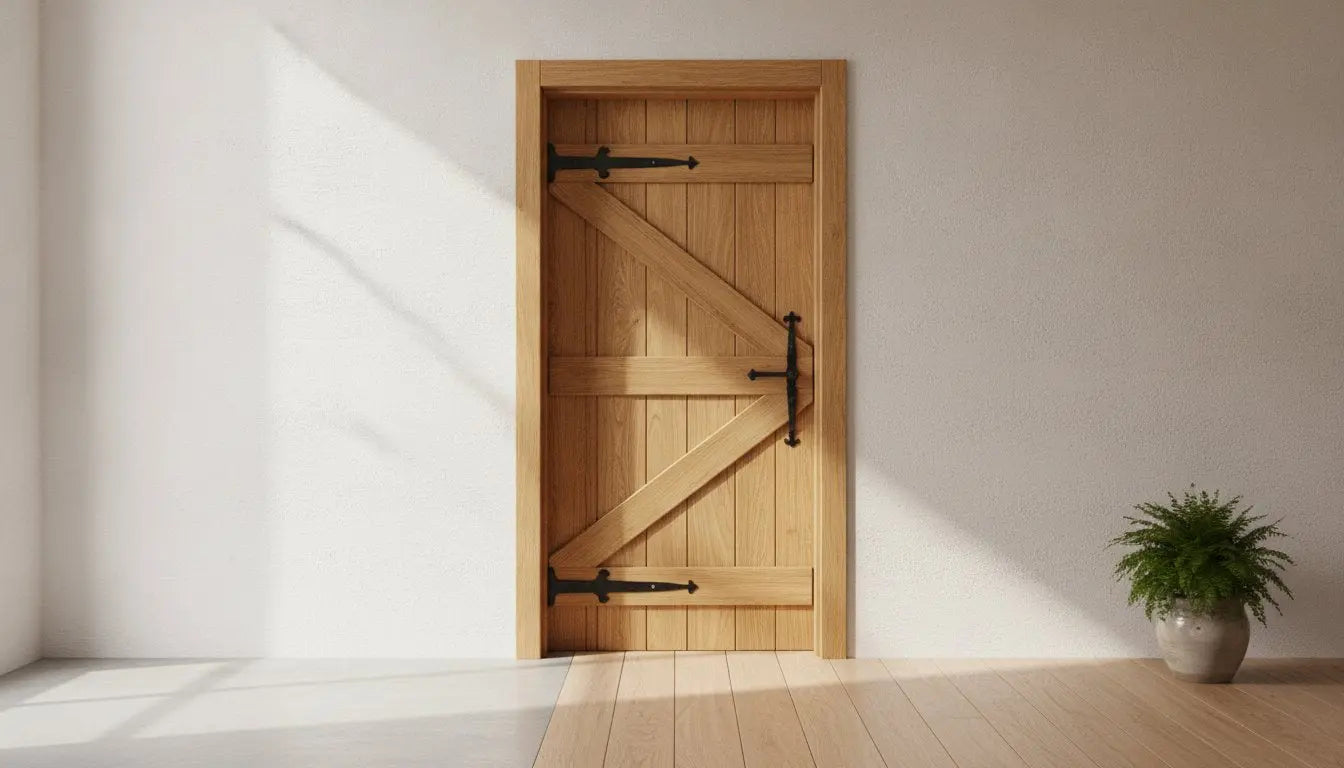
Could a door design from the seventeenth century actually be the most resilient choice for your twenty-first-century renovation? Whilst many modern interiors rely on mass-produced, hollow-core alternatives, the traditional ledge and brace door remains a masterclass in functional joinery where every component serves a specific structural purpose. You might feel that choosing such a classic style is purely an aesthetic decision; however, the way these doors are engineered actually dictates how they handle the natural humidity shifts of a busy family home.
It is perfectly natural to feel a little overwhelmed by the terminology of ledges, braces, and frames, or to worry that a solid timber door might warp or sag over time. We understand that you want the warmth of authentic British craftsmanship without the maintenance headaches. In this guide, we will reveal the structural secrets behind these iconic designs and explain how different wood species impact both your budget and the door's longevity. You will learn how to identify the right variation for your space and which hand-forged hardware will provide that essential finishing touch for a truly heritage look.
Key Takeaways
- Master the structural anatomy of a ledge and brace door to ensure you choose a design that resists sagging and maintains its shape for decades.
- Identify the critical differences between ledged, braced, and framed variations to select the most stable and appropriate option for your specific doorway.
- Compare the premium durability of solid Oak against the versatile, cost-effective charm of softwoods to find the perfect match for your home's character.
- Discover the essential traditional ironmongery required to complete an authentic British look, including the correct use of T-hinges and latches.
- Follow our expert guidance on measuring and wood acclimatisation to ensure your new timber doors fit perfectly and remain stable after installation.
The Anatomy and History of the Ledge and Brace Door
The ledge and brace door is perhaps the most recognisable symbol of British rural architecture. Often referred to simply as a batten door, this design has served as a sturdy, reliable barrier in farmhouses and cottages for centuries. Whilst its origins are humble, the transition from drafty barn entrances to sophisticated internal joinery has seen it become a staple of modern-rustic interior design. In 2026, homeowners continue to favour this style for its unique ability to blend historical character with structural integrity.
Battens, Ledges, and Braces: A Structural Glossary
Understanding the Ledge and brace door construction requires looking past the surface to the three core elements that provide its strength:
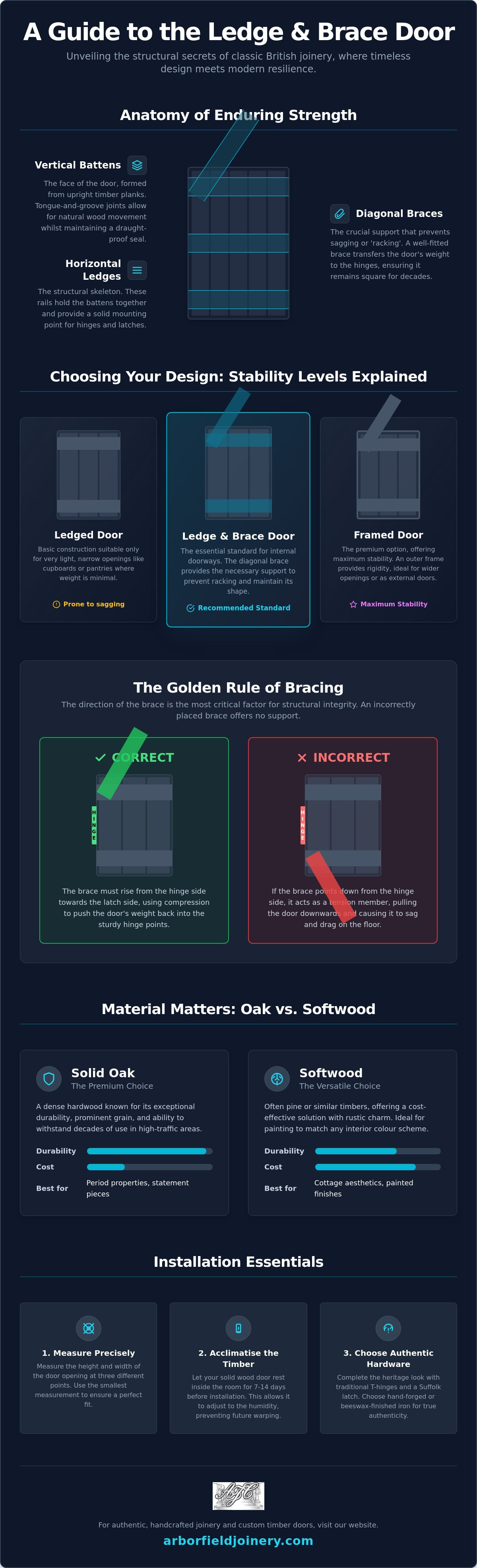
- Vertical Battens: These are the upright timber planks that form the face of the door. In high-quality joinery, these are typically joined with tongue-and-groove edges. This allows for natural movement whilst maintaining a tight, draught-proof seal.
- Horizontal Ledges: These are the rails fixed across the back of the battens. They act as the primary skeleton, holding the vertical boards together and providing a stable mounting point for hinges.
- Diagonal Braces: These are the structural supports that sit between the ledges. Their primary job is to prevent 'racking' or sagging. A well-fitted brace ensures the door remains square within its frame for decades.
The Heritage of the Batten Door in British Joinery
The story of this door type begins in simple medieval dwellings where timber was a precious, functional resource. By the 19th century, the design had been refined for use in farmhouses across the UK. Joiners favoured this construction because it handles temperature fluctuations better than many panelled alternatives. Because the battens are not glued into a rigid frame, the wood can expand and contract naturally without cracking or splitting. This resilience made it the logical choice for everything from external gates to kitchen pantries.
Today, the 'cottage' aesthetic remains a favourite amongst those looking to add tactile warmth to a renovation. Whether you're restoring a period property or adding soul to a new-build, the ledge and brace door offers a sense of permanence that few modern alternatives can match. It bridges the gap between heritage honesty and contemporary style, making it a versatile choice for any home that values craftsmanship.
To extend this artisanal feel to your furnishings, Urban Reclamation provides Direct Product Sales of rustic shelving and tables that perfectly complement the heavy timber and heritage character of a ledge and brace door.
Understanding the Variations: Ledged, Braced, and Framed
Not every opening requires the same level of structural reinforcement. Whilst the basic concept of a planked door remains consistent, the specific variation you choose will dictate how well the door performs over time. Selecting the wrong style for a heavy-traffic area often leads to the door dropping, causing it to scrape against the floor or stick in the frame. Understanding these nuances helps you invest in joinery that stays functional for a lifetime.
The Rule of Bracing states that diagonal supports must always rise from the hinge side toward the latch side to effectively transfer the door's weight through compression.
Ledged vs. Ledge and Brace: When to Upgrade
A simple ledged door consists only of vertical battens and horizontal rails. These are historically common in very narrow openings, such as a small larder or under-stairs cupboard where the weight of the timber is minimal. However, for a standard internal doorway, a ledge and brace door is the necessary standard. Without that diagonal brace, gravity eventually pulls the latch side of the door downwards. This "Z" or "X" pattern on the rear isn't just for show; it's the essential structural force that keeps your joinery square and prevents the wood from racking under its own weight.
The Critical Importance of Brace Direction
If you examine the history of Early and Vernacular Timber Doors, you'll see that the direction of the brace is never accidental. It must follow the "up and away" rule. The brace starts at the bottom ledge on the hinge side and rises to the top ledge on the latch side. This positioning uses the natural strength of the timber to push the weight back into the hinges through compression. If a door is hung with the brace pointing down towards the latch, it provides no structural support at all. This common mistake leads to dragging doors and permanent floor damage.
For those seeking the ultimate in stability, the Framed, Ledged, and Braced (FLB) door is the premium choice. By adding a full outer frame around the battens, the joinery becomes incredibly rigid. This is often the preferred option for external gates or high-traffic internal areas where you want a more substantial, high-end feel. If you're ready to enhance your home's character with these traditional styles, exploring our range of handcrafted oak doors is an excellent place to start. Whether you choose a standard braced design or a fully framed version, getting the structural basics right ensures your home retains its heritage charm without the maintenance frustrations.
Choosing the Right Timber: Oak vs. Softwood
The tactile weight of a door is something you'll notice every single day. It influences the acoustics of your hallway and the way a room holds its heat. Choosing the right material for your ledge and brace door involves balancing your aesthetic desires with the practicalities of your budget and the intended finish. Whether you seek the rugged permanence of hardwood or the versatile charm of softwood, the timber you select will define the character of your home for decades.
Timber is a living material that reacts to its environment. In the United Kingdom, our homes experience significant humidity shifts between the damp winter months and the drier summer season. It is vital to ensure your doors are crafted from timber with the correct moisture content, typically kiln-dried to around 10 to 12 percent for internal use. This precision prevents the battens from shrinking or warping once they are exposed to your central heating.
Internal Oak Doors: The Premium Gold Standard
For many homeowners, the dense grain and honeyed tones of Internal Oak Doors represent the ultimate choice for a heritage renovation. Oak is a remarkably durable hardwood that resists the dents and scratches of a busy household far better than softer alternatives. When ordering, you will often have the choice between different grades of timber:
- Select Grade: Features a more uniform grain pattern with fewer, smaller knots for a refined, high-end appearance.
- Natural or Rustic Grade: Embraces the wilder character of the tree, including larger knots and varied colour streaks that suit period cottages perfectly.
To protect the wood whilst celebrating its natural beauty, we recommend finishing oak with high-quality hardwax oils or clear waxes. These treatments penetrate deep into the fibres, enhancing the grain without creating the plastic-like surface often associated with cheap varnishes.
Softwood and Primed Options for Versatility
Whilst oak represents a significant investment, softwoods like Pine or Redwood offer an excellent, cost-effective alternative. These timbers are lighter and easier to trim during installation, making them a favourite for DIY projects or budget-conscious builds. Pine has a paler, more subtle grain that takes stains and paints exceptionally well. If you are planning a more contemporary interior, our White Primed doors provide a clean, smooth base that saves hours of preparation time.
A professional tip for those choosing to paint their softwood doors: always check for "live" knots. Even through several layers of paint, resin can eventually bleed through and create unsightly yellow circles. Applying a dedicated shellac-based knotting solution to every knot before you begin priming will ensure your finish remains crisp and professional for years to come.
Completing the Look: Ironmongery and Hardware
Standard lever handles designed for modern panelled doors often look jarringly out of place against the vertical battens of a ledge and brace door. To maintain the heritage integrity we have discussed in the previous sections, your choice of ironmongery should be as deliberate as the timber itself. The right hardware "kit" doesn't just facilitate movement; it anchors the design in a specific historical era. Whether you are aiming for a primitive rustic feel or a more polished "Industrial Chic" look, the metalwork you choose provides the final, essential layer of character.
T-Hinges: The Essential Support
Long T-hinges, often called strap hinges, are the essential partner for this door style. Unlike standard butt hinges that hide within the frame, T-hinges sit proudly across the face of the door. This serves a vital structural purpose by spreading the significant weight of the timber planks across the horizontal ledges. For a secure and balanced installation, the hinge strap should typically cover half to two-thirds of the door's width. Whilst mass-produced stamped hinges are readily available, we always recommend hand-forged ironmongery. The hammered texture and slight irregularities of forged metal provide a tactile quality that mass production simply cannot replicate.
Suffolk Latches vs. Rim Latches
The Suffolk latch is the quintessential choice for an authentic British batten door. Its simple thumb-lever mechanism and staple-and-bar latch have remained virtually unchanged for centuries. It's the "correct" choice for those seeking a true cottage aesthetic. For rooms requiring more privacy, such as bathrooms or bedrooms, you might consider a rim latch or a simple privacy bolt. If your renovation leans toward a more contemporary "Urban" or industrial twist, swapping traditional iron for sleek Black Door Handles can instantly modernise the look without losing the door's structural charm.
The finish of your hardware will dramatically alter the room's atmosphere. You might choose:
- Beeswax: A traditional matte finish that preserves the raw look of the iron, best suited for internal rooms.
- Black Powder Coated: A durable, crisp finish that provides a high-contrast look against lighter timbers like pine or primed white.
- Pewter: A softer, silver-grey tone that feels more refined and pairs beautifully with the cool undertones of select-grade oak.
Ready to put the finishing touches on your interior? Explore our curated range of heritage door hardware to find the perfect match for your new joinery.
Selecting and Maintaining Your Ledge and Brace Doors
Investing in authentic joinery is a commitment to your home's long-term character. Since 1953, Arborfield Joinery has remained dedicated to the principles of British craftsmanship, ensuring that every door we provide meets the highest standards of structural integrity. However, the journey to a perfect installation doesn't end at the point of purchase. Because a ledge and brace door is crafted from solid timber, it requires a thoughtful approach to fitting and ongoing care to ensure it performs beautifully for decades to come.
Measuring and Fitting Tips
One of the significant advantages of solid timber doors is their versatility during installation. Unlike engineered doors with thin veneers, a solid ledge and brace door can be trimmed more generously to suit the irregular frames often found in period properties. Before you order, follow this simple checklist to ensure a perfect fit:
- Measure in three places: Take width measurements at the top, middle, and bottom of the frame. Use the widest measurement to ensure the door can be trimmed down to fit perfectly.
- Check for floor clearance: Traditional cottages often feature thick, plush carpets. Ensure you allow a sufficient gap at the bottom of the door, typically 10mm to 15mm, to prevent dragging.
- Account for unfinished edges: Most heritage doors are supplied "unfinished." This is a deliberate choice that allows you to apply your own custom stain, oil, or paint to match your existing skirting and architraves.
Long-Term Care for Solid Timber
Before hanging your new door, it is essential to allow for an acclimatisation period. We recommend resting the timber flat in the room where it will be installed for at least 48 to 72 hours. This allows the wood to adjust to the specific humidity and temperature of your home, reducing the risk of dramatic movement after it is hung.
The most critical step in protecting your investment is treating the end grain. The top and bottom edges of the door act like a sponge for atmospheric moisture. You must seal these edges with at least two coats of your chosen finish immediately after trimming. This simple step prevents moisture ingress, which is the primary cause of warping and batten separation.
Solid timber will naturally expand and contract with the seasons. To keep the wood supple and prevent it from drying out, establish a maintenance schedule to re-oil or wax the surface every 12 to 24 months, depending on the sunlight exposure in the room. If you are ready to transform your interior with the warmth of natural wood, we invite you to visit our showroom or browse our full range of internal doors to find your perfect match.
Bring Heritage Character into Your Home
Choosing the right internal joinery is about more than just filling an opening; it's about investing in the soul of your property. By understanding the structural importance of brace direction and selecting the correct timber species, you ensure that your ledge and brace door remains a functional piece of art for decades. From the rugged beauty of solid oak to the authentic click of a hand-forged Suffolk latch, every detail contributes to a home that feels established and well-crafted.
As family-run British joinery experts since 1953, we take immense pride in helping homeowners curate their ideal living spaces. If you're looking for tailored advice, our 120-plus door showroom offers the perfect environment for an expert consultation. For those ordering online, we provide free mainland UK shipping on all orders over £900, ensuring your premium joinery arrives safely at your doorstep. Explore our range of handcrafted Internal Oak Doors today and discover the difference that seventy years of expertise makes to your renovation. Your home deserves the timeless quality of authentic British craftsmanship.
Frequently Asked Questions
Do ledge and brace doors sag over time?
A correctly constructed ledge and brace door will not sag if the diagonal brace is fitted accurately and the timber is of high quality. Sagging usually occurs when the brace is pointing the wrong way or if the door has been hung with insufficient hinges. By transferring the weight back to the hinge side through compression, the brace ensures the door remains square within its frame for many years of reliable use.
Can I use a ledge and brace door for a bathroom?
Yes, these doors are perfectly suitable for bathrooms provided they are thoroughly sealed on all six sides. Because bathrooms experience high humidity, you must pay particular attention to the end grain at the top and bottom. Using a high-quality hardwax oil or moisture-resistant paint will prevent the timber from absorbing steam, which ensures the battens don't swell or move over time.
Which way should the brace point on a ledge and brace door?
The diagonal brace must always rise from the bottom ledge on the hinge side to the top ledge on the latch side. This "up and away" orientation is critical because it allows the brace to act in compression. It effectively pushes the weight of the latch-side battens back towards the hinges, preventing the door from dragging across your floor or damaging your carpets.
What is the difference between a ledged door and a framed ledged and braced door?
A ledged door is the simplest form, consisting only of vertical planks and horizontal rails. In contrast, a framed, ledged, and braced (FLB) door includes a full outer frame around the perimeter. This added framing provides superior rigidity and a more substantial feel, making it the preferred choice for external use or high-traffic internal areas where maximum durability and a premium finish are required.
How much can I trim off a ledge and brace door?
Because these are solid timber constructions, you can typically trim more from a ledge and brace door than from a modern hollow-core or veneered alternative. Whilst you can safely remove up to 20mm from the sides and bottom to suit an irregular frame, you must be careful not to cut into the structural ledges or braces. Always ensure you re-seal any trimmed edges immediately to prevent moisture ingress.
What hinges do I need for a heavy oak ledge and brace door?
Heavy oak doors require substantial T-hinges, also known as strap hinges, to support their considerable weight. For a standard internal door, we recommend using three hinges to ensure long-term stability and prevent bowing. The strap of the hinge should ideally reach across half to two-thirds of the door's width to effectively spread the load across the horizontal ledges and prevent the timber from straining.
Are ledge and brace doors suitable for modern houses?
How do I stop my ledge and brace door from warping?
Preventing a ledge and brace door from warping starts with proper acclimatisation in the room where it will be hung. Resting the door flat for at least 48 hours allows the moisture content to stabilise with your home's environment. Following this, you must apply a high-quality finish to every surface, including the hidden top and bottom edges, to create a barrier against seasonal humidity changes.
Share:
Stairs and Staircase Components: The Complete UK Homeowner’s Guide
Stairs and Staircase Components: The Complete UK Homeowner’s Guide