
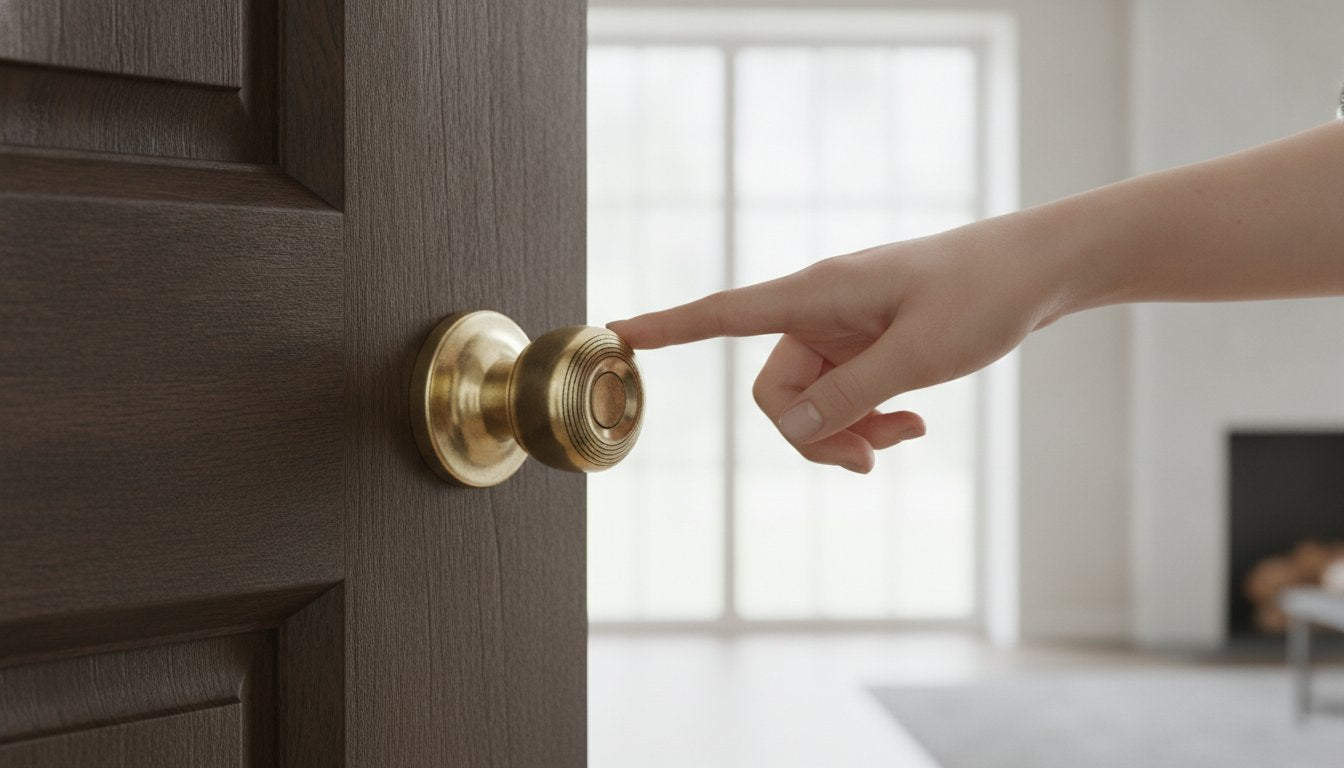
A door knob is the very first thing a guest touches when entering a room, making it the silent handshake of your home's interior design. Choosing the wrong door knobs can make a premium oak door feel flimsy, whilst the right selection transforms a simple transition into a moment of tactile luxury. It is a small detail that carries immense weight in both daily function and overall aesthetic appeal.
You might find the technical distinction between 'mortice' and 'rim' terminology confusing, or perhaps you worry that a beautiful finish will clash with your other room accents. It's a common concern for homeowners who want their hardware to be as durable as it is elegant. This guide promises to clear that confusion, helping you select hardware that offers a comfortable grip and a timeless finish that complements your unique style.
We'll break down the essential installation requirements and compare traditional materials like ebonised wood and solid forged brass. By the end, you'll understand how to curate a cohesive look that brings out the best in your interior joinery, ensuring every turn of a handle feels like a mark of genuine quality.
Key Takeaways
- Learn why the weight and material of your hardware act as a tactile handshake, instantly elevating the perceived quality of your interior joinery.
- Clear up the confusion between mortice and rim door knobs to ensure you select the correct mechanism for your home's specific architectural period.
- Discover how to pair sophisticated finishes like Aged Brass or Polished Nickel with oak or walnut doors to create a cohesive and intentional room accent.
- Master the technical side of installation, including why a 75mm latch is essential to prevent the common mistake of catching your knuckles on the door frame.
- Understand how choosing durable, solid forged materials ensures that your home's most-touched surfaces remain premium to the touch for decades.
The Art of the Finishing Touch: Why Quality Door Knobs Matter
Opening a door is a physical interaction that sets the tone for a room. A heavy, well-crafted knob signals that the space beyond is intentional and well-built. In many traditional and period-style British homes, knobs are often preferred over levers because they maintain the architectural soul of the property. They provide a classic silhouette that feels permanent and reliable. Since 1953, Arborfield Joinery has understood that these small details define the overall feel of a house. Our collection of 97 door knobs ranges from ornate Victorian heritage designs to the tactile, knurled textures of contemporary industrial styles, ensuring every home finds its perfect match.
Aesthetic Harmony with Internal Doors
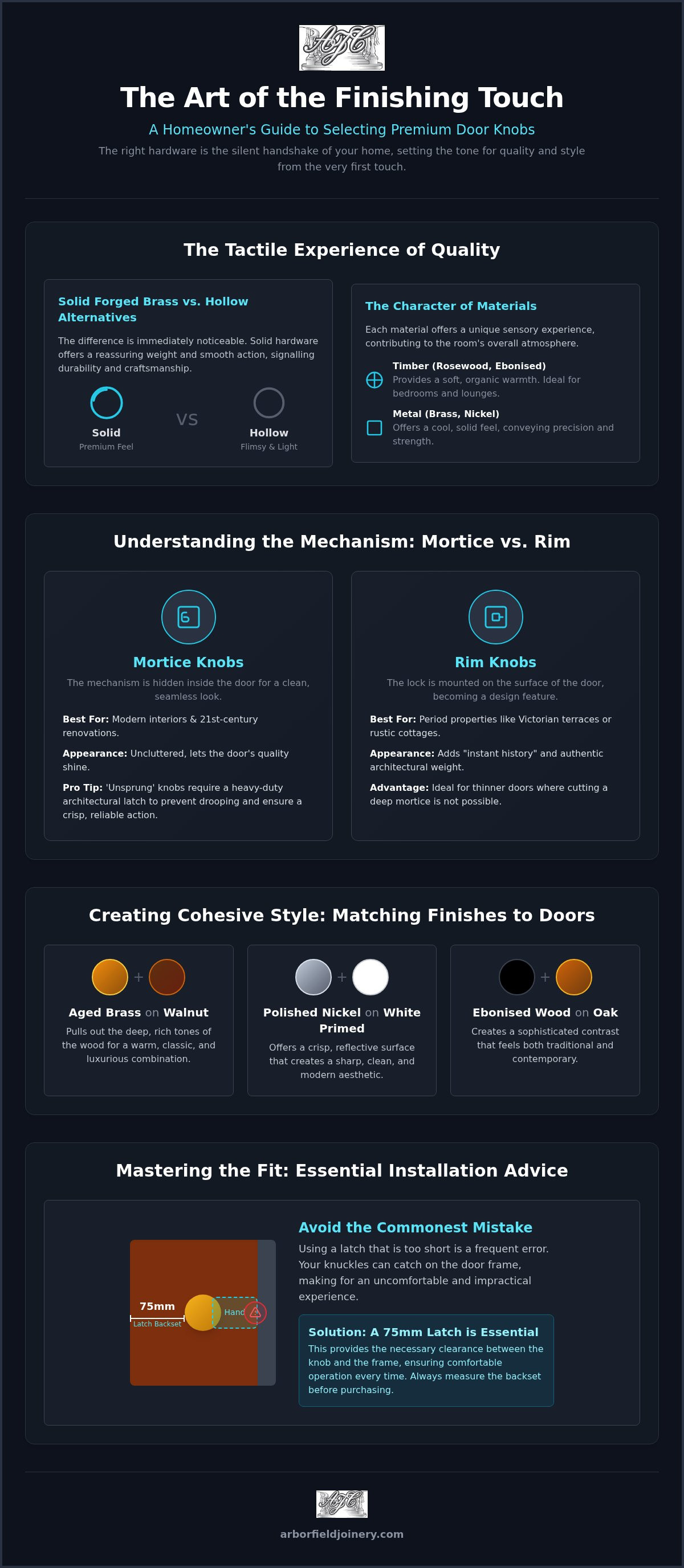
Achieving a cohesive interior requires you to match your hardware carefully to your internal doors and door frames. The right finish doesn't just sit on the surface; it highlights the natural beauty of the wood. An Aged Brass finish can pull out the deep, rich tones of a walnut door, whilst Polished Nickel offers a crisp, modern edge to white primed joinery. If you're looking for a transitional aesthetic, try pairing a traditional oval knob with a minimalist door design. It's also vital to consider the 'rose', the plate that sits against the door. The size and style of the rose define the knob's visual footprint, providing the necessary weight to balance the door's proportions.
The Tactile Experience of Quality Hardware
Hardware is the jewellery of the home, but it must be functional. There's a noticeable difference in feel between solid forged brass and cheaper, hollow alternatives. High-quality door knobs should offer a reassuring weight and a smooth mechanical action. For a comprehensive overview of door handle types, it's evident that material choice dictates both durability and comfort. Timber knobs, such as rosewood or ebonised wood, provide a soft, organic warmth that feels welcoming in a bedroom or lounge. In contrast, the cool, solid feel of metal hardware offers a sense of precision and strength. Since you'll touch these knobs dozens of times a day, ergonomic design is paramount. A well-designed knob fits the palm naturally, making every entry into a room a small but distinct pleasure.
Understanding Mechanisms: Mortice vs Rim Door Knobs
Before you fall in love with a specific finish, you must understand the mechanical requirements of your project. The type of door knobs you choose depends entirely on how the latch or lock is fitted to the door. A mortice knob is designed to work with a mechanism set into the door's edge, whilst a rim knob pairs with a lock mounted directly onto the door's surface. Your choice of internal oak doors often dictates this decision. Solid timber doors provide the depth needed for a mortice cutout, whereas thinner, period-style doors might benefit from the external mounting of a rim lock to preserve their structural integrity.
Mortice Knobs: The Seamless Choice for Modern Interiors
Mortice mechanisms are the standard for most 21st-century UK renovations. Because the lock is hidden within the door itself, the result is a clean, uncluttered face that lets the quality of the joinery take centre stage. It's vital to understand that many premium door knobs in our collection are 'unsprung'. This means they don't have an internal spring to return the knob to its original position after use. To ensure a crisp, reliable action, you'll need to pair them with a heavy-duty architectural latch. This avoids the frustration of a drooping handle and ensures the hardware feels as solid and premium as it looks.
Rim Knobs: Preserving Period Charm and Authentic Detail
For those restoring a Victorian terrace, a rustic cottage, or a barn conversion, rim knobs offer an authentic aesthetic that mortice versions cannot replicate. A rim lock is mounted directly onto the surface of the door, making the hardware a visible design feature in its own right. This setup is particularly advantageous for thinner doors where cutting a deep mortice might be impossible. Even on a plain door, adding a rim lock provides a sense of 'instant history' and architectural weight. Many designs in the Arborfield collection are versatile hybrids. They feature a removable rose, allowing them to function perfectly with either a mortice or a rim lock. This flexibility is a hallmark of our curated range, where we prioritise both heritage and modern practicality. If you're ready to find the right fit for your home, you can explore our full range of traditional and modern knobs to see how they might transform your space.
Selecting the Perfect Material and Finish for Your Interior
Material choice is where your interior's personality truly emerges. Solid forged brass remains the gold standard for longevity, offering a reassuring weight that hollow alternatives lack. Whilst Polished Chrome provides a cool, contemporary glint, many of our clients prefer Polished Nickel for its deeper, warmer undertones. These subtle yellow hues feel more inviting in a residential setting than the blue-tinted finish of chrome. For heritage projects, 'Aged Brass' is a firm favourite; it develops a natural patina over time, reflecting the history of the home. This "living finish" ensures that your door knobs only look better with age. To achieve a professional finish, coordinate these materials with your cupboard knobs and drawer pulls for a seamless whole-room design.
Timeless Timber: Ebonised Wood and Rosewood
The 'Ebonised Beehive' knob is a Victorian design that remains a bestseller in 2026. Its deep black, silk-like finish provides a sharp, sophisticated contrast against lighter wood grains. You might choose to pair Rosewood knobs with modern laminate internal doors to introduce a layer of organic texture that balances the door's clean, minimalist lines. Timber hardware requires slightly more care than metal; an occasional rub with a high-quality beeswax will keep the wood nourished and prevent it from drying out or losing its lustre over the decades.
Textured Details: Beehive, Reeded, and Hammered Styles
Texture is a major design trend, adding a tactile dimension to functional hardware. The concentric rings of the 'Beehive' style aren't just for show. They provide a superior grip that makes the knob easier to turn for all members of the household. If your home features Regency or Georgian architectural details, reeded door knobs offer a linear elegance that mirrors the period's love for symmetry and order. For those seeking a bespoke feel, hand-hammered textures provide a visible 'maker's mark'. These subtle indentations catch the light differently at every angle, adding a sense of depth and artisanal character that mass-produced hardware simply cannot replicate. Each strike of the hammer creates a unique finish, ensuring your joinery feels curated rather than merely assembled.
Standout Selections from the Arborfield Joinery Collection
Choosing the right hardware involves balancing budget with the level of craftsmanship required for your home. With a curated range of 97 door knobs, our collection provides options that cater to both strict historical restorations and bold modern renovations. These pieces are designed to act as the essential final flourish for our high-quality oak and walnut doors, ensuring that your hardware matches the superior standard of your joinery. When you invest in solid forged brass or hand-turned timber, you aren't just buying a fixture; you're securing a durable component that will function beautifully for decades.
The Heritage Favourites: Beehive and Reeded Designs
For those seeking a traditional British aesthetic, certain designs have stood the test of time. The Ebonised Beehive Mortice/Rim Door Knob in Matt Antique (£25.52) is a versatile classic that works equally well with surface-mounted rim locks or internal mortice latches. Its dark, silk-like finish is particularly striking against lighter wood grains. If your project demands a more formal Regency feel, the Reeded 60mm Rim/Mortice Door Knob (£52.72) offers exquisite solid brass detailing that feels substantial in the hand. To ensure a cohesive look across your entire room, our Rosewood Beehive Cupboard Knobs (starting from £4.55) allow you to match your furniture hardware directly to your main door knobs.
Modern Statements: Hammered and Polished Finishes
If your interior leans toward a contemporary or transitional style, textured metals provide a sophisticated edge. The Oxford Mortice Door Knob in Polished Nickel (£72.15) features a premium, inseparable rose design and a unique ribbed texture that catches the light beautifully. For those who value versatility, the Carter Mortice/Rim Door Knob in Aged Brass (£51.12) provides a similar ribbed aesthetic but includes a detachable rose, making it suitable for a variety of lock types. If you want a piece that feels truly artisanal, the Hammered Ball Mortice Door Knob in Polished Nickel (£48.73) offers incredible depth. Each hand-hammered facet creates a 'maker's mark' that adds character to any modern door.
Shop the Collection
Finding the perfect hardware is about more than just the knob itself. You should also consider matching accessories like escutcheons, thumbturns, and letter plates to complete the look. Whether you're looking for the organic warmth of timber or the crisp precision of polished nickel, our full range is designed to provide a premium tactile experience. You can browse the full Door Knobs collection here to find the ideal match for your home's unique architectural character.
Practical Considerations: Measuring, Fitting, and Maintenance
The technical aspect of hardware selection is just as vital as the aesthetic. When you transition from levers to door knobs, the most significant change is the required 'backset' distance. This is the measurement from the edge of the door to the centre of the spindle hole. Whilst a standard lever might function perfectly with a 64mm latch, a knob requires a 75mm (3 inch) or even a 100mm latch. If the backset is too short, you'll find yourself catching your knuckles on the door frame every time you turn the handle. It's a small technical detail that makes a massive difference in daily comfort and usability.
Fitting a knob on an unsprung rose requires precision. Because many premium designs don't have an internal spring, the alignment between the spindle and the heavy-duty latch must be perfect to ensure a smooth, crisp return. For a competent DIY enthusiast, installation on standard doors is usually straightforward. However, if you've invested in bespoke joinery or high-quality walnut doors, we recommend hiring a professional joiner. A specialist ensures the mortice is cut with the necessary precision to protect the door's structural integrity whilst providing that flawless, premium mechanical feel that defines quality hardware.
Measuring for Success
Before ordering, measure your door thickness carefully. Standard UK internal doors are typically 35mm or 44mm, but bespoke options can vary. You must ensure the spindle provided is compatible or can be cut to size for a snug fit. Consider the width of the door's 'stiles', which are the vertical sections of the frame. If the stiles are narrow, a large knob might look cramped or sit too close to the edge. Traditionally, door knobs were often fitted at mid-rail height, roughly 900mm to 1000mm from the floor, though modern standards often align them with the latch height of other rooms for visual consistency across the landing.
Long-term Care for Your Hardware
Maintaining the premium feel of your hardware is simple if you use the right approach. For polished nickel and brass finishes, avoid abrasive cleaners that might strip the protective coating. A soft, damp cloth followed by a dry buff is usually sufficient to restore the lustre. Ebonised wood and rosewood require a different touch; avoid excessive moisture and harsh chemicals that could cause the timber to swell or lose its finish. If a knob feels loose over time, check the grub screw on the side of the rose. A quick tighten usually restores the solid, as-new feel to the mechanism.
Ready to Transform Your Home?
The right hardware doesn't just open a door; it tells the story of your home's character and your eye for detail. Take a moment to review your door styles and select the finishes that will provide that essential tactile handshake for years to come. We provide free mainland UK shipping on all orders over £900, helping you complete your renovation project with confidence. You can find your perfect door knobs at Arborfield Joinery today and elevate your interior joinery to its full potential.
Complete Your Home with Timeless Hardware
Selecting the right hardware is about more than just aesthetics; it's about the daily tactile experience of your home. By prioritising the weight of solid forged materials and ensuring technical measurements like the 'backset' are precise, you ensure your door knobs function as beautifully as they look. Whether you've chosen a traditional ebonised beehive design or a modern hammered nickel finish, these details act as the final, essential handshake for your interior joinery.
At Arborfield Joinery, we've been a family-run UK business since 1953, helping homeowners curate spaces that reflect their personal style. With over 97 luxurious designs in stock, you'll find the perfect match for any period or contemporary door. We also offer free mainland shipping on orders over £900 to help you complete your project with ease. Don't let your hardware be an afterthought; instead, choose pieces that offer durability and quiet elegance.
Ready to find the finishing touch? Upgrade your home with our premium Door Knobs collection today and enjoy the lasting quality of expert craftsmanship.
Frequently Asked Questions
What is the difference between a mortice knob and a rim knob?
A mortice knob works with a latch or lock set into the edge of the door, whilst a rim knob pairs with a lock box mounted directly onto the door's surface. Mortice designs are the standard for modern UK homes because they offer a cleaner, hidden look. Rim knobs are typically chosen for period properties or thinner doors where cutting a deep mortice might compromise the timber's strength.
Can I use door knobs on any type of internal door?
Most door knobs are compatible with standard UK internal doors, including oak, walnut, and white primed styles. However, you must check the door's thickness to ensure the connecting spindle is long enough. For doors with narrow vertical stiles, ensure the knob isn't so large that it sits too close to the frame, as this can make the door difficult to operate without catching your hand.
Why do I need a different latch for a door knob than for a lever handle?
You need a longer latch for a knob to ensure your knuckles don't hit the door frame. Whilst lever handles work well with a 64mm latch, knobs require a 75mm or 100mm latch. This extra length moves the knob further away from the door's edge, providing the necessary clearance for a comfortable grip and a smooth turn every time you enter the room.
Are the door knobs in your collection sold as pairs or individually?
Our internal door knobs are sold as pairs, providing everything you need for both sides of a single door. Each set includes two knobs, a connecting spindle, and the necessary fixing screws. If you're looking to update a cupboard or wardrobe, we also offer matching individual knobs in various timber and metal finishes to ensure your hardware remains consistent throughout your home's interior.
What does 'unsprung' mean and how does it affect my choice of latch?
Unsprung means the knob doesn't have a built-in spring to return it to the central position after use. Most premium, traditional knobs are unsprung to allow for a slimmer rose design. To ensure the handle doesn't droop, you must pair it with a heavy-duty architectural latch. This specialised latch provides the necessary tension to pull the knob back into place automatically every time it's released.
Will these door knobs fit on fire doors?
Many of our solid brass and timber designs can be used on fire doors, provided they are fitted with the correct fire-rated latches and intumescent seals. However, UK building regulations for 2026 require that the entire door assembly is certified as a system. You should always check the specific fire certificate of your door to ensure that round knobs are permitted and won't compromise the safety rating.
How do I maintain the finish on my aged brass or polished nickel knobs?
Maintaining finishes like aged brass or polished nickel is simple if you avoid harsh chemicals. For polished nickel, a wipe with a soft, damp cloth followed by a dry buff will maintain its warm lustre. Aged brass is a living finish designed to patina over time. If you prefer to slow this process, a light application of high-quality beeswax once or twice a year will protect the metal's surface effectively.
Do you provide matching cupboard knobs for kitchens or wardrobes?
We offer a curated selection of cupboard knobs that perfectly match our full-sized door hardware. This allows you to coordinate your wardrobes or kitchen cabinets with your room's main entrance for a truly bespoke interior. From rosewood beehive designs to hand-hammered nickel, these smaller accents ensure that every tactile element in your home feels part of a cohesive and intentional design scheme that lasts for decades.
Share:
Woodplas vs Crawford Joinery: 2026 Comparison
Understanding Door Architrave: The Complete Guide to Finishing Your Internal Doors