
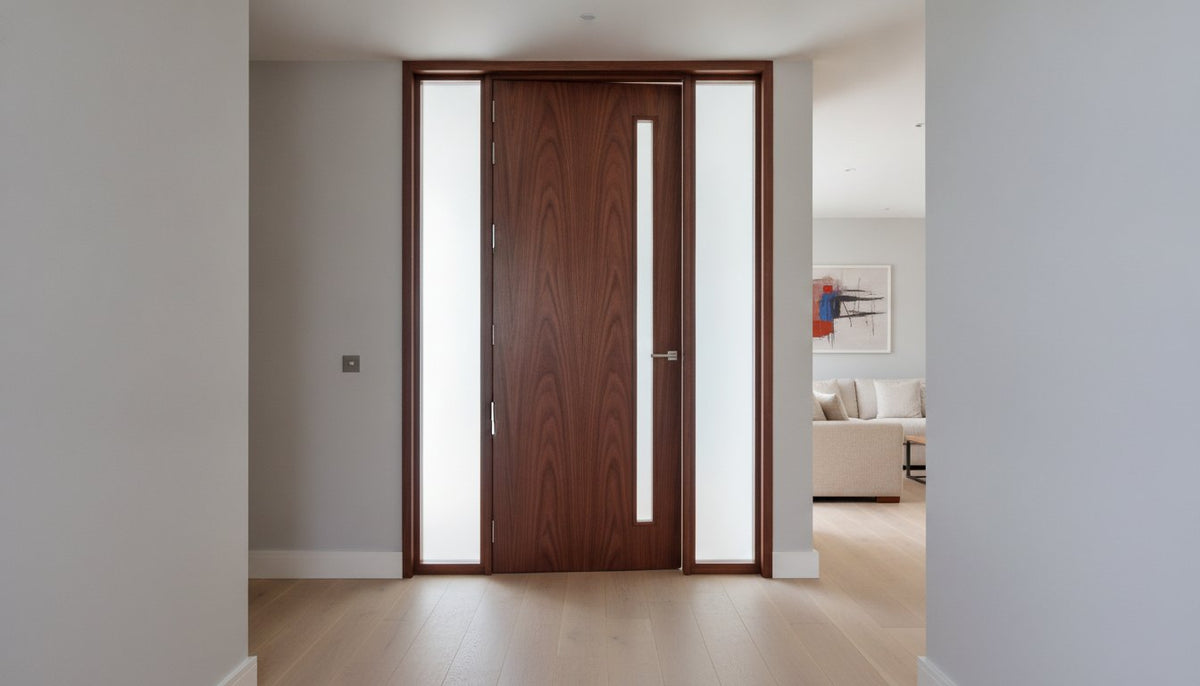
Choosing a door is rarely just about closing off a room; it's an intentional investment in the "quiet luxury" of your home's architecture. You're likely drawn to the deep, chocolatey hues and complex grain patterns that make solid walnut internal doors the premier choice for sophisticated interiors. It's natural, however, to feel a little hesitant. Will the dark wood make your hallway feel smaller? Is there a significant difference between a solid timber door and a high-quality engineered core? These are the exact questions we've been answering at our family-run showroom since 1953.
We understand that you want more than just a beautiful finish; you need joinery that stands up to the demands of a modern home. This guide will help you navigate the technicalities of walnut construction, from fire safety regulations to the tactile benefits of different finishes. You'll discover how to select a style that complements your specific architecture and learn the simple maintenance routines that keep premium timber looking flawless. By the end, you will have the confidence to choose a door that serves as a lasting statement of quality and style.
Key Takeaways
- Learn the crucial difference between solid timber and engineered cores to ensure your solid walnut internal doors provide lasting stability in centrally heated homes.
- Discover how to incorporate glazed panels to maintain a sense of light, preventing dark timber from making smaller rooms feel enclosed.
- Understand the practical benefits of factory pre-finished doors versus unfinished options to help you manage your home improvement timeline.
- Master the technical requirements for measuring and sizing to ensure your new joinery fits perfectly within existing frames.
- Learn why seeing walnut grain in person is essential for selecting a style that truly complements your home's unique architecture.
The Allure of Solid Walnut Internal Doors: Why Choose This Premium Timber?
Walnut is often described as the aristocrat of timbers. While oak has long been the standard for British homes, solid walnut internal doors offer a distinct step up in terms of visual depth and exclusivity. The wood is celebrated for its deep, chocolatey tones and a complex grain that seems to shift when it catches the light. It isn't just about the colour; it's about the feeling of permanence and "quiet luxury" that a premium hardwood brings to a living space. Choosing walnut is a statement that you value craftsmanship and material integrity over mass-produced alternatives.
Many homeowners worry that installing dark timber will make their rooms feel cramped or gloomy. In reality, walnut provides what designers call "visual anchoring." By creating a bold point of contrast against lighter walls, these doors define the boundaries of a room and give it a sense of structured elegance. They act as a focal point rather than just a functional barrier. Over time, walnut ages with more grace than almost any other wood. It develops a rich, lustrous patina that enhances the grain, ensuring the doors look even better a decade after installation than they did on the day they were hung.
The Aesthetic Characteristics of Real Walnut
The beauty of walnut lies in its natural inconsistency. Most high-quality joinery uses timber from the Black Walnut (Juglans nigra) tree, which produces a striking contrast between the creamy sapwood and the dark, coffee-coloured heartwood. You'll often see "curly" or "burr" grain patterns; these are natural swirls in the wood that ensure no two doors are ever identical. Walnut's natural oil content ensures a surface that feels exceptionally smooth and substantial to the touch, providing a tactile experience that cheap imitations cannot hope to match.
Walnut vs. Oak: A Quick Comparison of Style
Choosing between walnut and oak often comes down to the atmosphere you want to create. Oak is beloved for its rustic, dependable charm and works beautifully in country cottages or traditional builds. Walnut, however, has a sharper, more sophisticated edge that suits modern architecture and bold interior design. It pairs exceptionally well with contemporary palettes like navy blue, forest green, or charcoal grey, where the dark wood provides a warm, organic counterpoint to cool tones. If you're still weighing up your options and lean towards a more traditional look, you might find the ultimate guide to internal oak doors a useful resource for your project.
Understanding Construction: Solid Walnut vs. Walnut Veneer Internal Doors
One of the most common points of confusion for our customers is what actually constitutes a "solid" door. When you browse for solid walnut internal doors, you'll encounter two distinct types of construction: 100% solid timber and engineered solid cores with real wood veneers. Whilst both offer the unmistakable aesthetic of premium walnut, their performance in a modern home differs significantly. It's vital to understand these differences to ensure your investment lasts for decades rather than years.
The weight and sound-insulation properties of a door are often the first things people notice. A high-quality walnut door should feel substantial. This density isn't just for show; it provides a natural acoustic barrier that keeps your home quiet and private. However, the thickness of the walnut layer on the surface is equally important. A premium veneer allows for future wood finishing and maintenance, meaning you can lightly sand and re-lacquer the door if it suffers a scuff or scratch in a busy household.
What is an Engineered Solid Core?
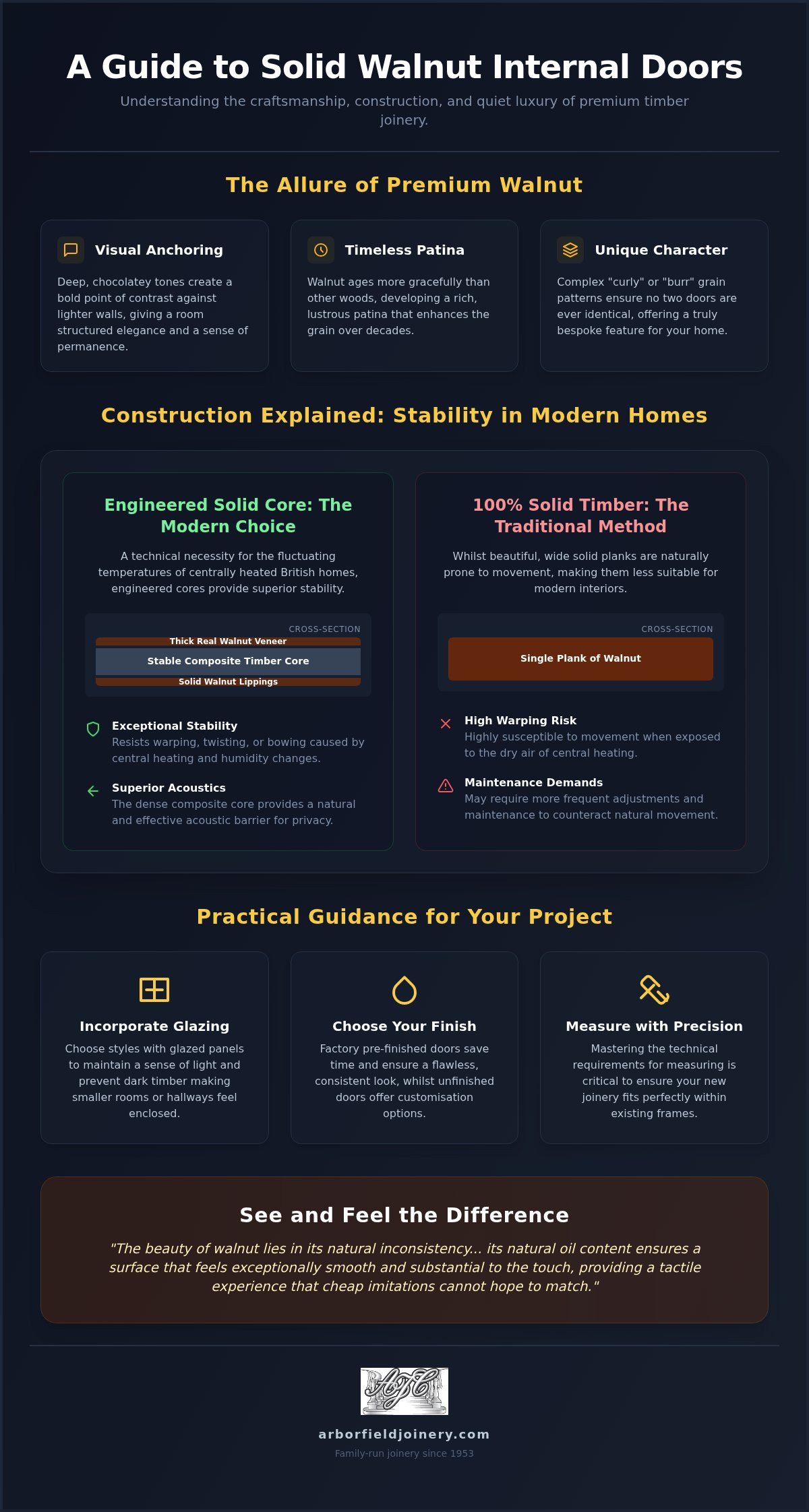
Most premium solid walnut internal doors sold in the UK today utilise an engineered solid core. This isn't a cost-cutting measure; it's a technical necessity for the British climate. Walnut is a beautiful wood, but wide, solid planks are naturally prone to warping or twisting when exposed to the fluctuating temperatures of modern central heating. An engineered core, usually made of composite timber or layered wood sections, provides a stable foundation that doesn't move. This core is then wrapped in a thick, real walnut veneer and finished with solid wood "lippings." These lippings are the solid timber edges that allow your joiner to trim the door for a perfect fit without exposing the core.
To identify a high-quality engineered door, look for these markers:
- Substantial lippings of at least 10mm to 20mm on all sides.
- A heavy, solid weight that suggests a high-density core rather than a hollow one.
- Consistent grain matching across the veneer face.
The Pros and Cons of Full Solid Walnut
For those commissioning bespoke joinery, 100% solid walnut remains the ultimate choice for prestige. It carries a sense of heritage that's hard to replicate. However, it requires a stable environment to thrive. We typically advise caution when using full solid timber in humid areas like bathrooms or in rooms where temperature swings are extreme, as the wood will naturally "breathe" and expand. If you're looking for the perfect balance of beauty and structural integrity, you can explore our range of walnut doors to see how modern construction techniques have perfected this classic material.
Selecting the Perfect Style for Your Home’s Interior
Walnut is a remarkably versatile timber that adapts to various architectural languages. Whether you are aiming for a minimalist aesthetic or a more traditional feel, the choice of door design defines the character of your space. Popular designs such as the 5-panel Vancouver offer a clean, linear look that emphasises the vertical grain, whilst the classic Shaker style provides a timeless structure that works amongst almost any decor. For those following the latest design movements, "Urban" or industrial-style walnut doors are becoming increasingly popular. These often feature slimmer profiles and narrower stiles, perfect for a modern renovation where a sleek, lightweight appearance is desired.
The finishing touches you choose are just as important as the door itself. To complement solid walnut internal doors, we typically recommend hardware in polished chrome or matt black. Polished chrome offers a striking, mirror-like contrast against the dark coffee tones of the wood, creating a bright and energetic feel. Conversely, matt black handles provide a sophisticated, understated finish that leans into the industrial trend. Both options respect the premium nature of the material without distracting from the natural beauty of the grain.
Contemporary vs. Traditional Walnut Designs
If you are looking to create a seamless, "hotel-style" luxury in your home, flush walnut doors are an excellent choice. Their flat, uninterrupted surfaces allow the natural variations in the timber to take centre stage. For those living in period properties, walnut can still feel right at home. By pairing these doors with more ornate, traditional architraves, you can bridge the gap between heritage architecture and modern luxury. If you're unsure about how to match your new joinery with your existing woodwork, the complete guide to internal doors and door frames offers expert advice on achieving a cohesive look throughout your property.
The Role of Glazing and Light
Glazing is a powerful tool when working with darker woods. Solid walnut internal doors with glass panels allow you to brighten a hallway or a dark corner whilst maintaining the acoustic benefits of a solid door. Clear glass is ideal for connecting living and dining areas, creating a sense of flow and shared space. If privacy is a priority, frosted or obscure glass provides a soft, diffused light without compromising your personal space. In the evening, you'll notice how artificial light reflects off the dark grain, creating a warm, amber glow that makes a room feel incredibly inviting and snug.
Practical Guidance: Sizing, Finishing, and Maintenance
Investing in solid walnut internal doors requires a precise approach to installation. Unlike standard hollow-core doors, premium timber joinery leaves little room for error. Getting the measurements right is the first step toward a flawless finish. We recommend measuring your existing door frame in three places for width (top, middle, and bottom) and two places for height. Use the largest dimensions to select your door size; it's much easier for a joiner to trim a slightly larger door than to bridge a gap in a frame that isn't perfectly square.
One question we're frequently asked at our showroom is how much a door can be trimmed. Most high-quality walnut doors feature a solid timber lipping of around 10mm to 20mm. Generally, you can safely remove up to 6mm from each side and the bottom to ensure a perfect fit. However, you should always consult the specific technical sheet for your chosen model. Trimming too far into the engineered core can compromise the door's structural integrity and void your warranty. If you're unsure about the technical specs, you can browse our full collection of walnut doors to view detailed sizing guides for every style.
Pre-finished vs. Unfinished: Which is Best?
Choosing between a pre-finished or unfinished door depends entirely on your project timeline. Pre-finished walnut doors are factory-lacquered in a controlled, dust-free environment. This ensures a perfectly consistent colour and a durable surface that's ready to hang immediately. It's the most reliable way to achieve a professional "hotel-standard" look across every room in your house.
Unfinished doors offer more flexibility if you want to apply a bespoke stain or a specific matte wax. If you choose this route, be careful with your product selection. You should never use water-based paints or stains on high-quality walnut veneers. The moisture in water-based products can cause the veneer to bubble or delaminate from the core. Stick to solvent-based or oil-based finishes to protect the timber's natural oils and intricate grain patterns.
Caring for Your Investment
Walnut is a durable hardwood, but it needs the right environment to stay at its best. Dust your doors regularly with a soft, dry microfibre cloth. Avoid harsh chemical cleaners or abrasive sprays, as these strip away the natural oils and can leave the wood looking dull and brittle. For a deeper clean, a slightly damp cloth followed immediately by a dry one is all that's required.
- Apply a fresh coat of clear wax or oil every 18 to 24 months to maintain the wood's lustre.
- Repair minor scuffs or scratches using a colour-matched wax filler stick.
- Ensure your joiner seals all four edges, including the top and bottom, during installation to prevent moisture ingress.
It is vital to seal the top and bottom edges during the hanging process to prevent moisture from entering the core and causing the timber to swell. By following these simple maintenance steps, your walnut doors will remain a stunning focal point for decades.
Why Source Your Walnut Doors from Arborfield Joinery?
Since 1953, our family-run business has operated with a "quality-first" narrative that puts the customer's vision at the heart of everything we do. We've seen design trends evolve over the decades, but the demand for solid walnut internal doors remains constant amongst those who appreciate high-end joinery. Choosing the right supplier is just as important as choosing the timber itself. You need a partner who acts as a steady hand, guiding you away from cheap imitations and toward products that offer genuine structural integrity and aesthetic depth.
We take immense pride in our heritage as timber specialists. We don't just sell doors; we curate ideal living spaces. Our role is to act as your knowledgeable consultant, ensuring you feel confident in your investment. By focusing on long-term reliability rather than quick transactions, we've built a reputation for excellence that spans seven decades. When you choose Arborfield Joinery, you're benefiting from a legacy of craftsmanship and a deeply personal approach to home improvement.
The Showroom Experience
There is no substitute for seeing premium timber in person. Our massive showroom in Berkshire houses over 120 doors on display, allowing you to compare different walnut grain patterns side by side. You can experience the tactile smoothness and substantial weight of our range, which is essential for a material as sensory as walnut. Our team is always on hand to help with technical queries regarding frames, fire ratings, or hardware. Whilst we don't provide installation services, we ensure you leave with all the components and advice needed for a professional, seamless finish.
National Delivery and Expertise
We've refined our logistics to ensure that sourcing premium joinery is straightforward, no matter where you are in the country. Our nationwide delivery service is designed to handle high-value orders with the utmost care. We maintain rigorous quality control processes, checking every item to ensure your solid walnut internal doors arrive in perfect condition. To make your project even more cost-effective, we offer free mainland UK shipping on all orders over £900. This combination of expert curation and reliable delivery makes us the preferred choice for discerning homeowners across the country.
Our commitment to value and service means we are always looking for ways to support your renovation journey. From the initial inspiration in our showroom to the moment your doors are delivered to your doorstep, we provide a high-end experience that reflects the quality of the timber we sell. Don't settle for mass-market alternatives when you can have joinery backed by 70 years of proven expertise. Explore our full range of walnut internal doors today and take the first step toward a more sophisticated interior.
Elevate Your Interior with Timeless Walnut
Investing in solid walnut internal doors is a decision that elevates the architectural character of your home. You've learned how the rich chocolate tones provide a sophisticated anchor for any room, whilst modern engineered cores ensure your doors remain stable for years to come. By following our guidance on precise sizing and maintenance, you can ensure your joinery remains a striking focal point that ages beautifully.
At Arborfield Joinery, we've been helping homeowners select the perfect timber since 1953. Our family-run team is here to provide the expert advice you need to avoid common pitfalls. We invite you to visit our Berkshire showroom to see over 120 doors on display and experience the quality for yourself. If you're ordering from further afield, we offer free UK mainland delivery on orders over £900 to make your project as seamless as possible.
Ready to transform your living space? Browse our premium collection of walnut internal doors. We look forward to helping you create a home that reflects your dedication to quality and style.
Frequently Asked Questions
Are walnut internal doors more expensive than oak?
Walnut is indeed a premium choice and generally sits at a higher price point than oak due to its rarity and the complex processing required for its intricate grain. Whilst oak is a dependable and beautiful standard, solid walnut internal doors are considered an investment in "quiet luxury." The cost reflects the timber's unique aesthetic and the sophisticated manufacturing needed to ensure long-term stability in a modern home.
Can I trim a walnut veneer door to fit my existing frame?
You can trim a walnut door, but you must stay within the limits of the solid timber lippings. Most high-quality designs allow for approximately 6mm to be removed from each side and the bottom to ensure a perfect fit. Trimming beyond these solid edges risks exposing the engineered core, which can compromise the door's structure and void your warranty. Always check the specific manufacturer's technical sheet before your joiner starts work.
Do walnut doors fade in direct sunlight?
Natural timber is sensitive to UV light, and walnut is no exception. Unlike many woods that darken with age, walnut tends to mellow and lighten slightly when exposed to prolonged, direct sunlight. To minimise this effect, we recommend using high-quality UV-resistant oils or lacquers. If your room is particularly bright, rotating the doors or using window treatments can help maintain the wood's deep, original chocolate tones over the years.
Should I choose pre-finished or unfinished walnut doors?
Pre-finished doors are the most popular choice because they arrive factory-lacquered, ensuring a consistent, professional finish across your entire home. This saves significant time on-site and provides immediate protection. However, you should choose unfinished walnut if you have a specific, bespoke stain in mind or prefer a particular matt wax finish. Just ensure you use oil-based products, as water-based alternatives can damage the delicate veneer and cause it to bubble.
What colour handles look best on solid walnut doors?
Polished chrome and matt black are the most effective hardware choices for walnut joinery. Chrome provides a bright, mirror-like contrast that makes the dark wood grain "pop" in both traditional and modern settings. Matt black offers a more understated, industrial aesthetic that feels incredibly contemporary. We recommend avoiding brass or gold finishes, as these can sometimes clash with the cool, purplish-brown undertones natural to walnut timber.
Are walnut doors suitable for bathrooms and high-humidity areas?
Walnut doors are perfectly suitable for bathrooms, provided you choose an engineered core design rather than 100% solid timber. Engineered construction offers the stability needed to resist the warping caused by humidity and temperature shifts. It is essential that your joiner seals all four edges of the door during installation. This prevents moisture from entering the core, ensuring your investment remains structurally sound and visually stunning in damp environments.
How do I clean and maintain my walnut interior doors?
Maintenance is straightforward but requires a gentle touch. For daily cleaning, a dry microfibre cloth is all you need to remove dust. You should avoid harsh chemical sprays or abrasive cleaners, as these can strip the natural oils and dull the finish. To keep the wood looking its best, apply a fresh coat of clear wax or solvent-based oil every two years. This prevents the timber from drying out and maintains its lustre.
What is the difference between American Black Walnut and standard walnut?
American Black Walnut is the specific species used for high-end solid walnut internal doors due to its rich, dark heartwood and striking grain patterns. Other varieties, such as European walnut, often feature lighter, more variegated tones and different structural properties. When people refer to "standard" walnut in the luxury joinery industry, they are almost always talking about the American variety, which is prized for its uniform colour and sophisticated appearance.
Share:
Bespoke Joinery for Modern Homes: A 2026 Guide
How to Find Reliable Joinery Suppliers (2026 Guide)