
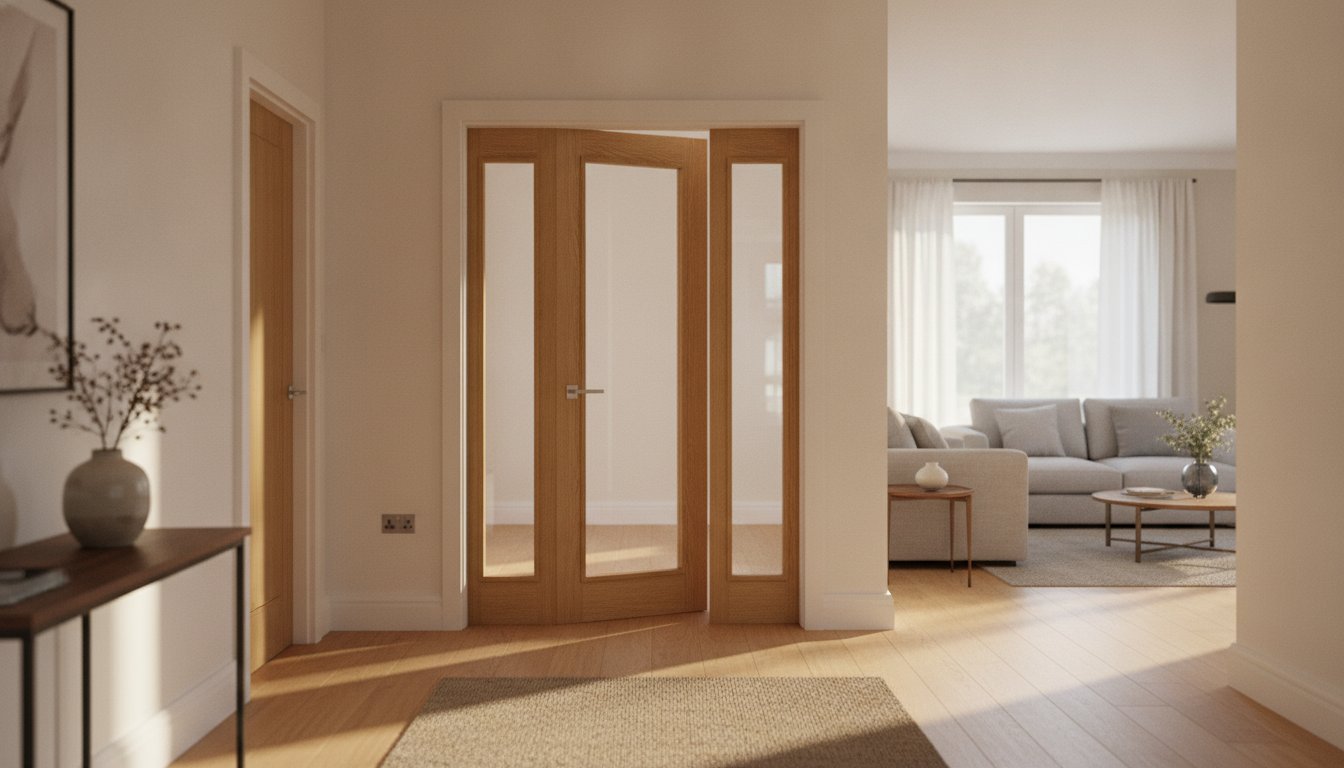
What if the secret to a more spacious, inviting home isn't an expensive extension, but simply changing the way light moves between your rooms? Many homeowners struggle with dark, narrow hallways or internal spaces that feel disconnected, yet they're often hesitant to replace solid timber because they value its durability and classic aesthetic. You might also worry about the safety of glass in a busy family environment or wonder if a new style will clash with your existing joinery. It's a common dilemma when you want to modernise without losing the heritage feel of your property.
We understand that a door is more than just a functional barrier; it's a piece of craftsmanship that defines the character of your living space. By choosing internal oak glazed doors, you can maximise the flow of natural light whilst maintaining the premium feel and acoustic benefits of solid wood. This article will show you how to transform your home into a brighter, more open-plan environment. We'll guide you through the essential safety standards, such as the requirement for toughened glass to BS EN 12150, and help you navigate the various styles and finishes that can increase your property's long-term value.
Key Takeaways
- Maximise natural light in windowless hallways by utilising "borrowed light" through strategically placed glazing.
- Discover why internal oak glazed doors offer superior durability and stability compared to softwood or white primed alternatives.
- Choose between clear glass for an open-plan feel or frosted options that maintain privacy whilst still allowing light to travel.
- Explore popular styles like Shaker and Mexicano to find the perfect match for both contemporary and traditional interior schemes.
- Learn how to select high-quality joinery that complies with UK safety standards and enhances your property's overall value.
The Impact of Internal Oak Glazed Doors on Home Lighting and Space
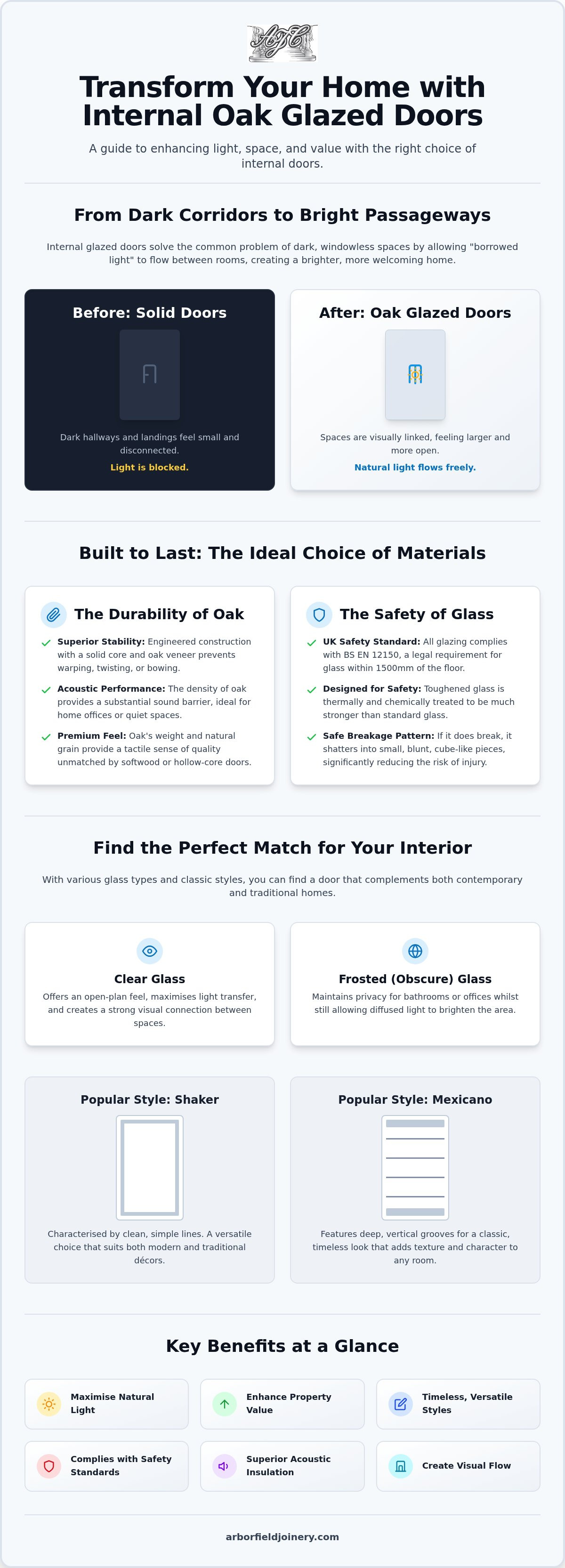
Natural light is a precious commodity in the British home. Many of our traditional properties, particularly Victorian terraces and mid-century semi-detached houses, were designed with solid internal barriers that inadvertently create dark pockets. By introducing internal oak glazed doors, you aren't just changing a fixture; you're effectively reorganising how light moves through your floor plan. These doors act as structural conduits for "borrowed light," capturing sunshine from south-facing windows and funnelling it into windowless hallways or central landings that would otherwise remain dim and uninviting.
Choosing oak for these large-scale glass apertures is a decision rooted in both aesthetics and engineering. The inherent density of oak provides a level of structural integrity that softer timbers simply cannot match. This is a critical factor in door construction and materials, as the weight of toughened safety glass requires a frame that won't warp or twist over time. Beyond the technical benefits, there's a significant psychological advantage to this transition. Increased exposure to natural light is widely recognised to improve mood and circadian rhythms, making your home feel more like a sanctuary and less like a series of enclosed boxes.
Solving the Dark Hallway Problem
Hallways are frequently the most neglected spaces in a house, often serving as nothing more than a dark thoroughfare between rooms. When you replace a heavy, solid door with a glazed alternative, you immediately dissolve the "tunnel" effect. Light from the lounge or kitchen spills into the corridor, highlighting the grain of your flooring and making the entire entrance feel more spacious. This is especially effective in small landings where every square inch of visual space counts. It creates an immediate sense of welcome for guests and a more pleasant transition for you as you move through your home.
Creating Visual Flow Between Living Spaces
Modern homeowners often crave the look of open-plan living but find the reality—noise transfer and a lack of privacy—difficult to manage. Internal oak glazed doors offer a sophisticated middle ground. They allow you to "frame" the view into the next room, creating a sense of visual continuity that makes the house feel like one cohesive environment whilst maintaining acoustic control. This is exceptionally useful for families. You can keep an eye on children or pets in a separate playroom from the comfort of your home office, staying connected to the household's activity without being interrupted by the noise. It's about maintaining a sense of togetherness without sacrificing the functional boundaries that make a home work.
Material Quality: Why Solid Oak and Toughened Glass are the Ideal Choice
When investing in internal oak glazed doors, the material choice is the foundation of long-term satisfaction. Oak is a hardwood known for its exceptional density, far surpassing that of pine or standard white-primed alternatives. This weight isn't just for show; it provides a tactile sense of quality and contributes significantly to the door's acoustic performance. While a hollow-core door might rattle or allow noise to bleed between rooms, the combination of a substantial oak frame and thick glass panels creates a formidable barrier against sound. It's the ideal solution for home offices or busy family lounges where peace and quiet are essential.
The Durability of Oak Timber
Modern joinery has evolved to make the most of this timber through engineered construction. Most premium doors today feature a solid core overlaid with a high-quality oak veneer. This method is preferred because it significantly reduces the risk of twisting, bowing, or warping, which can occur with solid timber in homes with central heating and fluctuating temperatures. You get the authentic beauty of the natural grain alongside a structural stability that ensures the door continues to hang perfectly for decades. Cheaper materials often lack this premium texture, feeling thin or flimsy by comparison. Oak's natural resistance to daily wear and tear means it can withstand the bumps and scrapes of a busy household whilst maintaining its elegant appearance.
Safety First: Understanding Toughened Glass
The glass used in these doors is just as critical as the timber itself. In the UK, safety glazing is a legal requirement wherever the glass is within 1,500mm of the floor level. Toughened safety glass, often referred to as tempered glass, is the industry standard for these applications. This material undergoes a thermal treatment process that makes it up to five times stronger than standard float glass. If it does happen to break under extreme impact, it crumbles into small, relatively harmless granules rather than sharp, dangerous shards. This is a vital consideration for family homes with young children or pets.
When browsing for new joinery, always check for compliance with BS EN 12150 standards. This provides peace of mind that the product meets rigorous British safety benchmarks. This level of precision and care is what we've prioritised at our family-run business for over 70 years. If you're looking for a balance of safety and style, you can explore our premium oak range to see the difference that expert craftsmanship makes to your home's environment.
Comparing Glass Types: Clear vs. Frosted Oak Doors with Glass
Selecting the right glass for your internal oak glazed doors involves more than just a quick aesthetic decision. It’s a functional choice that dictates how much of your private life is visible and how much light can penetrate the core of your home. While we’ve established the necessity of adhering to UK safety glazing standards for durability, the visual finish of the glass determines the atmosphere of each room. You must consider whether you want a seamless view or a soft, diffused glow that protects your privacy.
Clear Glass for Maximum Light Transfer
Clear glass remains the most popular choice for communal areas like kitchen-diners and lounges. It creates a seamless visual link between spaces, making even modest homes feel like they have an expansive, open-plan layout. If you’re aiming for a minimalist, modern aesthetic, clear panels offer a crisp finish that lets your interior design shine through without distraction. Clear glazing is the best choice for north-facing rooms. By using these doors in areas that receive less direct sunlight, you ensure that every scrap of available daylight is shared across the floor plan, reducing the need for artificial lighting during the day.
Frosted and Obscure Glass for Privacy
There are rooms where an open view simply isn’t desirable. Home offices, snugs, and bathrooms require a degree of seclusion that clear glass cannot provide. Frosted or obscure glass is the perfect solution here. It diffuses the light, preventing direct lines of sight whilst still allowing a soft glow to pass through. This is particularly useful for utility rooms or en-suites that lack their own external windows. When selecting a finish, consider the maintenance involved. Sandblasted glass offers a deep, uniform opacity but can sometimes show finger marks more easily than acid-etched alternatives. Etched glass provides a smoother surface that’s often simpler to wipe clean, making it a favourite for high-traffic family homes.
For those seeking a touch of traditional elegance, bevelled glass offers a decorative alternative. The angled edges of the glass catch the light, creating subtle prismatic effects that add a layer of sophistication to the timber frame. These options are particularly effective in period properties where you want to maintain a heritage feel. Whether you opt for a single large pane or a multi-light design, matching the glass type to the specific function of the room ensures your new joinery is as practical as it is beautiful.
Selecting the Perfect Style: From Traditional Shaker to Contemporary Designs
Selecting the right aesthetic for your home is a balance of architectural respect and personal taste. While the functional benefits of light transfer are clear, the visual impact of internal oak glazed doors is what truly defines a room's character. Whether you're restoring a period property or finishing a modern self-build, the door style acts as a bridge between your furniture, flooring, and wall treatments. It’s also vital to ensure your choice harmonises with your existing internal doors and door frames to create a consistent look throughout the house.
Traditional and Cottage Styles
The Suffolk and Mexicano styles remain enduring favourites in the UK for their timeless, rustic appeal. These designs are characterised by their distinctive vertical panels, which evoke a traditional cottage feel that works exceptionally well in older properties. In Victorian or Edwardian renovations, many homeowners opt for 4-panel or 6-panel glazed designs. These styles often use decorative glazing bars to break up the glass, adding architectural interest and a sense of heritage that matches the proportions of high-ceilinged rooms. Shaker-style glazed doors have also become a versatile staple. Their simple, recessed panels and square edges offer a tidy, uncluttered look that suits a farmhouse kitchen just as well as a more formal dining room. It’s a sophisticated way to introduce light without making the space feel too starkly modern.
Sleek Contemporary and Urban Designs
For those with a more minimalist vision, the "Pattern 10" design is a standout choice. Featuring a large, single pane of glass within a simple oak frame, it offers the cleanest lines and the most unobstructed view possible. This style is particularly effective in north-facing rooms where every centimetre of glazing counts. We've also seen a significant rise in "Urban" style doors. These feature slimmer profiles and multiple glass strips, fitting perfectly into the industrial aesthetic that is currently trending across British interiors. Pairing these modern oak glazed doors with matt black ironmongery creates a striking contrast that feels both premium and current. If your home features flush doors, choosing a version with subtle glass inserts can maintain that streamlined look whilst still reaping the benefits of increased light.
Finding the right fit for your home shouldn't be a guessing game. You can browse our full collection of oak glazed doors to find a style that perfectly matches your property's unique personality and architectural heritage.
Enhancing Your Interior with Arborfield Joinery’s Premium Oak Collection
Choosing the perfect internal oak glazed doors is about more than just picking a design from a catalogue; it's an investment in the long-term comfort and value of your property. This decision requires a blend of technical understanding and a discerning eye for style. At Arborfield Joinery, we've spent over 70 years curating a selection that balances these needs, sourcing only from premium brands like Deanta and other leading timber specialists. We believe that every home deserves the quiet elegance and structural reliability that high-quality joinery brings to a living space.
Heritage Craftsmanship Since 1953
Our journey began in 1953, and as a family-run enterprise, we've maintained a "quality-first" narrative for generations. This heritage isn't just about our history; it's about the reliability that comes from seven decades of proven expertise. We understand the nuances of timber behaviour and the vital importance of sustainable sourcing in the modern market. Both trade professionals and homeowners trust us for their internal oak doors because they know we prioritise craftsmanship over high-pressure sales tactics. Our team acts as knowledgeable consultants, helping you navigate the complexities of building regulations and design trends with the steady hand of a trustworthy veteran.
Visit Our Showroom or Order Online for National Delivery
While we operate nationally, our heart remains in our Berkshire showroom, where you can explore an extensive collection of over 120 doors. Seeing the products in person allows you to appreciate the precision of the joinery and the substantial, premium feel of the oak frames before you commit. If you're further afield, our secure online storefront provides a direct and efficient way to browse our range from the comfort of your home. We offer national delivery across the UK, with free mainland shipping on all orders over £900. This ensures that whether you're renovating a single room or an entire property, you receive a premium service that mirrors a real-world showroom experience.
We don't just stop at the door itself. Our team can help you coordinate matching door and frame kits to ensure your installation is as seamless and professional as possible. Whether you're looking for advice on glass safety or need help matching a new glazed style to your existing solid timber doors, we're here to provide the personalised support you need. Our goal is to help you curate your ideal living space with the confidence that comes from using a specialist who knows the industry inside out.
Transform Your Home with Light and Quality
Investing in internal oak glazed doors is a sophisticated way to invite natural light into the heart of your property whilst maintaining the acoustic privacy and structural warmth of premium timber. By selecting the right glass type and a style that respects your home’s architectural heritage, you create a space that feels both more expansive and more connected. We’ve seen how the right joinery can turn a dark, uninviting hallway into a bright and welcoming entrance that enhances your daily living experience.
As a family-run specialist established in 1953, we take immense pride in helping homeowners find the perfect balance of aesthetics and safety. Whether you choose to visit our Berkshire showroom to see over 120 doors on display or prefer the convenience of online ordering, our team is here to offer expert guidance. We provide free mainland UK shipping on all orders over £900, ensuring your premium joinery arrives safely at your door.
Browse our full range of internal oak glazed doors today and take the first step towards a brighter, more beautiful interior. We look forward to helping you curate a space you'll love for years to come.
Frequently Asked Questions
Are internal oak glazed doors safe for homes with children?
Yes, internal oak glazed doors are perfectly safe for family homes when they feature toughened safety glass. This material is designed to be highly impact-resistant. If it does happen to break, it shatters into small, blunt granules rather than sharp, dangerous shards. Always look for the permanent British Standards mark on the glass to ensure it meets the necessary domestic safety requirements for your household.
Do I need a special frame for an oak glazed door?
You don't usually need a bespoke frame, but it must be sturdy enough to support the significant weight of the timber and glass. Because oak is a dense hardwood, these doors are much heavier than standard hollow-core versions. We recommend using a matching oak frame to ensure structural stability and a consistent aesthetic finish across your doorway, providing a more reliable fit for years to come.
What is the difference between clear and frosted glass in terms of light?
Clear glass provides an unobstructed view and allows the maximum amount of light to pass between rooms. In contrast, frosted glass is treated to be opaque, which diffuses the light into a soft glow whilst protecting your privacy. Frosted glass is the ideal choice for spaces like bathrooms or home offices where you want to avoid a direct line of sight but still need to brighten a dark area.
Can I trim an internal oak glazed door to fit my opening?
Most internal oak glazed doors can be trimmed, but you must stay within the manufacturer's recommended limits. This is typically between 5mm and 10mm on each side. Trimming beyond these designated zones can weaken the door's structure or even expose the internal glass housing. If your opening is particularly unusual, it's often better to consider a bespoke size rather than over-trimming a standard door which could compromise its integrity.
How do I maintain the finish on my oak glazed door?
Maintaining your door depends on whether it is pre-finished or unfinished. For pre-finished doors, a simple wipe with a soft, damp cloth is usually enough to remove dust and fingerprints. If you've chosen an unfinished door, you'll need to apply a high-quality wood oil or wax to seal the grain and prevent moisture absorption. Avoid using abrasive cleaners on the glass panels to prevent scratching the surface over time.
Do glazed oak doors provide good sound insulation?
Yes, glazed oak doors offer surprisingly good sound insulation. The combination of dense oak timber and thick toughened glass creates a much more effective acoustic barrier than a lightweight, hollow-core door. This makes them a practical choice for separating a noisy kitchen from a living area or ensuring a quiet environment in a home office whilst still feeling connected to the rest of the household activity.
What UK safety standards should I look for in glazed doors?
You should specifically look for glass that is marked with BS EN 12150 or BS EN 14449. These standards ensure the glass has been thermally toughened or laminated to withstand significant impact. Under UK Building Regulations, specifically Approved Document K, safety glass is a legal requirement for any internal door where the glazing is within 1,500mm of the floor level. This ensures maximum protection for everyone in the home.
Are these doors supplied pre-finished or unfinished?
We supply our range in both pre-finished and unfinished options to suit your specific project needs. Pre-finished doors are factory-sealed and ready to hang immediately, which saves time and ensures a professional, uniform look. Unfinished doors are popular with those who want to apply a specific stain, oil, or paint to perfectly match their existing skirting boards or furniture, allowing for a truly bespoke interior finish.
Share:
Timber Bifold Doors for Sale: The Homeowner’s Premium Buying Guide
Guide to Internal Doors and Door Frames for UK Homes