

Flush doors aren’t automatically the more expensive option. Their cost depends on the finish, core, size and specification, so compare like with like rather than judging by appearance alone. Their clean, understated design can suit many interiors, from a calm bedroom to a streamlined hallway.
Style matters, but so does everyday practicality. This guide explains what affects the cost of flush doors in the UK, how their smooth design can complement different rooms, and what to consider when comparing durability and upkeep.
You’ll also learn how to compare finishes and specifications to choose flush doors that suit your home.
Key Takeaways
- Compare door costs by finish, core and specification, not appearance alone; pre-finished and primed options suit different priorities.
- A smooth, simple door face can complement a range of interior styles, while colour and surrounding details shape the overall effect.
- Consider the full specification when assessing value, as size and intended use can influence which option fits your project.
- Good upkeep starts with care suited to the door’s finish, helping preserve its appearance through everyday use.
- Explore different constructions and finishes to find a door that balances the look you want with practical needs.
Are Flush Doors More Expensive?
Not necessarily. The cost of flush doors depends on their finish, core, dimensions and specification, not simply on the flat face. Compare products with similar features before deciding which offers better value.
Compared with a panel door, a flush door has a smooth, uninterrupted face. Panel doors have framed sections that add depth and detail.
Finish and colour choices
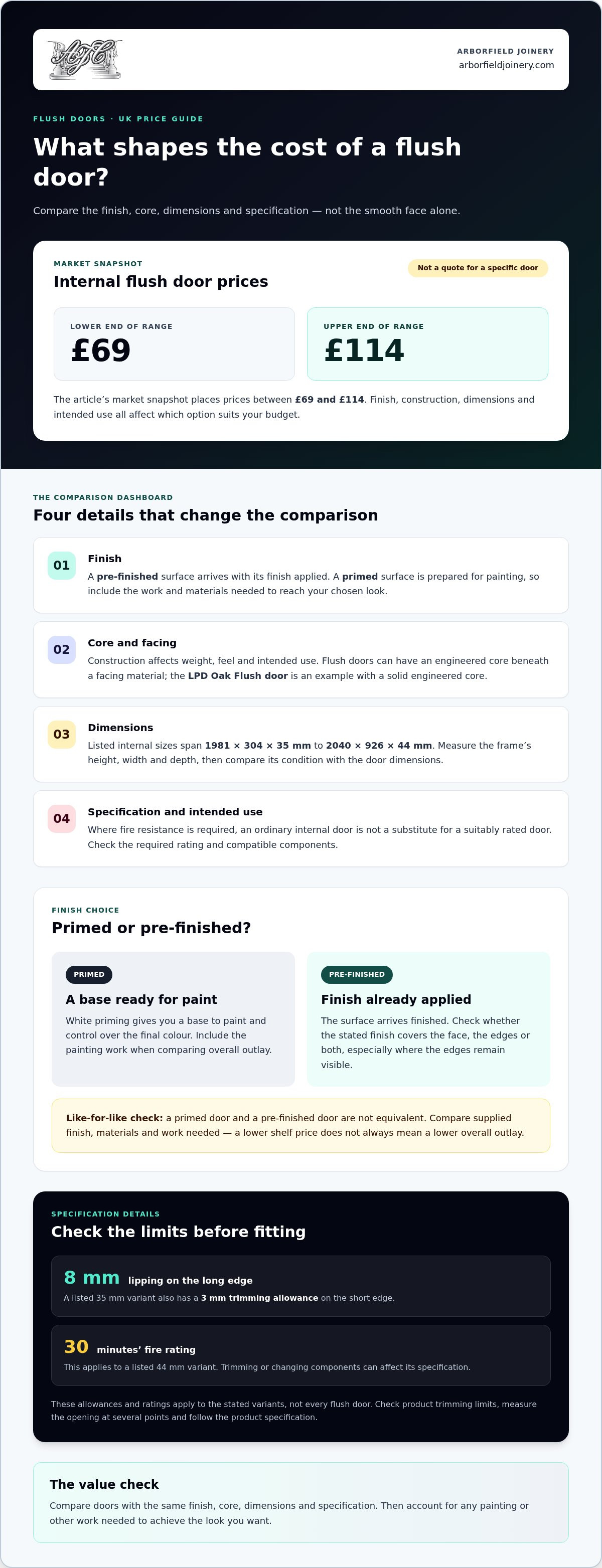
A pre-finished surface arrives with its finish applied, while a primed surface is prepared for painting. This affects the work needed after purchase: compare the supplied finish with the colour and sheen you want for the room.
White priming gives you a base to paint, while a finished timber look can bring visible grain into the scheme. Oak and walnut have distinct tones, so consider how each will work with your flooring, furniture and existing woodwork. A painted finish can blend with the walls or create a deliberate contrast.
Before comparing options, decide whether you want a ready-finished appearance or control over the final colour. Check whether the stated finish applies to the face, the edges or both. This can affect the finished look, especially when the edges remain visible.
For flush doors, the finish and underlying materials both shape the appearance and practical suitability. Compare the surface description with the room’s palette and intended use.
Core and facing materials
Construction affects weight, feel and intended use. Flush designs can have an engineered core beneath a facing material, with the core varying in construction and the facing providing the visible surface. The LPD Oak Flush door has a solid engineered core, illustrating why the product specification matters as much as appearance.
UK building requirements depend on the building and the door’s position. Where fire resistance is required, an ordinary internal door shouldn’t be treated as a substitute for a suitably rated door. The required rating and compatible components matter.
Internal sizes listed in the UK range from 1981 x 304 x 35mm to 2040 x 926 x 44mm. Measure the existing frame’s height, width and depth, then compare those measurements with the door size and frame condition before selecting a replacement.
For fitting, check the opening at several points, since an older frame may not be square. A listed 35 mm variant has an 8 mm lipping on the long edge and a 3 mm trimming allowance on the short edge. These allowances apply to those variants, not every door; follow the product’s trimming limits before cutting. A listed 44 mm variant has a 30-minute fire rating, so trimming or changing components can affect its specification.
Flush internal door appearance and design
A smooth door face creates a quieter visual rhythm. Unlike raised panels, it has fewer lines competing with wall mouldings, artwork or furniture. In a narrow hallway, a plain door can keep the eye moving towards the end of the space. In a bedroom, it can sit discreetly beside fitted wardrobes.
Look at the whole doorway, not just the door leaf. The frame, handles and surrounding architrave all influence the finished effect. A dark handle, for example, contrasts with a pale door, while a matching handle makes the details less prominent. Consistent choices across adjoining rooms help create a considered look.
Colour can change how a doorway looks. A door painted to match the wall blends into the background, which can suit a minimal scheme. A contrasting shade draws attention to the entrance. Picture a deep green door against a warm neutral wall, or a white door alongside white skirting for a calmer transition.
Natural wood adds a different kind of visual interest. Oak brings a lighter, recognisable grain, while walnut tends to look deeper and richer. Compare the door with nearby flooring and furniture in daylight, as warm artificial lighting can alter the appearance of wood tones. Repeating timber tones can link separate rooms.
Flush doors can also suit interiors that combine old and new details. In a period home, a simple face can balance ornate cornices or patterned wallpaper. In a contemporary flat, it can reinforce clean lines around streamlined furniture. The result depends on the surrounding architecture, not on the door style in isolation.
Consider the room’s proportions before choosing a visual treatment. A broad, uninterrupted surface can make a small room feel less busy, while a strong colour can give a larger room a focal point. In a corridor with several doors, repeating one colour and handle style creates a more orderly sequence.
Before deciding, view a sample beside the materials already in the room. Compare it with the floor, skirting, wall colour and nearby cabinetry. Then check how it looks from the main approach to the doorway, not only from directly in front. This reveals whether the door blends in or becomes a feature.
For inspiration, browse a range of flush door designs and compare their visual character with your interior. Notice how different flush doors, colours and timber tones change a room’s balance before settling on a look.
Appearance is only one part of the choice; comparing options by finish and specification can help keep a flush design consistent with the room. The retailer describes its internal flush fire doors as slightly thicker than its other models, a detail to consider when matching the door with the surrounding frame.
These price points offer a practical way to compare painted and timber-faced choices while keeping the overall visual effect in mind.
Affordability
The purchase price is only one part of a door’s overall value. A market snapshot places internal flush door prices between £69 and £114. Treat this as a market range, not a quote for a particular door. Finish, construction, dimensions and intended use all affect which option suits your budget.
Start by comparing products with the same specification. A primed door and a pre-finished door aren’t equivalent: one needs painting, while the other arrives with its surface finished. Include the materials and work needed to achieve your chosen look. A lower shelf price doesn’t always mean a lower overall outlay.
Next, consider the core and facing. A solid engineered core has a different construction from a lighter core. Facing materials also vary, from paint-grade surfaces to timber appearances. Compare the specifications with the look you want, rather than assuming two smooth-faced doors have the same construction.
Dimensions matter, too. Choosing a door that suits the existing opening may avoid extra alteration, while a poor size match can mean more work. Check the frame and opening measurements before selecting a size. Compare thickness as well, since it affects whether the door suits the existing frame and hardware.
Fire-rated options have a specific purpose and specification. Listed flush fire door products include FD30 and FD60 ratings, with FD60 indicating a 60-minute rating. Don’t compare these directly with standard internal doors on price alone. First establish whether the intended location needs a fire-rated door, then compare products with the relevant rating.
Use this checklist to make a fair comparison:
- Finish: compare primed and pre-finished options, including the work each requires.
- Construction: note the core and facing materials in each specification.
- Size: match the door dimensions to the measured opening and frame.
- Use: separate standard internal doors from fire-rated choices.
Finally, consider how many rooms are included in your project. When replacing several doors, consistent finishes and sizes become especially important. Make a room-by-room list, record each opening, then group doors by specification. This helps you see where one finish works throughout and where another choice better suits a particular room.
Set your budget around the requirements, not just the first price you see. A standard specification may suit a bedroom; where fire resistance is required, the rating is central. Compare like with like, account for finishing work, and decide which features matter most before choosing.
Durability and maintenance
Durability depends on construction, finish and the conditions around the doorway. A solid engineered core describes the door’s internal structure, while the facing and finish are exposed to everyday contact. Compare these details with how often the door will be used, such as at a busy kitchen entrance or in a quieter spare bedroom.
The LPD Oak Flush door has a 10-year manufacturer’s conditional warranty. Read the conditions alongside the product specification, including any requirements for care or use. A warranty period is useful context, but it doesn’t replace routine inspection for loose handles, scuffed edges or changes in how the door closes.
Clean the door according to its surface. For a painted door, use a soft cloth and mild cleaning solution, then dry the surface. Avoid abrasive pads, which can mark the finish. On a timber-faced door, wipe along the grain and clean spills promptly. Test any cleaning product in an inconspicuous area first.
Check the door and its hardware during routine household cleaning. Look for chips around the handle, worn edges near the floor, or loose hinges. Tighten a loose screw with the correct screwdriver, and touch up a small finish mark before it spreads. If the door starts catching, inspect the frame and hinges before sanding or trimming.
Flush doors can suit bathrooms, fire-door locations or rooms where sound reduction matters, but the relevant specification must match the purpose. A standard internal door shouldn’t be assumed to provide fire resistance or sound insulation. A listed 44 mm LPD Oak Flush variant has a 30-minute fire rating; fire performance depends on using the rated door as specified.
In a bathroom, consider moisture exposure and the door’s finish. Wipe away condensation or splashes rather than leaving moisture on the surface. Keep the room ventilated, and inspect the bottom edge and finish for damage. These steps help you spot wear early, particularly when the door is near a bath or basin.
Sound control involves more than the door leaf. Gaps around the frame can let sound through, so check how closely the door meets its stops. A well-fitted door with suitable seals can reduce sound transfer, although the result also depends on the surrounding wall and installation. Keep this in mind when choosing a door for a study beside a busy living room, where acoustic privacy and comfortable workspace setups from specialists like EKOBOR Office Ergonomic Furniture both contribute to a focused working environment.
When comparing options, note the intended room, finish and required performance. Follow the manufacturer’s care instructions and regularly inspect the surface, edges and hardware. This routine helps preserve the door’s appearance and flags small issues before they affect everyday use.
What types of flush doors are available in the UK?
UK buyers can compare doors by construction, surface finish and intended use. These choices affect the door’s appearance, weight and suitability for each room. Start by deciding whether you need a plain painted surface, a timber look, glazing or a fire-rated specification. Then compare the product details with the opening and room.
Paint-grade and primed doors provide a surface ready for your chosen paint colour. They suit schemes where you want the door to match walls, skirting or fitted furniture. A pre-finished option arrives with its visible surface already finished, reducing the painting needed after purchase. Check whether the finish covers the edges as well as the face.
Timber-faced and laminate designs create different visual effects. An oak-faced door shows natural wood character, while walnut has a deeper tone. Laminate has a manufactured surface, with its appearance determined by the specific design. Compare samples with flooring and furniture in daylight, since nearby wood tones can make a door appear warmer or cooler.
Core construction is another useful distinction. The LPD Oak Flush door has a solid engineered core and is intended for internal use. Core type influences the door’s feel and weight, so include it in comparisons rather than relying on surface appearance. Check the product specification for its intended location and any fitting limits.
Fire-rated models are designed for locations where enhanced fire protection is required. Flush fire doors can provide up to 60 minutes of enhanced protection in the event of a fire. A 44 mm listed LPD Oak Flush variant has a 30-minute fire rating. Ratings belong to the specified door configuration, so don’t assume every smooth-faced door provides the same performance.
Glazed flush designs combine a simple door face with glass, allowing light to pass between spaces. They can suit a dark hallway opening into a brighter room. Consider privacy and the doorway’s position before choosing glazing, such as between a corridor and a living space.
To narrow down the options, list each room and its needs. A bedroom may suit a painted or timber appearance, while a hallway could benefit from glazing. For a fire-rated location, prioritise the required rating and specified construction. Then check the door’s dimensions against the frame and opening before selecting a model.
Compare flush door types and finishes to find an option suited to each room and its intended use.
Arborfield Joinery: Oak Doors
Arborfield Joinery offers door styles and finishes for your interior project. If you like the natural character of timber, explore Oak Doors or Walnut Doors; for a paint-ready look, consider White Primed Doors. Urban Doors offer another style for a more contemporary interior.
Think about the room’s palette, existing woodwork and the look you want before narrowing your choice. Comparing these options can help you decide which material and finish best complement your home, whether you’re updating one doorway or creating a consistent look across several rooms.
For a closer look at the options, contact Arborfield Joinery or visit arborfieldjoinery.com.
Choose a door that feels at home
Before choosing, picture the doorway as part of the room’s wider character. Consider the atmosphere you want, then decide whether the door should blend with its surroundings or create a distinct contrast. This gives your shortlist a clear purpose, instead of leaving the decision to appearance alone.
Arborfield Joinery offers Oak Doors, Walnut Doors and White Primed Doors, giving you different starting points for shaping an interior. Consider which material or finish best supports your preferred look and how it will sit alongside your existing décor. A considered choice can help the doorway feel naturally connected to your home.
Ready to explore options for your project? Browse the flush door collection and consider which design feels right for your space. The right flush door is the one that brings your practical needs and personal style together. Take the next step when you’re ready, and enjoy shaping a home that feels distinctly yours.
Frequently Asked Questions
What is an Internal Flush Door?
An internal flush door is designed for use inside a building and has a flat face rather than raised panels. It can separate spaces such as a bedroom and landing, or a kitchen and utility room. Its simple surface suits painted or timber-look finishes. Before choosing one, consider the room, the door’s finish and how it will sit alongside nearby walls and woodwork.
What is a flush door and what are its main features?
A flush door has a smooth, level face, usually formed over a core with facing materials. Its uncluttered appearance can suit contemporary rooms and interiors with more decorative details. Construction, surface and intended use vary between models, so read the product specification rather than assuming every door is built alike. For example, compare core type and finish when choosing between a painted look and visible timber character.
How much do flush doors cost in the UK?
As a UK market guide, internal flush doors are typically priced between £69 and £114. The final price depends on specification, including dimensions, core construction, finish and whether a fire rating is required. Compare products with matching features, rather than treating a primed door and a pre-finished door as equivalent. This market range is general guidance, not a price for a particular seller or product.
How do you paint, maintain and repair a flush door?
For a primed door, prepare the surface as directed by the manufacturer, then apply paint evenly with a suitable brush or roller. Let each coat dry before applying the next. Clean finished surfaces with a soft cloth and mild solution. For a small chip, lightly prepare the damaged area and touch it up with a matching finish. If damage reaches the core or affects the door’s fit, assess the cause before attempting repairs.
What UK building regulations and fire-safety rules apply to flush doors?
UK building requirements depend on the building and the door’s position. Where fire resistance is required, use a suitably rated door with compatible components; an ordinary internal door is not a substitute. Listed flush fire doors include FD30 and FD60 ratings.
Share:
5 Ways to Reduce Energy Bills With New Doors
Internal Oak Fire Door Prices, Ratings and Fitting in the UK