
Table of Contents
- Why Durable Timber Doors Matter for External Entrances
- Hardwood vs Softwood External Doors: Which Lasts Longer
- Key Durability Factors: Construction, Materials and Lifespan
- Engineered Timber Front Doors vs Solid Timber
- External Door Maintenance Guide: Protecting Your Investment
- Bespoke vs Off-the-Shelf: Cost, Customisation and Long-Term Value
- Timber Door Options and Pricing
- Conclusion
- Frequently Asked Questions
Last Updated: September 30, 2026
Why Durable Timber Doors Matter for External Entrances
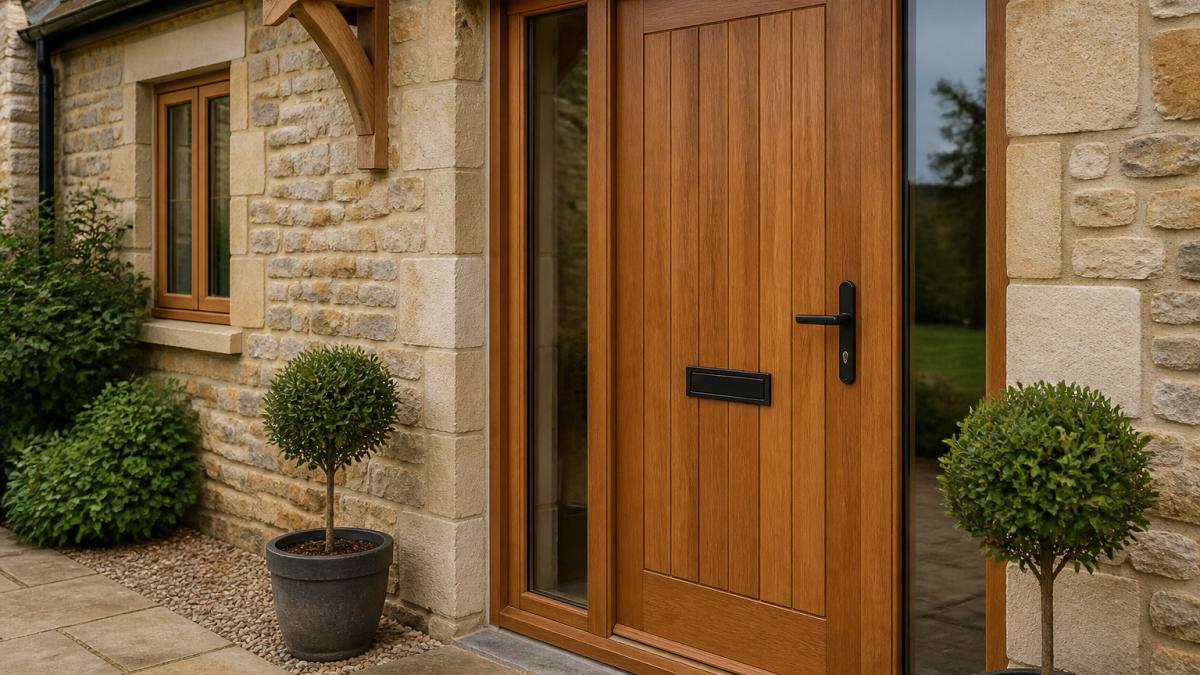
An external door is your home's first line of defence against the elements, security threats, and energy loss, which is why durable timber doors for external use matter so much. Yet many homeowners treat door selection as an afterthought, ignoring durability and long-term value. This is where durable timber doors for external use become essential.

Timber has protected buildings for centuries. Unlike composite alternatives, solid timber and engineered timber doors offer genuine weather resistance when properly constructed and maintained. They insulate naturally, age beautifully, and can be repaired and refinished indefinitely, a 30-year-old timber door can look brand new with proper care.
Arborfield Joinery is a family-run business established in 1953, dedicated to providing high-quality doors that last. The difference between a door that warps after two seasons and one that performs for decades comes down to three things: timber species, construction method, and finish applied.
Hardwood vs Softwood External Doors: Which Lasts Longer
The timber species you choose determines how your door will perform in rain, sun, and frost.
Hardwoods (oak, ash, walnut) are denser and naturally more resistant to moisture, warping, and rot. A hardwood door can last 40+ years with proper maintenance, but they're heavier and more expensive.
Softwoods (pine, fir, spruce) are lighter and more affordable but require rigorous finishing.
Key Durability Factors: Construction, Materials and Lifespan
Three factors separate a door that lasts from one that fails: how it's built, what protects it, and how well it's finished.
Dowel and Mortise-and-Tenon Construction
Dowel construction uses wooden dowels to join frame pieces. It's faster and cheaper, working well for moderate stress. The Suffolk Oak Double Glazed External door uses dowel construction with a 10-year warranty.
Thermal Efficiency and Weather Resistance
Timber is a natural insulator, far better than aluminium or steel. But thermal efficiency is lost if water gets in. A well-sealed door with modest insulation performs better than a poorly sealed high-performance door.
Fire Resistance Standards and Security
Fire resistance is governed by building regulations. The standard FD30 means the door maintains integrity for 30 minutes in a fire. Most external doors don't need this unless they're part of a fire escape route. Check your local building regulations.
Engineered Timber Front Doors vs Solid Timber
Engineered timber uses a solid timber veneer over a plywood core, reducing movement and warping because the cross-laminated core resists expansion and contraction.
Performance and Longevity Trade-Offs
Solid timber can last 40+ years and be sanded and refinished multiple times, effectively resetting its lifespan. Engineered timber typically lasts 30+ years but cannot be sanded and refinished; once the veneer is damaged, repair options are limited. Solid timber has a genuine long-term advantage if you're willing to invest in maintenance.
Cost of Ownership Over 30 Years
A solid hardwood door (£500-£700) requires recoating every 3-5 years at £150-£300 per cycle, adding £900-£3,000 over 30 years. An engineered timber door (£350-£500) requires minimal refinishing but cannot be restored if the veneer degrades. Solid timber favours long-term maintenance commitment; engineered timber favours minimal upkeep.
Environmental Impact and Certification
If sustainability matters, verify timber sourcing and certification.
FSC (Forest Stewardship Council) and PEFC (Programme for the Endorsement of Forest Certification) certify responsibly harvested timber. Ask suppliers whether timber carries FSC or PEFC certification.
Practical Guidance
Choose solid timber if:
- You plan to stay in the property long-term and commit to maintenance
- You value the ability to restore and refinish indefinitely
- You want authentic character and are willing to accept natural movement
- Environmental certification is a priority and you can source FSC/PEFC timber
Choose engineered timber if:
- You live in a high-humidity or coastal climate where stability is critical
- You prefer minimal maintenance and predictable upkeep costs
- You want reduced risk of warping or panel movement
- You prioritise contemporary aesthetics and modern performance standards
| Construction Type | Durability | Maintenance | Cost | Best For |
|---|---|---|---|---|
| Solid hardwood | 40+ years (indefinite with refinishing) | Regular refinishing every 3-5 years | £500-£700 | Long-term investment, period properties, eco-conscious buyers |
| Solid softwood | 20-30 years | Frequent recoating every 2-3 years | £200-£400 | Budget-conscious, sheltered use, secondary entrances |
| Engineered timber | 30+ years | Minimal refinishing, no sanding | £350-£500 | High-humidity climates, low-maintenance preference, modern builds |
External Door Maintenance Guide: Protecting Your Investment
Your door's lifespan depends entirely on maintenance. A £500 door neglected will fail; a £200 door maintained properly will outlast it.
Climate-Specific Maintenance Demands
Coastal and salt-air environments accelerate finish degradation and ironmongery corrosion. Recoat every 2-3 years with marine-grade finish. Use stainless steel or hot-dipped galvanised ironmongery and check quarterly for corrosion.
Annual Inspection Checklist
Finish condition: Look for cracks, peeling, or bare wood. Run your hand over the surface; it should feel smooth. In coastal areas, check for white salt deposits indicating salt intrusion.
Recoating Schedule and Technique
- Exposed positions or harsh weather: Every 2-3 years
- Sheltered positions or moderate climates: Every 3-5 years
- Coastal areas: Every 2-3 years (use marine-grade finish)
- High-humidity areas: Every 3-4 years (monitor for swelling or panel movement)
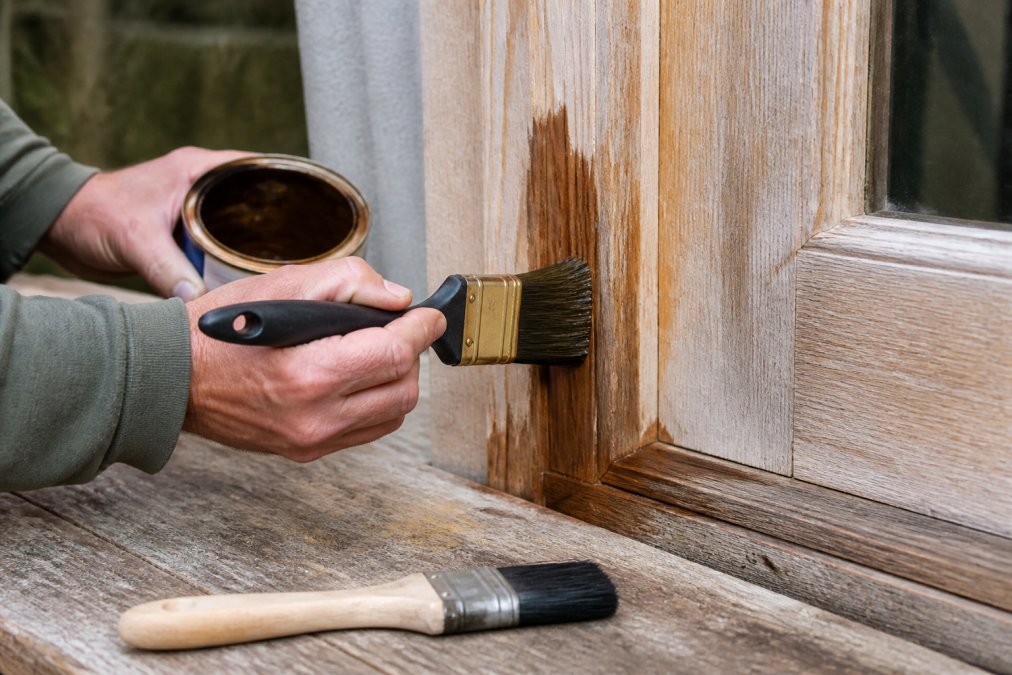
Sand the surface lightly (120-150 grit) before recoating. Use external timber finish; interior paint fails within months. Two-part polyurethane varnish and modern exterior stains offer better durability. Follow manufacturer's instructions on temperature and humidity.
Addressing Damage Before It Spreads
Exposed bare wood: Fill and recoat within days. Bare wood absorbs moisture rapidly, leading to swelling and rot.
Long-Term Maintenance Investment
Over the long term, maintenance costs are an important part of the total cost of ownership, and regular recoating represents an ongoing investment alongside the initial purchase price.
Bespoke vs Off-the-Shelf: Cost, Customisation and Long-Term Value
Standard doors come in fixed sizes. For non-standard openings, common in older properties, you can force a standard door to fit or commission a bespoke door.
Timber Door Options and Pricing
York M&T Hardwood External (£226.50) uses mortise-and-tenon construction with hardwood and raised panels. Unfinished, so you can customise the colour. Built for longevity with proper maintenance.
Conclusion
Choosing a durable timber door for external use is an investment in your home's security, thermal performance, and character. The decision hinges on three factors: timber species (hardwood for maximum durability, softwood for budget), construction method (mortise-and-tenon for stress resistance, dowel for cost efficiency), and maintenance commitment (regular recoating extends life indefinitely).
Frequently Asked Questions
What type of timber is best for durable external doors?
Hardwood species such as oak are widely chosen for external doors because of their density and robust feel. Engineered timber is often selected where stability and resistance to movement are a priority. The choice depends on your climate, aesthetic preference, and maintenance commitment. Solid timber with dowel or mortise-and-tenon construction is commonly associated with a strong, traditional build, while engineered options are often chosen by those prioritising stability over traditional appearance.
How often should external timber doors be maintained?
External timber doors benefit from periodic maintenance, with more frequent attention advisable in harsher coastal or wet climates. Inspect for cracks, gaps, and weathering regularly. Reapply protective finish (stain or paint) as needed to maintain weather resistance. Check weatherstripping and seals around the threshold to prevent water ingress. Regular cleaning of the door and hardware to remove dirt and salt spray can also help preserve appearance and function. Proper maintenance extends the lifespan significantly and prevents costly structural damage from moisture penetration.
What is the difference between engineered timber and solid timber for external doors?
Solid timber doors, crafted from hardwood or softwood, offer traditional aesthetics and natural beauty but can warp or shrink with moisture and temperature changes. Engineered timber typically uses a core with a timber veneer and is often chosen for its stability and resistance to movement. Solid timber is valued for its traditional appearance and natural feel, while engineered options are popular where stability and predictable performance are priorities. Choose solid timber for heritage properties or bespoke designs; engineered timber for stability and modern efficiency.
Do timber external doors meet fire safety standards?
Some timber doors on the market are manufactured to FD30 fire resistance standards, meaning they are designed to resist fire for 30 minutes. Check the manufacturer's specification when selecting a door for compliance with Building Regulations. Properly constructed timber doors with appropriate glazing and ironmongery can be designed to meet specific fire resistance standards where required. Always verify fire rating before purchase, especially for doors serving as escape routes or in multi-storey properties. Always consult individual product specifications and Building Regulations to confirm any required safety or fire performance ratings.
How much should I budget for a quality external timber door?
Arborfield Joinery offers external timber doors from £198.50 to £592.50 depending on material, glazing, and construction. The Windsor M&T Hardwood costs £198.50, whilst the Oslo Oak External Door is £592.50. Also remember to factor in installation, finishing if the door is supplied unfinished, and suitable hardware. Consider long-term value: a durable hardwood door lasting 20+ years outperforms cheap alternatives that warp within years. Free UK mainland shipping on orders over £900 reduces delivery costs for multiple products.
Can external timber doors be installed in non-standard openings?
Yes, many timber doors can be chosen or adjusted to suit non-standard openings more closely, helping to minimise gaps and draught issues. Many doors, including the Suffolk Oak Double Glazed External, can be trimmed during installation for flexibility. Careful selection and fitting help reduce the risk of movement and draughts that can occur when forcing standard sizes into irregular openings, which is particularly relevant for many period properties.
What security features should external timber doors have?
Look for doors with robust locking mechanisms, reinforced frames, and quality ironmongery that resists forced entry. Mortise-and-tenon or dowel construction creates structural integrity essential for security. Double-glazed panels with laminated glass add strength and visibility. Ensure the door leaf fits tightly within the frame with proper weatherstripping to prevent leverage points. Multi-point locking systems provide superior security compared to single locks. Check that any external door you choose is installed correctly with a suitable frame and appropriate locking hardware.
Share:
Glass Staircase Balustrade Kits: A UK Buyer’s Guide for 2026
Best Wood Sealants for Moisture Protection: UK Guide