
Table of Contents
- What Makes a Wood Sealant Effective for Moisture Protection?
- Quick Comparison: Top Wood Sealants for Moisture Protection
- Water-Based vs Solvent-Based Wood Sealants
- How to Waterproof Exterior Wood
- How Long Does Wood Sealant Last?
- Choosing the Right Sealant for Your Wood Species and Climate
- Essential Door Hardware for Complete Moisture Protection
- Conclusion
- Frequently Asked Questions
Last Updated: October 1, 2026
What Makes a Wood Sealant Effective for Moisture Protection?
A wood sealant for moisture protection is a coating or penetrating treatment that limits how much water timber absorbs, reducing swelling, warping, and rot. At Arborfield Joinery, we have supplied external timber since 1953, and the failures we see almost always trace back to water getting into the wood grain and staying there. The best wood sealants repel liquid water at the surface while still letting trapped moisture vapour escape so the timber can dry.
Penetrating vs Film-Forming Formulas
Penetrating sealers soak into the wood cells and line them from the inside. They leave the grain visible, will not peel, and suit species that move with the seasons.
Quick Comparison: Top Wood Sealants for Moisture Protection
How the main sealant types compare on real-world performance:
| Type | Water Repellency | Breathability | Best For | Recoat Interval |
|---|---|---|---|---|
| Penetrating oil-based | Moderate | High | Oak, teak, moving timber | 12-18 months |
| Penetrating water-based | Moderate | High | Low-VOC projects | 12-18 months |
| Film-forming solvent-based | High | Low | Sheltered exterior joinery | 3-5 years |
| Film-forming water-based | High | Moderate | Doors, windows, trim | 2-4 years |
The trade-off is consistent: the harder the finish repels water, the less the timber can breathe. On exposed elevations, breathability usually wins.
Water-Based vs Solvent-Based Wood Sealants
Water-based versus solvent-based (often called oil-based) sealants differ in penetration, drying time, odour, cleanup, and ageing, neither is simply better.
How the Two Families Differ
Solvent-based sealants use organic solvents as the carrier. They penetrate deeper into dense or oily timbers and resist water strongly, but carry higher VOC content, can take days to cure, and leave a lingering smell in enclosed spaces.
A practical summary of the trade-offs:
- Penetration: Solvent-based generally deeper, especially on oily or dense species. Water-based adequate on most softwoods and many hardwoods.
- Drying and recoat time: Water-based typically hours; solvent-based often overnight or longer.
- Odour and indoor use: Water-based far more suitable for occupied buildings and poorly ventilated spaces.
- Cleanup: Water-based with water; solvent-based requires white spirit or similar.
- Durability on exposed elevations: Solvent-based often holds longer, but the gap narrows with modern hybrids.
- Appearance: Solvent-based tends to amber or darken some timbers more; water-based stays closer to the natural tone.
VOC Content and Eco-Friendly Alternatives
VOC content is worth checking on the tin, especially for indoor joinery or a sealed workshop. Lower-VOC and VOC-free options reduce fumes and suit limited ventilation. In the UK, decorative paint and varnish VOC content is regulated under the Volatile Organic Compounds in Paints, Varnishes and Vehicle Refinishing Products Regulations 2012, which sets limits by product category. The label's VOC classification is a quick way to compare products on more than price.
- Water-based acrylic sealers with low or zero added VOC, the default for indoor joinery and occupied buildings.
- Plant-oil-based penetrating sealers (linseed, tung, or modified vegetable oils), good breathability and a natural finish, though recoat intervals can be shorter.
- Hybrid water-based/solvent-free formulas, combine the penetration of a solvent product with the low odour and cleanup of a water-based one.
- Solvent-free film-forming products, for doors and trim where a harder finish is wanted without the solvent load.
What to look for on the label:
- VOC content in g/L, and the product's VOC classification.
- Whether the product is described as solvent-free, low-VOC, or VOC-free.
- Coverage rate per litre, so you can compare cost per square metre rather than per tin.
- Recommended recoat interval and number of coats.
- Suitability for the species and exposure you are working with.
How to Waterproof Exterior Wood
Waterproofing exterior wood comes down to preparation and technique, not the price of the tin. A cheap sealer applied well beats an expensive one applied badly.
Surface Preparation and Application Technique
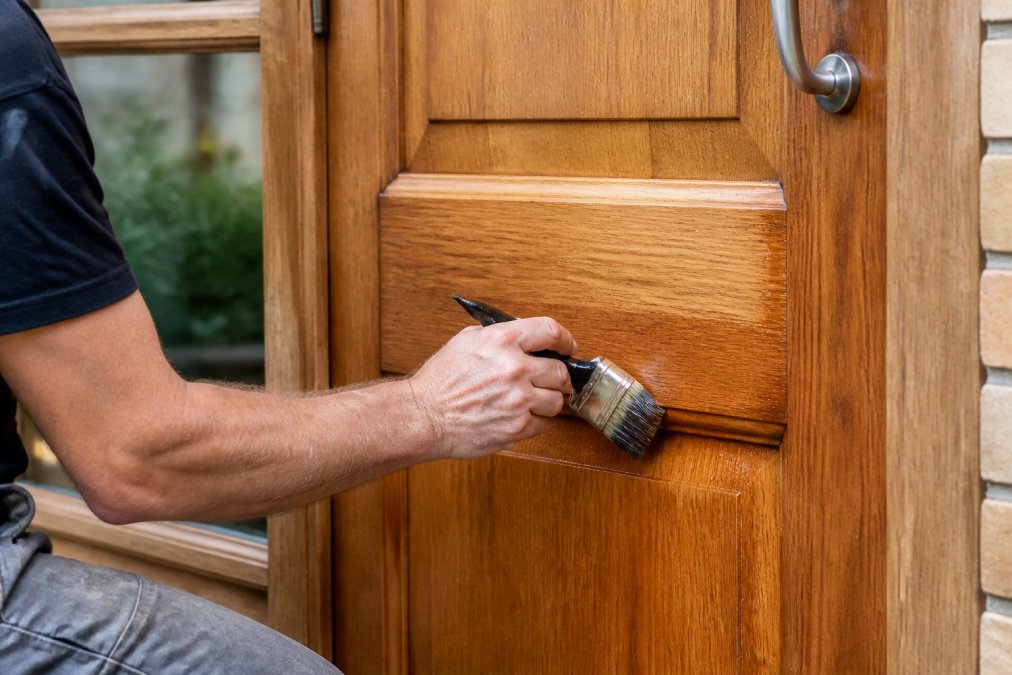
New timber must be dry, clean, and sanded before sealing; strip old finishes where they are flaking.
Hardwood External Weather Bar →
- Check moisture content with a meter; most sealers need timber below 18%
- Sand along the grain, finishing at 120-150 grit
- Remove all dust with a tack cloth
- Test the sealer on an offcut or hidden edge first
- Apply thin coats, brushing with the grain
- Allow full curing time between coats
- Seal all faces and end grain, not just the visible side
How Long Does Wood Sealant Last?
Wood sealant typically lasts 12-18 months for penetrating formulas and 2-5 years for film-forming finishes, depending on exposure and climate. South-facing elevations, coastal salt air, and heavy rainfall shorten the cycle, while a sheltered north-facing door may hold its finish far longer than an exposed gate. Test water behaviour: if water stops beading and starts soaking in, it is time to recoat, regardless of the calendar.

Choosing the Right Sealant for Your Wood Species and Climate
Wood species and local climate should drive the decision more than brand loyalty. Absorption rate and movement vary enormously between species, and the same sealer can perform well on one board and poorly on another in the same doorway.
Matching Sealant to Wood Species
Species differ in density, pore structure, and movement as moisture content changes, which determines whether a penetrating or film-forming product suits best.
- Oak (European and American white oak): Dense, large open pores, moderate movement. Penetrating oils and oil-modified water-based sealers soak in well and leave the grain readable. Film-forming finishes work on sheltered oak joinery but flake where the timber moves.
- Teak and other oily tropical hardwoods: Naturally water-resistant and slow to absorb. Penetrating oils sit closer to the surface and may need longer between coats. Solvent-based products penetrate oily species better than water-based ones, which can struggle to wet out the surface.
- Cedar and redwood: Soft, low-density, highly absorbent. They drink sealer quickly, so expect higher coverage than the tin suggests. A penetrating water-based or oil-based sealer suits best; film-forming products can crack as the soft timber swells and shrinks beneath them.
- Pine and other softwoods: High porosity and significant movement. They benefit from a penetrating sealer that lets the timber dry from the inside out, especially on external doors and frames where end grain is exposed.
- Iroko and similar dense hardwoods: Dense and dimensionally stable, but slow to accept finish. Thin coats and longer flash-off times are usually needed.
Climate-Based Recommendations
Generic 'best sealer' advice ignores that a product performing well in a dry, sheltered spot can fail within a season on an exposed, rain-driven elevation. The variables that matter most are annual rainfall, prevailing wind direction, salt exposure, and freeze-thaw cycling.
- High-rainfall, wind-driven exposures (western and south-western elevations, upland areas): Prioritise maximum water repellency with high breathability. Penetrating oil-based or hybrid water-based sealers are safer because they let the timber dry after saturation. Film-forming finishes here tend to trap moisture and blister.
- Coastal and salt-air locations: Salt accelerates surface degradation and can break down some film-forming finishes faster than inland exposure. Look for documented salt-spray resistance, and expect shorter recoat intervals than the tin states. Pair with stainless or marine-grade hardware to avoid corrosion staining.
- Cold, freeze-thaw-prone areas: Water sitting in the grain and freezing will lift finishes and split fibres. Breathability matters more than raw water repellency, because the timber must shed internal moisture before temperatures drop.
- Hot, dry, high-UV exposures (southern aspects, sheltered inland gardens): UV degradation, not water, is often the primary failure mode. Film-forming finishes with UV inhibitors hold colour and gloss longer, and the longer recoat interval is a genuine advantage.
- Sheltered, north-facing or covered aspects: Lower rain and UV load means a film-forming finish can last considerably longer. This is where a harder, longer-life product earns its place.
Testing Compatibility Before You Commit
Most failures on previously finished timber are compatibility failures, not product failures. A new sealer over an unknown or incompatible old finish can blister, fish-eye, or peel within weeks.
- Identify the existing finish if possible. Solvent-based and water-based products do not always bond, and some two-pack finishes reject anything applied over them.
- Sand a small, representative patch, ideally a hidden edge or the underside of the door, back to bare timber or a sound, well-keyed surface.
- Apply the new sealer exactly as the tin instructs, including the recommended number of coats.
- Leave it at least 48 hours in similar conditions to the final location.
- Check for blotching, raised grain, poor adhesion, or softening of the underlying finish. If any appear, strip back further or switch to a compatible product.
Essential Door Hardware for Complete Moisture Protection
Sealant alone will not keep water out of a doorway. The hardware that sheds water away from the timber matters just as much.
Conclusion
Getting moisture protection right is less about one miracle product and more about matching the sealer to the timber, exposure, and hardware. Homeowners who avoid warped doors and rotten frames prepare properly, seal every face, and recoat before the finish fails.
Frequently Asked Questions
What is the best wood sealer for protecting wood from water damage?
The best wood sealer depends on your wood type and exposure. Penetrating oil-based sealants soak into wood cells for deep moisture ingress protection, while film-forming options like spar urethane create a surface barrier. For exterior doors and windows, a breathable finish that allows moisture vapor transmission while blocking liquid water works best. Always check compatibility with your existing finish before applying.
How often should you reapply moisture-resistant wood sealant?
Reapplication depends on the sealant type and weather exposure. Film-forming sealants typically need refreshing every 1-2 years on south-facing exterior wood. Penetrating sealants may last 2-4 years but require more frequent inspection. Test water repellency by sprinkling water on the surface: if it soaks in rather than beading, it is time to reapply. High-traffic areas like exterior doors may need annual maintenance.
Does wood sealant prevent rot and fungal growth?
Wood sealant helps prevent rot by blocking moisture ingress, which is the primary cause of fungal growth. However, sealant alone cannot stop rot if wood is already damp or if water pools on surfaces. Proper surface preparation, adequate drainage, and using weather bars on exterior doors all contribute to wood rot prevention. For best results, apply sealant to dry wood and maintain the protective barrier regularly.
Can you apply wood sealant over existing paint or varnish?
Applying sealant over existing finishes requires compatibility testing first. Oil-based sealants may not adhere properly to water-based paints, and some solvent-based products can lift existing coatings. Test on a small hidden area and wait 48 hours to check for bubbling or peeling. If the existing finish is in good condition, a compatible clear coat may work. If it is flaking, sanding back to bare wood before sealing gives better results.
What is the best waterproof coating for exterior timber?
For exterior timber, the best waterproof coating balances water repellency with breathability. Solvent-based penetrating sealants offer deep protection and UV resistance, while water-based options provide lower VOC content and easier cleanup. For hardwood doors and frames, a breathable finish prevents wood swelling by allowing moisture vapor transmission. Always ensure the timber is fully finished before installation, especially for exterior doors.
Share:
Durable Timber Doors for External Use: A 2026 Guide
Internal Concertina Doors in Wood: A Practical Buying Guide