
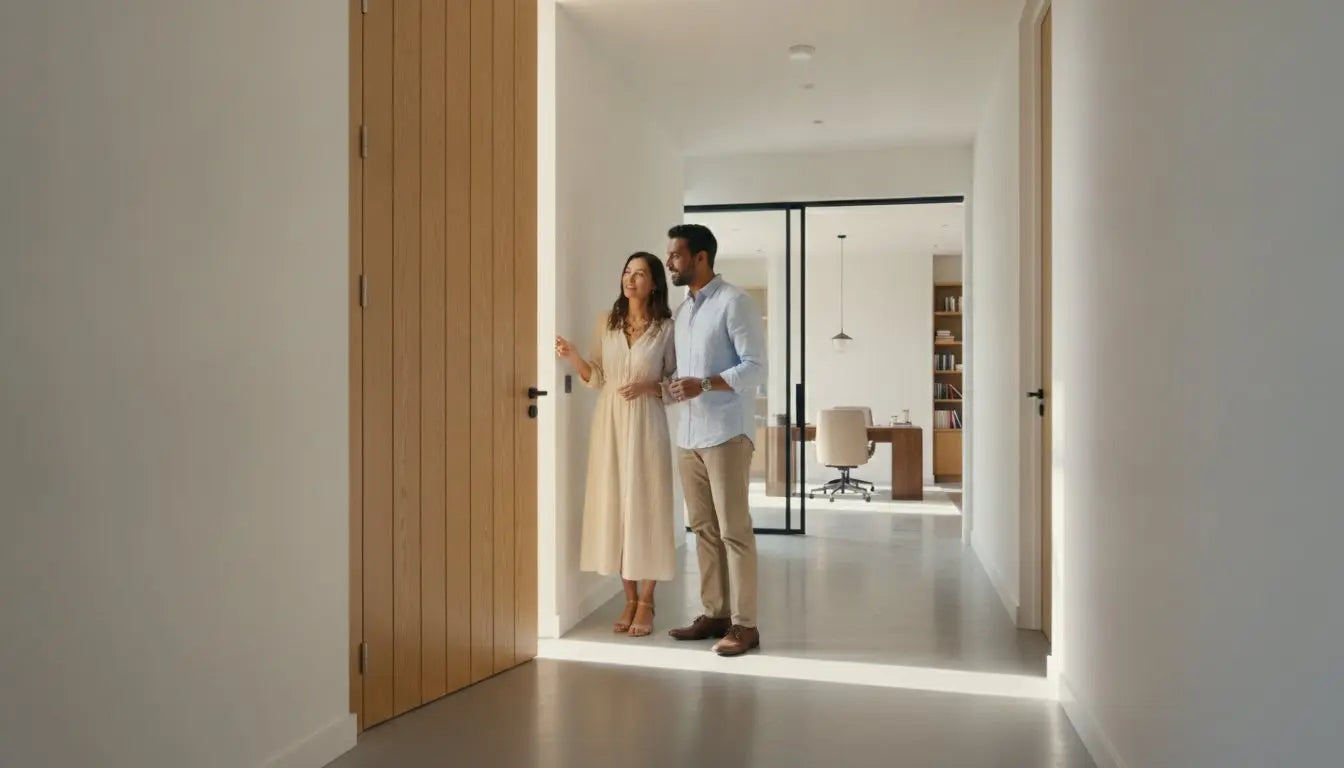
What if the most impactful piece of furniture in your home isn't a designer sofa, but the very portal you walk through every day? It's a question many homeowners overlook until they're faced with a sea of confusing options. Selecting the right interior doors is about more than just closing off a room; it's about defining the architectural character of your living space whilst ensuring your family's safety and comfort.
We understand that you want a home that feels cohesive and premium, but the technical side can often feel daunting. Whether you're puzzled by the difference between veneer and solid timber, or concerned about the 2026 transition from BS 476-22 to the EN 1634-1 fire door regulations, these worries are completely natural. This guide will clear the fog. You'll discover how to select stylish, low-maintenance solutions that improve light flow and add genuine value to your property. We'll explore the resurgence of natural oak and walnut finishes, the benefits of space-saving pocket systems, and the essential digital documentation now required for fire safety compliance.
Key Takeaways
- Learn how to view your doors as central design elements that define your home's character and improve acoustic privacy between rooms.
- Navigate the hierarchy of materials to select interior doors that offer the perfect balance of aesthetic appeal and long-term structural stability.
- Discover architectural solutions like glazed and folding systems that effectively resolve challenges with natural light and limited floor space.
- Gain clarity on technical essentials, including precise measuring techniques and the latest 2026 UK fire safety standards for total peace of mind.
- Understand why choosing a specialist joinery over a general merchant ensures a more durable, premium finish for your home improvement project.
Choosing the Right Interior Doors for Your Home’s Character
Interior doors are often the most undervalued architectural feature in a British home. Whilst many view them as mere utility items, they function as permanent furniture that dictates the acoustic privacy and visual flow of your living space. A high quality door does more than just separate rooms; it acts as a tactile transition that signals the quality of the entire property. Selecting the right style requires a balance between functional requirements and aesthetic harmony. Understanding the different types of interior doors available is the first step toward a successful renovation that feels considered rather than accidental.
The "flow" of a home is heavily influenced by how these portals interact with light and sound. A thin, lightweight door can make a premium renovation feel hollow, whereas a substantial, well fitted door provides the acoustic dampening necessary for modern, multi functional living. Beyond sound, the concept of consistent joinery is vital for a high end finish. This means ensuring your interior doors, skirting boards, and architraves share a common design language. To complete this cohesive look, many renovators choose to buy carpet online UK from Frankly Flooring to find high-quality options that complement their new timber features, ensuring these elements align to create a sense of structural integrity that adds tangible value to the property.
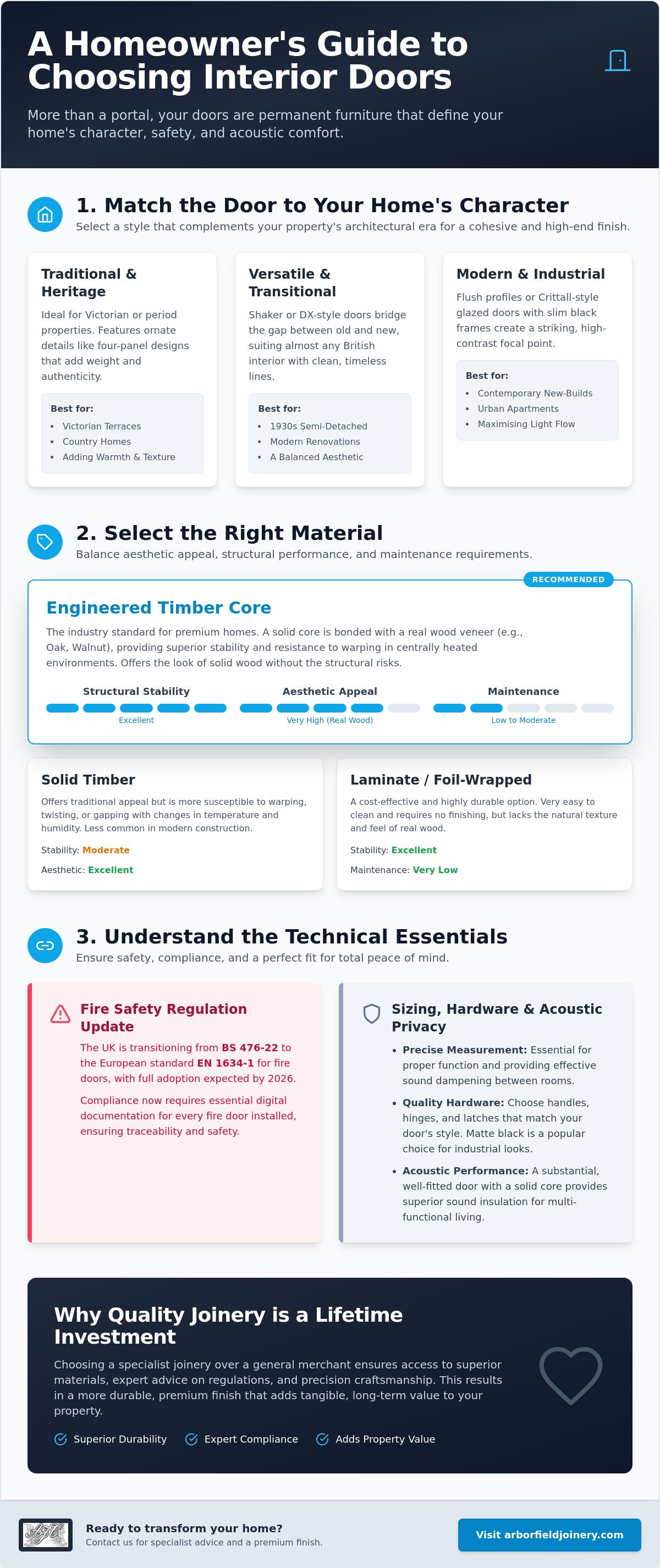
Matching your door choice to the era of your home is another hallmark of professional design. A Victorian terrace often demands the weight and ornate detail of traditional four panel designs to feel authentic. Conversely, a 1930s semi detached property might benefit from the iconic DX style door with its distinct three horizontal panels. For modern builds, the focus shifts toward clean lines and minimalist profiles that don't overwhelm the space.
Contemporary vs. Traditional Styles
The choice between contemporary and traditional often comes down to the desired atmosphere. Traditional oak doors provide a sense of heritage and warmth; they can ground a modern renovation by adding a layer of organic texture. In contrast, contemporary designs like flush or Shaker doors follow a "less is more" philosophy. These styles prioritise smooth surfaces and sharp geometry, making them ideal for homes where the goal is a streamlined, uncluttered aesthetic. Shaker doors are particularly versatile, offering a bridge between old and new that suits almost any British interior.
The Rise of Urban and Industrial Designs
One of the most significant shifts in recent years is the surge in popularity of the Urban Door. These designs typically feature slim black frames and large glass apertures, mimicking the classic Crittall-style aesthetic. They work exceptionally well amongst neutral colour palettes, exposed brickwork, or polished concrete floors. To complete this industrial look, homeowners are increasingly opting for matte black door handles and hinges. This creates a striking, high contrast finish that allows interior doors to become the focal point of a room rather than a background element.
Material Selection: From Classic Oak to Modern Laminate
Choosing the right material for your interior doors is a decision that balances tactile luxury with long term structural performance. The hierarchy of construction typically ranges from solid timber and engineered timber to modern laminates. Whilst many homeowners initially seek solid wood, the industry has largely shifted toward engineered construction. This sophisticated method involves a solid core bonded with a real wood veneer, which provides superior resistance to warping and twisting in centrally heated homes. It's a stable, reliable solution that ensures your doors don't stick or gap as the seasons change.
Material choice also dictates how well a product meets established Fire safety standards. Beyond safety, opting for sustainably sourced timber joinery ensures your home improvement project respects the environment. High quality timber is a renewable resource that acts as a carbon sink, making it a responsible choice for the eco conscious buyer. In terms of upkeep, maintenance requirements vary significantly between types. A laminate door requires nothing more than a damp cloth, whereas unfinished timber needs periodic oiling or waxing to prevent the wood from drying out and losing its natural lustre.
The Timeless Appeal of Internal Oak Doors
Oak remains the undisputed favourite amongst UK homeowners for its prominent grain patterns and warm, honey-toned colour variations. This material offers a sense of permanence that few other woods can match. You can choose pre-finished options for immediate installation or unfinished doors if you prefer to apply a bespoke stain or oil that matches your existing furniture. Oak is the gold standard for durability in British homes because of its natural density and ability to withstand the knocks of a busy household.
Premium Walnut and Versatile White Primed Options
For those seeking a more dramatic, high end look, walnut doors offer a rich, dark aesthetic that pairs beautifully with contemporary brass hardware. These doors are often used as statement pieces in master suites or formal dining rooms. If you have a specific colour palette in mind, white primed doors are the ideal choice; they provide a smooth, professional base for a custom paint finish. For high traffic areas, busy family homes, or rental properties, laminate doors provide exceptional scratch resistance and represent a cost effective alternative. If you're unsure which material best suits your lifestyle, you can explore our full range of quality interior doors to compare the textures and finishes in person.
Solving Space and Light Challenges with Glazed and Folding Doors
Many British homes suffer from two recurring issues: dark, windowless hallways and rooms that feel slightly too small for modern living. Instead of viewing interior doors as fixed barriers, think of them as architectural tools to manipulate light and space. By choosing glazed or folding options, you're not just buying a product; you're redesigning the way your home feels. This approach allows you to maintain the separation of rooms whilst creating an illusion of open plan living that feels airy and connected.
The concept of "borrowed light" is a game changer for terrace houses or apartments where natural light is limited to the front and rear of the property. A glazed door allows sunshine to permeate deeper into the floor plan, turning a gloomy corridor into a bright, welcoming passage. Safety is never a compromise in these designs. High quality interior doors with glass inserts utilise toughened safety glass as standard, providing the necessary impact resistance for homes with children or pets. This ensures that your aesthetic choices are backed by structural reliability and peace of mind.
Maximising Natural Light with Internal Glazed Doors
The choice of glass significantly impacts both light flow and privacy. Clear glass offers maximum visibility and light transmission, making it the ideal bridge between a kitchen and a dining area. If you require light but need to obscure the view, frosted or reeded glass provides a sophisticated solution for bathrooms or home offices. You should also consider the "Lite" configuration of the door. A single large pane (1-lite) offers a minimalist, modern aesthetic, whilst 4-lite or 5-lite designs can provide a more traditional or industrial feel that complements the era of your property.
Space-Saving Brilliance: Bi-fold and Pocket Doors
In smaller rooms, the "swing" of a traditional door often dictates where you can place furniture. Bi-fold doors eliminate this problem by operating on a precision track system, folding neatly to one side without encroaching on the room's footprint. For those seeking the ultimate space saving solution, pocket doors are a "disappearing" option that slides directly into a wall cavity. These are particularly effective for en-suites, larders, or utility rooms where floor space is at a premium. Selecting premium folding systems is essential here; a high quality mechanism ensures a silent, effortless glide that won't degrade with frequent daily use.
Technical Essentials: Fire Safety, Sizing, and Hardware
The most common anxiety we encounter amongst homeowners is the fear that their new interior doors simply won't fit the existing frames. In older British properties, frames are rarely perfectly square. This makes precise measurement a non negotiable part of the process. To ensure a professional finish, you should measure the width and height of your frame in three separate places: the top, middle, and bottom. Always use the largest dimension to select your door size. It's far easier to trim a door down than it is to bridge a gap that's too wide.
Standard UK door sizes typically follow a set of dimensions, with heights usually fixed at 1981mm and widths ranging from 610mm to 838mm. However, the door itself is only part of the visual equation. The architrave and skirting boards act as the frame for your new installation. If these aren't aligned in style and quality, even the most expensive door will look out of place. Similarly, never underestimate the impact of hardware. High quality hinges and latches don't just look better; they provide that satisfying, heavy "feel" and a silent operation that defines a premium home environment.
Understanding Fire Door Requirements (FD30)
Safety regulations in the UK are strict, particularly regarding doors that lead to integral garages or those situated in multi storey homes. In these instances, you'll likely require FD30 rated doors. Fortunately, modern manufacturing means these safety features don't have to look industrial. You can find FD30 versions in the same elegant oak, walnut, and white primed finishes as your standard doors. An FD30 rating provides 30 minutes of fire resistance.
Trimmable Doors: How Much Can You Safely Cut?
Every door has a "trimming allowance," but this varies significantly depending on the construction. Solid timber doors offer the most flexibility, often allowing for several millimetres to be removed from each edge. Hollow core doors have a much smaller internal frame; over trimming these can compromise the door's structural integrity and leave the honeycomb core exposed. If your frames are particularly irregular, consider using a door and frame kit to ensure perfect alignment from the start. For technical advice on sizing or to browse our compliant range, view our collection of interior doors and speak with our expert team.
Why Quality Joinery is a Lifetime Investment
Investing in your home is a long term commitment, and your choice of supplier is just as critical as the material itself. Whilst general builders' merchants offer convenience for structural supplies, they often lack the specialised knowledge required for high performance timber. A specialist joinery focuses on the finer details of grain selection, moisture content, and structural stability. This expertise ensures that your interior doors don't just look impressive on the day of installation, but continue to operate smoothly for decades to come. When you choose a specialist, you're investing in "permanent furniture" that defines the quality of your living space.
There is no substitute for the tactile experience of a physical showroom. Digital images can't fully convey the weight of a solid core door or the intricate texture of a natural oak grain. Our Berkshire showroom features over 120 doors on display, allowing you to experience the quality firsthand before making a final decision. This sensory approach is vital for ensuring your doors match the existing joinery and aesthetic of your property. Beyond the immediate visual appeal, quality doors provide a significant return on investment. In the UK property market, premium internal finishes act as a silent indicator of a well maintained home, making them a key selling point for discerning buyers.
For homeowners looking to ensure quality from the ground up, you can learn more about Emerald Construction and their expertise in groundworks and general building, which provides the essential structural foundation for any premium interior renovation.
The Arborfield Joinery Heritage Since 1953
Our story began over seven decades ago, and that heritage remains at the heart of everything we do. Since 1953, we've refined our expertise in timber selection and craftsmanship, transitioning from a local workshop to a national supplier without losing the personal touch of a family run enterprise. This longevity provides our customers with a sense of security; we've seen the industry evolve and we understand which designs truly stand the test of time. We invite you to visit our Berkshire showroom, where our team acts as knowledgeable consultants rather than high pressure salespeople, helping you curate a home that reflects your personal style.
National Delivery and Expert Support
We combine the traditional values of a family business with the logistical capability of a national provider. For larger renovation projects, we offer free mainland UK shipping on all orders over £900, ensuring your products arrive safely and efficiently. If you're managing a complex order or have technical questions regarding the fire safety standards discussed earlier, our experts are available via phone or in store to provide empathetic, professional guidance. We believe in building long term relationships with our customers, supporting you from the initial measurement to the final delivery. Browse our extensive collection of interior doors and find your perfect match today.
Elevate Your Living Space with Expert Joinery
Choosing the right interior doors is a transformative decision that harmonises your home’s aesthetic whilst providing essential acoustic and structural benefits. By prioritising high quality materials and ensuring technical compliance with the latest fire safety standards, you're making a lifetime investment in your property's value. Whether you’re drawn to the warmth of natural oak or the sleek lines of our Urban collection, the right choice will redefine your home's character for years to come.
At Arborfield Joinery, our family run business has been guiding homeowners through these decisions since 1953. We invite you to visit our Berkshire showroom to explore over 120 doors on display and receive personalised advice from our expert team. If you’re ready to begin your renovation, we offer free mainland UK shipping on all orders over £900 to ensure a seamless experience from selection to delivery.
Shop the Full Range of Premium Interior Doors and take the first step toward a more beautiful, cohesive home today.
Frequently Asked Questions
What is the standard size for interior doors in the UK?
The most common standard size for interior doors in the UK is 1981mm x 762mm, which is often referred to as a 2'6" door. However, other standard widths include 610mm, 686mm, 711mm, and 838mm. It’s essential to measure your existing frame at the top, middle, and bottom because older properties often have non-standard openings. If your frame doesn't match these exactly, you'll need a door with a sufficient trimming allowance or a bespoke solution.
Can I replace an internal door without replacing the frame?
You can absolutely replace an internal door whilst keeping the existing frame, provided the timber is structurally sound and relatively square. It’s a cost-effective way to refresh a room’s aesthetic without the upheaval of major joinery work. You simply need to ensure the new door matches the dimensions of the old one as closely as possible. If the frame has settled or warped over time, a skilled joiner can trim the new door to accommodate these slight irregularities.
What is the difference between a pre-finished and an unfinished door?
A pre-finished door arrives fully factory-treated with lacquer, paint, or oil, meaning it’s ready to hang immediately. This saves significant time and ensures a perfectly smooth, professional finish that’s difficult to replicate at home. Unfinished doors are supplied as raw timber, giving you the freedom to apply a bespoke stain or paint that matches your specific decor. Whilst unfinished options offer more creative control, they require careful sealing on all edges to prevent moisture absorption.
Are oak veneer internal doors as good as solid oak?
Modern oak veneer interior doors are often superior to solid oak in terms of structural stability. They utilise an engineered core that resists the natural expansion and contraction caused by central heating and humidity changes. Solid oak is beautiful and traditional, but it’s more prone to warping if the environment isn't perfectly controlled. For most British homes, an engineered veneer provides the best balance of a premium real-wood look and long-term reliability without the risk of sticking.
How much can I trim off a standard internal door?
Most standard internal doors allow for a trimming allowance of approximately 3mm to 6mm from each edge. Solid timber doors offer the most flexibility, but hollow-core or engineered doors have a specific internal lipping that must not be compromised. If you cut beyond this lipping, you risk exposing the internal core and weakening the entire structure. Always check the manufacturer’s specific guidelines before you begin cutting to ensure you don't void your warranty or damage the door.
Do I need a fire door for my kitchen or bedroom?
You don't typically need fire doors for standard kitchens or bedrooms in a two-storey residential home. However, UK building regulations require them for rooms leading to an integral garage or in houses with three or more storeys. If you’re converting a loft, the new rooms and the stairwell will likely require FD30-rated doors to create a safe escape route. It’s always best to consult a local building control officer to ensure your project complies with current safety legislation.
What are the benefits of choosing a glazed internal door?
The primary benefit of a glazed door is the significant increase in natural light flow between rooms. This "borrowed light" can make dark hallways feel larger and more welcoming without sacrificing thermal or acoustic insulation. Glazed designs also create a visual connection between living spaces, such as a kitchen and dining room, whilst still containing noise and cooking odours. They’re an excellent architectural solution for modernising older, more compartmentalised floor plans without losing the sense of separate rooms.
How do I maintain my walnut interior doors to keep them looking new?
To keep walnut doors looking new, you should dust them regularly with a soft, lint-free cloth. Avoid using harsh chemical cleaners or abrasive polishes that can damage the delicate grain and protective finish. If the doors are oiled, a light application of a high-quality clear wax or furniture oil every few years will maintain their deep, rich colour. Always wipe in the direction of the wood grain to prevent streaking and ensure a uniform, sophisticated lustre.
Share:
The Ultimate Guide to Internal Oak Doors: Timeless Style and Craftsmanship
The Ultimate Guide to Internal Oak Doors: Timeless Style and Craftsmanship