
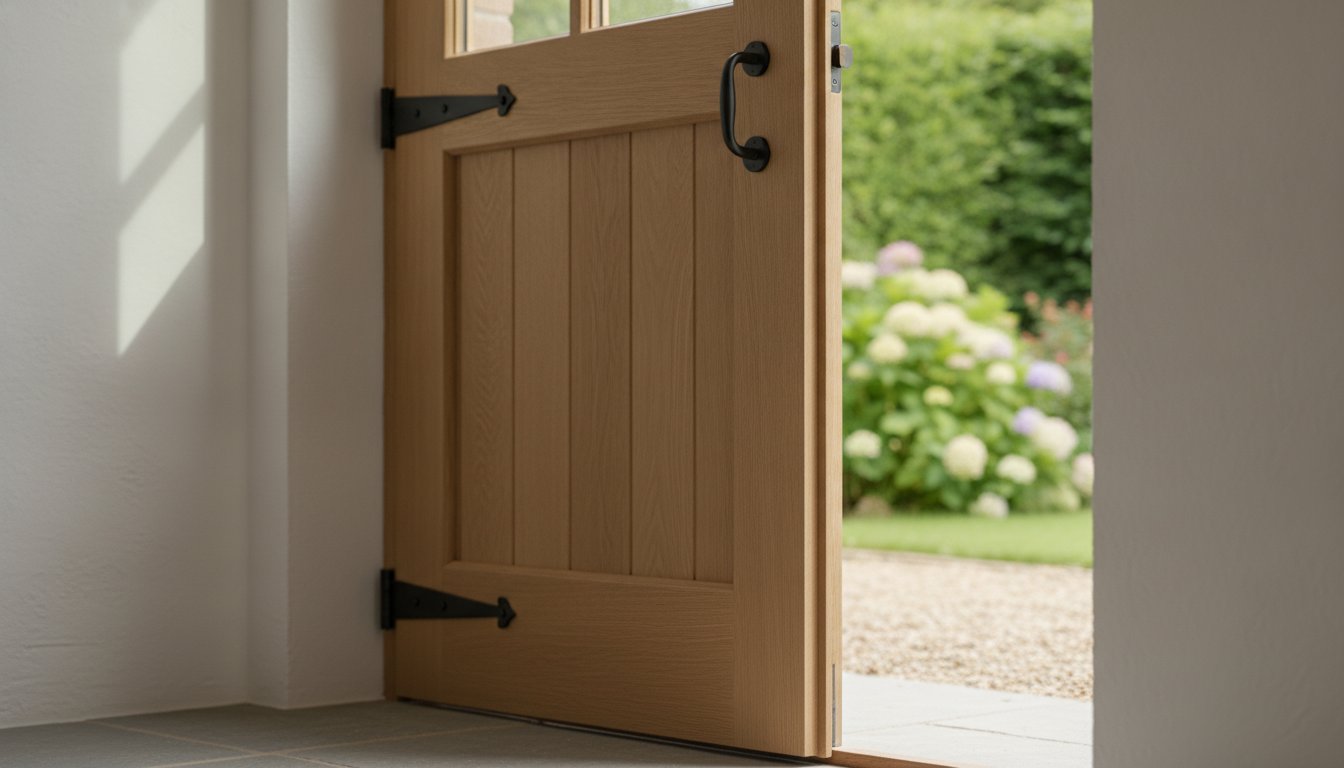
A ledge and brace door is not just a utility item; it's a structural icon of British joinery that requires specific orientation to remain functional for decades. It's common to feel overwhelmed by the choice between ledged, braced, and framed variants, or to worry that a heavy timber door might warp and drop over time. Since 75% of fire doors inspected in 2023 failed to meet safety standards, we know that quality and precision matter more than ever. You likely want a door that achieves a high-end "cottage core" aesthetic whilst offering the structural integrity that only expert craftsmanship can provide.
This article promises to guide you through the traditional anatomy of these doors and the best timber choices for lasting stability. We'll explore the structural benefits of different designs and provide practical hardware and installation tips to ensure your joinery stands the test of time. You'll also learn about the latest July 2026 building regulations regarding fire safety and thermal efficiency, helping you make an informed investment. From choosing between oak and softwood to selecting the perfect wrought iron latches, we'll help you curate a home that feels both historic and secure.
Key Takeaways
- Master the traditional anatomy of "batten" doors to understand how horizontal ledges and diagonal braces work together for lasting strength.
- Evaluate the performance of European Oak versus Knotty Pine to ensure your choice aligns with your home's unique character and durability needs.
- Determine whether a standard ledge and brace door or a more robust framed variant is the correct fit for your specific room requirements.
- Select authentic finishing touches, including T-hinges and Suffolk latches, to perfectly complement a high-end "cottage core" aesthetic.
- Learn why investing in heritage joinery from a family-run specialist avoids common pitfalls like wood warping or joint failure.
Understanding the Anatomy of a Ledge and Brace Door
A ledge and brace door is a masterclass in functional joinery. Often referred to as a "batten" door, its design has remained largely unchanged for centuries because it simply works. Unlike the lightweight, hollow-core doors found in many modern developments, this traditional construction relies on solid timber components that work in harmony to resist gravity and seasonal shifts in humidity. While many people associate this style with garden gates or sheds, a high-quality internal version brings a sense of permanence and heritage to any room.
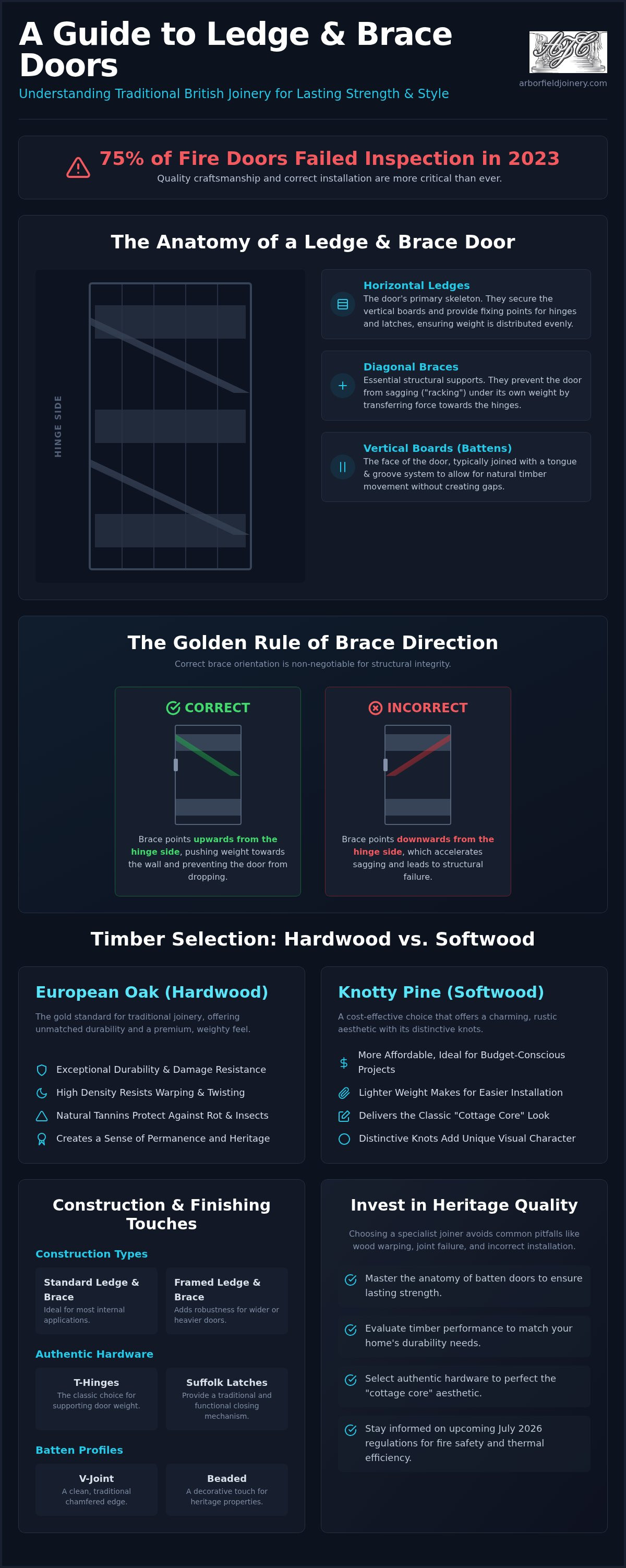
The "ledges" are the horizontal boards fixed across the rear of the door. These serve as the primary skeleton, securing the vertical planks firmly in place. In a standard configuration, you'll find three ledged sections: top, middle, and bottom. These aren't just for show; they provide the essential fixing points for hinges and latches, ensuring the door's weight is distributed evenly across the frame.
Braces are the diagonal timbers positioned between the ledges. Their role is purely structural. Without them, a heavy timber door would eventually "rack" or sag under its own weight, leading to a door that catches on the floor or fails to close properly. There is a non-negotiable rule in joinery: the brace must point upwards from the hinge side. This configuration ensures the weight of the door is pushed back towards the hinges and the wall, rather than pulling away and causing structural failure.
The Vertical Boards (Battens)
The face of a ledge and brace door consists of vertical boards, usually joined using a tongue and groove (T&G) system. This classic method allows the timber to expand and contract naturally without creating unsightly gaps. You can choose between different profiles to match your interior style:
- V-joint profiles: These offer a clean, traditional appearance with a simple chamfered edge.
- Beaded profiles: These introduce a decorative touch often seen in heritage cottages and period properties.
Beyond aesthetics, board thickness is a key consideration. Thicker battens provide superior sound insulation between rooms, making them a sensible choice for bedrooms or home offices where privacy and quiet are paramount.
The Structural Role of the Brace
Gravity is a constant force acting on heavy timber. A correctly installed brace acts as a strut, transferring the downward pressure from the outer edge of the door back to the supported hinge side. This prevents the "dropping" effect that plagues poorly made alternatives.
Pro Tip: Always verify your brace direction before installation. If the brace slopes downwards away from the hinges, it will actually accelerate sagging. When you're installing a pair of doors for a wider opening, the braces should mirror each other. This creates a balanced, symmetrical "V" or "A" shape that adds a sense of deliberate design and visual harmony to your living space.
Hardwood vs. Softwood: Selecting the Right Timber
The choice of timber is the most defining factor in the lifespan and appearance of your ledge and brace door. While the construction remains traditional, the material determines whether the door feels like a rustic utility piece or a premium architectural feature. Deciding between a hardwood like European Oak or a softwood like Knotty Pine involves balancing your budget with your expectations for durability and maintenance. It's about more than just the initial price tag; it's about how the wood behaves in your specific environment.
Hardwoods are generally denser and more resilient to physical damage, making them ideal for high-traffic areas of the home. Softwoods, whilst more affordable, offer a lighter weight and a distinct, knotty character that many homeowners find charming. Sustainability also plays a vital role in our selection process. Choosing quality timber species from managed sources ensures that your home improvement project respects the environment whilst providing a product that won't need replacing for decades.
The Case for Oak Ledge and Brace Doors
Oak is the undisputed gold standard for traditional British joinery. Choosing internal oak doors provides a sense of weight and permanence that softwood simply cannot match. European Oak is naturally rich in tannins, which act as a preservative against rot and insect attacks. This makes it an excellent candidate for both internal rooms and sheltered external positions where moisture levels might fluctuate.
One of the primary benefits of oak is its incredible resistance to warping. Because the grain is so dense, it's far less likely to react to changes in household humidity than cheaper alternatives. To preserve its honey-toned natural colour, we recommend finishing oak with a high-quality hardwax oil or clear matt varnish. This protects the wood from finger marks and spills whilst allowing the intricate grain patterns to remain the focal point of the room.
Softwood Options for Utility and Budget
Softwoods like Knotty Pine or Redwood are the traditional choice for a ledge and brace door in cottages and barn conversions where a more rugged, rustic look is desired. These timbers are significantly lighter than oak, which can make them easier to hang in older properties where the door frames might not be perfectly square. If you're planning to paint your doors to match a specific interior palette, such as a heritage sage green or a deep navy, softwood is often the more sensible "paint-grade" choice.
When using softwood for external applications, such as a garden room or a side gate, correct treatment is non-negotiable. Without a high-performance preservative and a UV-resistant finish, pine can quickly succumb to the damp British climate. However, for internal use, a simple wax or stain is often enough to highlight the natural knots and swirls that give pine its unique character. If you're looking for a balance of quality and value, you can view our full collection of timber doors to see how they compare to your project requirements.
Framed vs. Unframed: Which Construction Do You Need?
Choosing between a standard ledge and brace door and its framed counterpart depends entirely on where the door will live and what job it needs to do. While both styles share the iconic vertical battens and diagonal braces we discussed earlier, their structural "backbone" is fundamentally different. A standard Ledge and Brace (LB) door is the quintessential rustic choice, offering a slim profile that has been a staple in British cottages for centuries. In contrast, the Framed, Ledged and Braced (FLB) variant introduces a full outer frame, typically constructed with traditional mortise and tenon joints for maximum rigidity.
The physical presence of these two options varies significantly. An unframed door usually measures between 20mm and 30mm in thickness, making it lightweight and easy to handle. A framed door, however, typically boasts a 44mm depth. This extra timber isn't just for show; it provides the necessary substance required for external security and long-term weather resistance. Understanding these differences ensures you don't end up with a door that's either too flimsy for your front entrance or too bulky for a narrow interior hallway.
Internal Use: The Classic Ledged and Braced
In many period properties, doorways aren't always perfectly square or standard in size. This is where the slimmer profile of a standard ledge and brace door becomes a distinct advantage. When you're looking for internal doors and door frames that can adapt to the quirks of an older building, the unframed version is much easier to trim to fit.
Because there is no outer frame to worry about, a joiner can plane down the outer vertical boards to fit narrow or slightly tapered openings without compromising the door's structural integrity. This flexibility makes them the favourite choice for pantry doors, under-stairs cupboards, or bedroom entrances where space is at a premium. They provide that high-end "cottage core" aesthetic without the weight and complexity of a framed alternative.
External Security: The Framed Advantage
For any door that leads to the outside world, from side entrances to outbuildings, the FLB construction is the superior choice. The primary reason is security. A standard 20mm door is simply too thin to house a secure mortice lock. The 44mm frame of an FLB door provides the necessary depth to install robust locking mechanisms, keeping your home and belongings safe. It allows for more sophisticated ironmongery that simply wouldn't fit on a thinner batten door.
Beyond security, the frame plays a vital role in fighting the British weather. When timber is exposed to rain on one side and indoor heating on the other, it naturally wants to "cup" or bow. The mortise and tenon frame acts as a rigid corset, holding the vertical boards flat and preventing the door from twisting over time. If you're installing a garden gate or a workshop entrance, the framed advantage ensures it remains functional, draught-proof, and easy to close regardless of the season.
Essential Hardware and Finishing for a Traditional Look
Selecting the right ironmongery is as critical as the timber itself. A standard ledge and brace door requires hardware that respects its unique construction and weight distribution. While modern flush hinges work for standard internal doors, they often fail to support the weight of solid timber battens over time. This is why traditional surface-mounted ironmongery is the preferred choice for both structural stability and aesthetic harmony. It's the difference between a door that feels like a temporary fixture and one that feels like a permanent part of your home's history.
The finish you choose also dictates the final mood of the room. Black powder-coated ironmongery offers a crisp, durable finish that requires very little maintenance. Pewter provides a softer, silver-grey tone that beautifully complements the natural grain of oak, whilst a beeswax finish offers the most authentic, hand-forged appearance. Keep in mind that beeswax hardware is best suited for internal use, as it can react to the damp if used on external gates or outbuildings.
Choosing and Fitting T-Hinges
T-hinges, or tee hinges, are the authentic partner for this door style. Their long horizontal straps serve a vital purpose: they distribute the weight across multiple vertical boards, preventing the timber from pulling apart or sagging. As a rule of thumb, your hinge strap should cover between half and two-thirds of the door's width. For a standard internal opening, an 18-inch (450mm) hinge is typically the ideal size to ensure the door remains balanced.
Precision in fitting is vital for longevity. You must screw the hinges directly into the horizontal ledges. If you fix them only into the thin vertical battens, the door will eventually drop or the screws may pull out under the strain. For heavier variants, such as our premium oak doors, we always recommend using three hinges rather than two. This provides an extra point of support to keep the door perfectly aligned within the frame. You can choose between "Penny End" hinges for a softer, rounded look or "Arrow Head" designs for a more pointed, traditional feel.
The Suffolk Latch and Other Ironmongery
The Suffolk latch is the quintessential handle for any rustic interior. Unlike modern handles that rely on a tubular latch buried inside the wood, the Suffolk latch operates via a simple thumb lever and a bar that rests in a keep on the frame. This surface-mounted design is perfect for the thinner profile of an unframed ledge and brace door. When selecting your latch, ensure the handle is large enough for a comfortable grip; a 7-inch or 8-inch handle is usually the standard for most internal rooms.
While the latch provides the classic "clunk" we associate with cottage doors, you may need additional ironmongery for specific rooms. For bathrooms or bedrooms, a matching privacy bolt or a simple cabin hook can be added. If you're using a framed door for an external entrance, you'll likely need a more robust rim lock to provide the security required for modern insurance standards. Ready to find the perfect entrance for your home? Explore our full collection of traditionally crafted timber doors and discover the quality that only decades of experience can provide.
Why Quality Joinery Matters: The Arborfield Joinery Heritage
Our story began in 1953. Since then, we've evolved from a local family-run enterprise into a national supplier whilst maintaining the same meticulous attention to detail that defined our first workshop. Choosing a ledge and brace door from a heritage specialist ensures that the traditional techniques discussed in this guide are actually put into practice. It's the difference between a door that merely looks the part and one that performs flawlessly for decades. We treat every piece of timber as a structural investment for your home, not just a commodity.
Professional joinery is the only real defence against "racking" or joint failure. While mass-produced doors might appear identical on a digital storefront, they often lack the precision required to prevent sagging. Our craftsmen ensure that every ledge is perfectly square and every brace is oriented to transfer weight correctly back to the hinges. This "quality-first" narrative is at the heart of everything we do, positioning us as a trustworthy veteran for homeowners who value reliability over quick, low-quality transactions.
Craftsmanship Since 1953
Over the last seven decades, we've refined our techniques to blend traditional joinery with modern precision. This evolution allows us to source the finest sustainable timber, ensuring that your ledge and brace door is as environmentally responsible as it is beautiful. We believe that a bespoke approach to home improvement shouldn't be a luxury; it should be the standard. By choosing premium materials like European Oak or high-grade softwood, you save money in the long run by avoiding the frequent replacements required by inferior products. This commitment to durability is a hallmark of our family-run business.
National Expertise and Support
Ordering bulky timber items online can often feel daunting. We've streamlined the process to make it as reassuring as a visit to a local showroom. Whether you're looking for standard internal sizes or requires technical advice for a more complex project, our team acts as a knowledgeable consultant to guide you. We provide national UK shipping on orders over £900, ensuring your products arrive safely regardless of where you're located. This service extends beyond doors; we apply the same level of expertise to our full range of timber solutions, including stairs and folding systems.
We invite you to explore our full range of traditionally crafted timber products online. If you're uncertain about which timber species best suits your project or how to comply with the latest 2026 building regulations, our team is always available to offer empathetic, expert guidance. Let us help you curate a living space that celebrates the very best of British joinery heritage.
Curating Your Ideal Traditional Living Space
Choosing the perfect ledge and brace door is about more than just aesthetics; it's about respecting the architectural integrity of your home. By understanding the importance of brace orientation and the structural advantages of framed variants for external security, you ensure your joinery remains functional for decades. Whether you opt for the premium resilience of European Oak or the rustic charm of Knotty Pine, the right timber paired with authentic Suffolk latches creates a truly timeless atmosphere whilst adding genuine character to your property.
At Arborfield Joinery, we've been a family-owned business since 1953. With over 70 years of joinery expertise, we understand that quality craftsmanship is a long-term investment that saves you from the frustration of warping or joint failure. We invite you to browse our range of high-quality timber doors and joinery to find the perfect fit for your renovation. We also offer free UK mainland shipping on orders over £900, ensuring your premium timber arrives safely at your door. We look forward to helping you bring a touch of heritage craftsmanship into your home.
Frequently Asked Questions
Which way should the brace face on a ledge and brace door?
The brace must always point upwards from the hinge side towards the latch side. This specific orientation ensures that the weight of the timber is transferred back towards the hinges and the wall, effectively resisting the constant pull of gravity. If the brace is installed sloping downwards away from the hinges, it won't provide the necessary structural support, and the door will eventually sag and catch on the floor.
Can I use a ledge and brace door as a front door?
We recommend using a Framed, Ledged and Braced (FLB) door for external entrances rather than a standard unframed version. The addition of a full mortise and tenon frame provides the 44mm thickness required to house secure locks and helps prevent the timber from bowing when exposed to the damp British weather. To further enhance your home's exterior performance, you might also explore Double glazed windows as part of your renovation. A standard unframed ledge and brace door is better suited for internal rooms, pantries, or sheltered outbuildings.
Do ledge and brace doors need a special frame?
These doors do not require a bespoke frame, but the casing must be sturdy enough to support the weight of solid timber. Since these doors are significantly heavier than modern hollow-core alternatives, you should ensure your door frame is securely fixed to the masonry or studwork. It's also vital to use T-hinges that are long enough to distribute the weight across the horizontal ledges rather than just the vertical boards.
How do I stop my ledge and brace door from sagging?
Preventing a door from sagging starts with correct brace orientation and secure fixing points for your ironmongery. Ensure the diagonal braces are pointing up from the hinges and that all hardware is screwed directly into the horizontal ledges rather than just the thin vertical battens. For heavier oak variants, using three hinges instead of two provides the additional structural support needed to keep the door perfectly aligned within its frame over time.
Can I trim a ledge and brace door to fit a small opening?
Yes, the unframed variant is exceptionally easy to trim because it lacks a perimeter frame. You can plane the outer vertical boards or trim the top and bottom ledges to fit the non-standard or tapered openings often found in older British cottages. If you're working with a framed (FLB) door, your trimming capacity is much more limited; you shouldn't cut into the mortise and tenon joints as this will compromise the door's structural integrity.
What is the best way to finish an oak ledge and brace door?
A high-quality hardwax oil is the best choice for preserving the natural beauty and durability of oak. This finish penetrates deep into the grain to provide protection whilst allowing the wood to breathe and age gracefully without cracking. If you prefer a more traditional look, a clear matt varnish or a tinted wax can also be used to highlight the intricate patterns of the timber whilst protecting it from finger marks and spills.
What is the difference between a ledged door and a ledge and brace door?
A ledged door consists only of vertical boards held together by horizontal ledges, whereas a ledge and brace door adds diagonal timbers for essential structural strength. While a simple ledged door is suitable for very light use, such as a small under-stairs cupboard, the addition of braces is vital for full-sized doors. The braces provide the triangulation needed to prevent the door from "racking" or losing its square shape under its own weight.
Can I use standard door handles on a ledge and brace door?
Standard lever handles and mortice latches are usually unsuitable because the door's vertical battens are often too thin to house a modern tubular latch mechanism. The most authentic and practical choice is a Suffolk latch, which is surface-mounted and designed specifically for this type of traditional joinery. This hardware ensures a secure close and a comfortable grip without the need to cut deep holes into the timber boards.
Share:
Stairs and Staircase Components: The Ultimate UK Homeowner’s Guide 2026
The Homeowner’s Guide to Urban Doors: Achieving Industrial Chic in 2026