
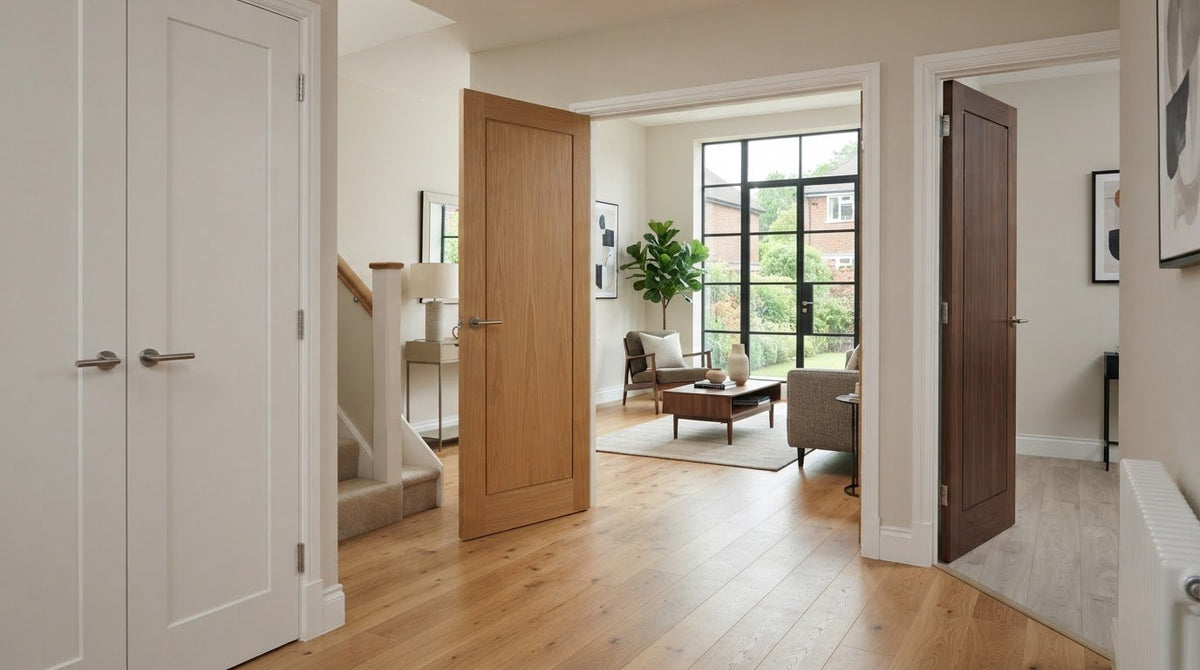
What if your doors and floors look more considered when they don’t match exactly? Learning how to match internal doors with flooring is less about finding identical shades and more about creating a thoughtful relationship between them.
A near-match can look accidental if the woods have different undertones, while warm and cool tones can compete if they are not balanced by the rest of the room. Shared undertones can bring different finishes together, and deliberate contrast can give a space character. You don’t need one formula for every room.
This guide explains how to read your floor’s undertones, account for light and room size, and compare natural wood, painted and laminate finishes. You’ll see how oak, walnut and white primed doors can work with different floors, and how to maintain a sense of continuity across rooms with varied flooring. Use these practical checks to narrow your choices and create a home that feels connected without looking too uniform.
Key Takeaways
- Learn how to match internal doors with flooring by relating undertones, rather than searching for an identical finish.
- Identify warm golden or honey notes and cooler grey or ashy tones in your flooring before comparing door colours.
- Choose between tonal continuity and deliberate contrast by considering the room’s wider palette.
- Record your floor’s colour, grain and finish, then assess door finishes in the room’s own light.
- Compare oak, walnut, white primed and laminate doors for the different character each can bring to a connected home.
How to Match Internal Doors with Flooring Without Making Them Identical
Your internal doors don’t need to copy your flooring exactly to create a considered finish. A near-match can look accidental if the woods have different undertones. For instance, a reddish door beside an ashy floor may feel less harmonious than a clear contrast or a deliberate difference in tone.
Coordination is about how the door relates to the floor and the rest of the room. Compare undertones, contrast, grain and surface sheen, then look at how these details sit alongside your walls, skirting, furniture and natural light. A glossy finish can feel quite different from a matt one, even when the colours are similar. The shape and glazing of the door also affect the overall impression; an overview of types of internal doors can help put those design choices in context.
The simplest rule: repeat a tone for continuity, or create deliberate contrast. Either approach can work. The important thing is to make the relationship look intentional.
What makes internal doors and flooring look coordinated?
Shared undertones are a useful starting point. A floor with golden or honey notes can sit comfortably with a door that also feels warm, even if the wood colours differ. Cooler, greyer tones can relate across different materials, too. The colours don’t need to be identical; a subtle connection is often enough.
Look beyond colour. Strong floor grain paired with pronounced door grain adds texture, while a simpler door can give a patterned floor more visual space. Sheen matters as well: a reflective surface draws the eye differently from a soft, matt finish. Assess the pairing in the room itself, where wall colour, skirting, furniture and changing daylight can soften or emphasise the contrast.
Should internal doors match the floor exactly?
No. Exact matching is optional, not a requirement for a cohesive room. Repeating a finish can create continuity, particularly if the same choice appears elsewhere in the home. But a close imitation that misses the mark may draw attention to small differences in colour or grain.
Instead, choose either a recognisable repetition or a complementary contrast. A natural wood door can bring warmth against a lighter floor, while a painted finish can provide a crisp visual break. Oak and walnut doors offer distinct natural wood character, but neither is a universal match for every floor. Judge each option against the room’s palette and the effect you want to create.
How to Read Flooring Undertones Before Choosing a Door Colour
A floor’s dominant colour is the first shade you notice; its undertone is the subtle warm or cool cast beneath it. Two floors can both look brown, for example, yet one may have a golden glow while the other appears muted and ashy. Identifying that underlying quality gives you a more dependable starting point for choosing a door finish.
Undertone compatibility matters more than choosing the same wood species. Oak, walnut and other woods vary in appearance according to their colour, grain and finish. The species name alone won’t tell you whether two surfaces will sit comfortably together.
How can you tell whether flooring has warm or cool undertones?
Look closely at the floor in more than one place, especially if its pattern varies. Golden, honey, reddish or orange-brown notes suggest a warmer appearance. Grey, muted or ashy notes tend to feel cooler. Some floors have a mixture, so note which quality is most noticeable rather than forcing them into a strict category.
A simple comparison can help: place a sheet of neutral white paper beside the flooring and observe whether the surface appears more yellow or red, or instead more grey. Treat this as a clue, not a final verdict. Paper, flooring and finishes can all look different under changing light, so don’t decide from one glance or one light source.
How do walls, trim and lighting affect the pairing?
A door and floor don’t sit in isolation. Skirting boards and architraves create a visible border around the door, while large pieces of furniture can introduce another prominent colour or wood tone. Consider these alongside the walls, rather than judging the floor and door as a pair alone. This wider view reflects the way interior design principles for material selection account for materials and furnishings within a room.
Light can shift the impression of a finish. Daylight may reveal cooler or more neutral qualities, while warm artificial lighting can bring out golden or reddish notes. Place flooring and door finishes together in the room, then look at them in daylight and again under your usual evening lighting. If the pairing feels balanced in both, you’re less likely to be surprised once the door is in place.
This room-by-room check is a practical step in how to match internal doors with flooring. Once you’ve identified the floor’s undertone and considered the surrounding palette, compare finishes with the same care. Explore oak and walnut door finishes as two ways to bring natural wood character into your scheme.
Internal Door and Flooring Combinations: Contrast, Continuity and Material
There are three useful ways to think about a door and floor pairing: keep their tones close, choose finishes that complement one another, or make the difference a deliberate feature. The right approach depends on the room’s character and how much visual contrast you want.
| Approach | How it works | Consider it when |
|---|---|---|
| Tonal continuity | Door and floor share a similar colour family, without needing identical materials. | You want a calm transition between connected spaces. |
| Complementary finishes | The finishes differ, but relate through tone, texture or the wider palette. | You want variety without a strong visual divide. |
| High contrast | A noticeably lighter or darker door stands apart from the flooring. | You want the doorway to become a feature. |
Natural wood is one option, but the name alone won’t dictate the result. Oak doors can create a lighter or warmer impression; walnut doors can introduce deeper colour. Either may work with different floors depending on the finish and the room around it, so compare the particular options rather than assuming a fixed pairing. White primed doors offer a painted alternative to a visible wood-on-wood scheme, while laminate doors provide another finish route. Choose a door for the way it contributes to the room’s overall feel, not simply to match a flooring label.
When does a continuous colour scheme work best?
Related tones can make the move between connected rooms feel calmer, particularly where flooring changes from one space to the next. Repeat a colour family or finish rather than trying to duplicate every surface. A consistent door design can also provide a thread through the home, allowing rooms to retain individual flooring and furnishings without feeling disconnected.
When can contrast make a room feel more considered?
A lighter door against a deeper floor, or a darker door against a pale floor, can create a clear focal point. To make the choice feel intentional, echo the contrasting colour in details such as skirting, handles or furnishings. Contrast chosen without regard for surrounding tones can feel abrupt, so assess the whole palette before settling on it.
Glazing and the door’s overall design influence how prominent the finish feels. A glazed door introduces another visual element, while a simpler design may let colour and material take the lead. These details matter when deciding how to match internal doors with flooring, but the choice needn’t become a technical exercise: compare the door and floor together, then consider the effect from the adjoining room as well.
A Step-by-Step Method for Matching Internal Doors with Existing Flooring
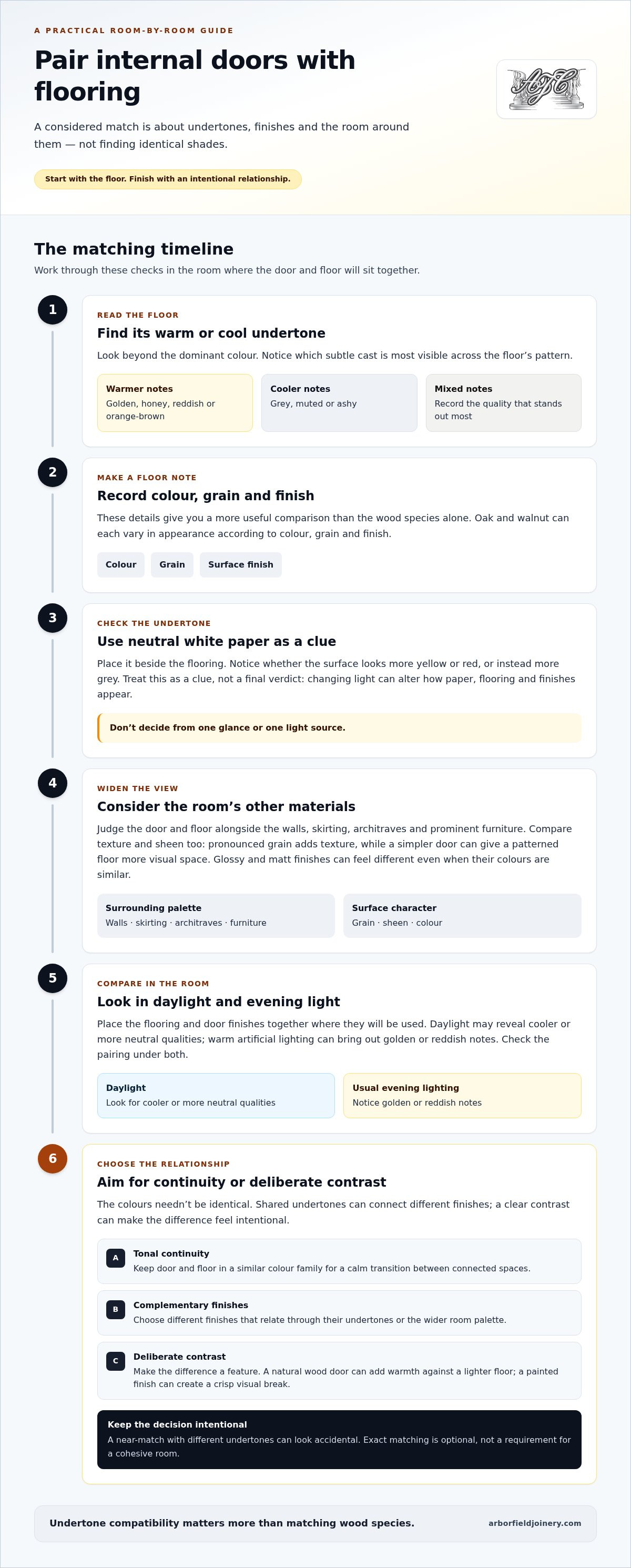
Start with the floor you already have, then narrow your door choices against the room’s fixed features and the atmosphere you want to create. This sequence makes how to match internal doors with flooring more manageable, even if several rooms have different finishes.
- Record what you see in the flooring. Note its undertone, dominant colour, grain or pattern, and surface finish. Consider its visual weight, too: a strongly patterned floor makes a different impression from a quiet, even surface.
- Look at connected rooms. Check whether the doorway is visible from a hall or adjoining space, and note any changes in flooring. Decide whether you want a gentle transition between rooms or a clearer distinction.
- List the fixed finishes. Include skirting, architraves, wall colour and large furniture. These details help you see which colours are already repeated and which might feel out of place.
- Choose the level of contrast. Decide whether you prefer a continuous look, a subtle difference or a deliberately bold contrast. Having a clear direction makes it easier to compare finishes without being distracted by every possible combination.
- Compare door categories. Oak and walnut doors bring different natural wood character; white primed doors create a painted alternative, while laminate doors offer another finish approach. Compare tone and overall effect rather than assuming one category is automatically the right match.
- Review finishes in the room. Place your preferred door finish beside the flooring and nearby trim, then assess the pairing in daylight and evening lighting. Look at it from the doorway and adjoining rooms before deciding.
How should you test the final combination at home?
Keep flooring and door references together rather than comparing a finish with a photograph or colour chart alone. Step back to see the overall relationship, then look more closely at grain, sheen and texture. A pairing that seems convincing up close may read differently across the room, particularly where the floor has a pronounced pattern.
Consider the door and its frame as part of the same visual composition. Their colour and design can strengthen the scheme or add another point of contrast, so assess both as you compare options. A consistent door design may also help link rooms where the flooring changes.
Use the final review to check whether the finish feels natural from every approach, not only when viewed head-on. Explore internal door finishes to compare different material approaches for your home.
Choose Internal Doors That Bring Your Flooring Scheme Together
A considered pairing doesn’t depend on finding a perfect colour match. Start by identifying the floor’s undertone, then decide whether you want a continuous look or deliberate contrast. Finally, consider how the door works with the whole room, including its walls, trim, furnishings and adjoining spaces. This order keeps the choice focused and helps you compare finishes for the effect they create, rather than by colour alone.
Which door finishes can complement different flooring schemes?
Oak doors offer a natural wood finish to compare with flooring in compatible tones, while walnut can bring a deeper note to the scheme. White primed doors provide a painted alternative, and laminate doors give you another finish to consider. None is a universal match: the right direction depends on the floor’s colour and character, as well as the palette and mood of the room.
If natural timber is your preferred starting point, explore the internal oak doors guide for more on this option. Keep your shortlist focused on a few distinct approaches, such as related wood tones, a painted contrast or a finish that picks up a colour already present in the room.
What should you do before choosing a door?
Gather a flooring reference and note the colours and finishes that are already fixed, including walls, skirting and large furnishings. Then compare a small number of door options alongside them. Revisit the finishes in the room rather than relying on memory or a screen, and consider how the scheme looks from nearby rooms as well as within the space itself.
That final review brings the decision back to the central principles of how to match internal doors with flooring: relate the undertones, choose your preferred balance of continuity and contrast, and judge the complete room. A pairing can be different without feeling disconnected, provided the relationship between its materials looks intentional.
Arborfield Joinery is a family-run business supplying doors, windows and stairs since 1953, with a focus on craftsmanship. Its internal door range includes oak, walnut, white primed and laminate finishes, offering different ways to shape a room’s character. Compare the styles and finishes against your flooring, then shortlist the options that suit your scheme.
Bring Your Flooring Scheme Together with Confidence
Choosing how to match internal doors with flooring doesn’t mean finding identical finishes. Start with the floor’s undertones, decide whether you want continuity or contrast, then consider how the door works with the whole room. Comparing finishes in the space can help you assess whether the colours, textures and surfaces sit comfortably together.
Oak, walnut, white primed and laminate doors each offer a different way to shape an interior. There’s no single combination that suits every home, so let your flooring and wider palette guide the choice. Arborfield Joinery is a family-run joinery business supplying doors since 1953, with craftsmanship at the heart of its approach.
Explore Arborfield Joinery’s internal door styles and finishes and find an option that feels at home with your flooring. With a clear sense of the look you want, you can create rooms that feel connected while retaining their own character.
Frequently Asked Questions
Do internal doors need to match the flooring?
No, internal doors don’t need to match the flooring exactly. A cohesive scheme can come from related undertones, a shared colour detail or deliberate contrast, rather than identical wood and finish. The key to how to match internal doors with flooring is to make the relationship feel intentional. Compare the door with the floor, then consider how both sit alongside the walls, skirting, furnishings and finishes in the rest of the room.
Should doors be lighter or darker than the floor?
Neither is automatically better. A lighter door against a darker floor can create crisp contrast, while a darker door may stand out against pale flooring and add visual weight. Similar tones can feel quieter and more continuous. Consider the room’s light, size and existing palette, then decide how prominent you want the doorway to be. Whichever direction you choose, check that the undertones work together. If you want a more connected look, repeat contrasting colours elsewhere in the room.
How do I match oak doors with flooring?
Start with the floor’s undertone, then compare it with the particular oak door finish rather than assuming all oak looks alike. Golden or honey notes may relate to warm-toned flooring, while a more muted oak can sit comfortably with cooler or neutral tones. Grain and sheen matter too: a strongly patterned floor may call for a simpler visual balance. View the door and flooring together in the room, in both daylight and evening lighting.
Can you have different flooring and doors in each room?
Yes, different flooring and door finishes can work from room to room. To maintain a sense of flow, consider keeping one element consistent, such as the door design, a shared colour family or a finish repeated in nearby spaces. Where flooring changes, the door can help ease the transition or make it feel deliberate. Look at adjoining rooms together, especially where doorways are visible from a hall or open space.
What colour doors go with grey flooring?
White primed doors can create a clean contrast with grey flooring, while a darker finish can make the doorway more prominent. Natural wood, including oak or walnut, can also add warmth, depending on the floor’s undertone and the room’s palette. Grey flooring varies: some shades have warm notes, while others look cooler or ashy. Compare door finishes with the actual floor and nearby trim, rather than choosing from the word “grey” alone.
Do internal doors and skirting boards have to be the same colour?
No, doors and skirting boards don’t have to be the same colour. Matching them can create a continuous, orderly look, while contrasting finishes can define the door and room edges. For a considered result, relate at least one detail, such as undertone, sheen or a colour repeated elsewhere in the space. Assess the door, skirting and architrave together, as these adjoining features frame the doorway and affect how the floor and door appear.
How can I coordinate doors with flooring in an open-plan home?
In an open-plan home, consider how the doors look alongside the flooring and finishes visible across the connected area. A consistent door finish or design can provide a visual thread, even if flooring differs between zones. Alternatively, use a contrasting door as a feature and repeat its colour in furnishings or trim. Check the scheme from several viewpoints, including the entrance and adjoining rooms, so the combination feels balanced throughout the space.
Share:
Bespoke Joinery Lead Times Explained 2026
How to Measure for a Replacement Internal Door