
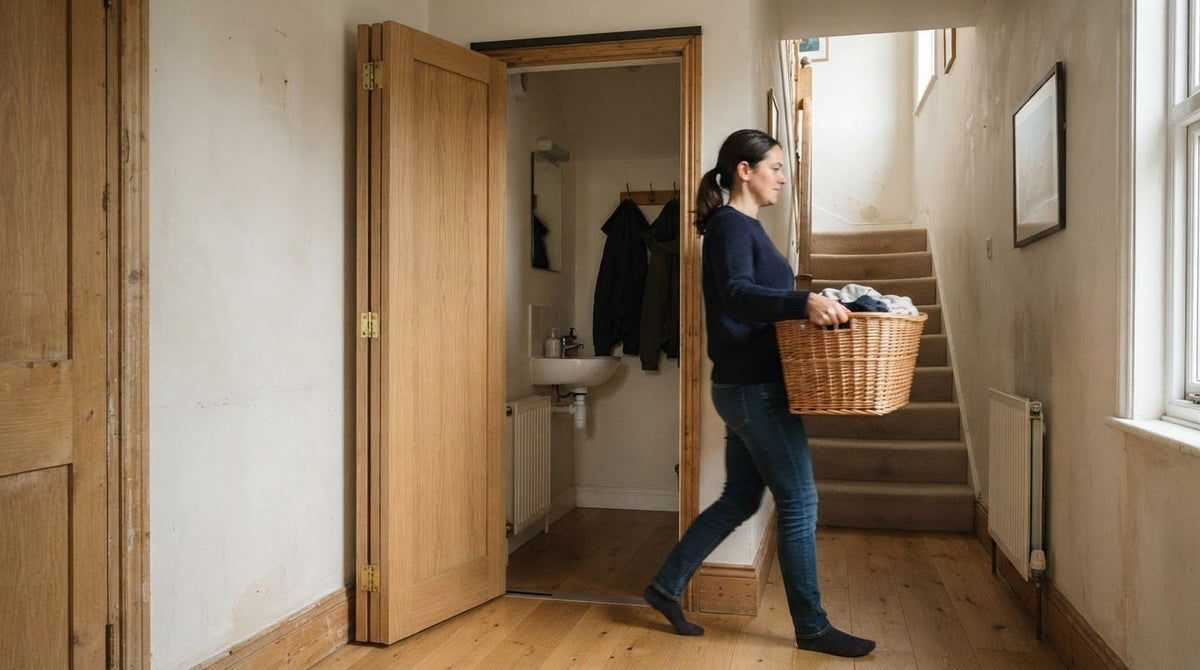
The best alternatives to hinged doors for tight spaces are pocket, sliding barn, bi-fold and folding hinged doors. Each avoids a traditional door swing differently: pocket doors slide into the wall, barn doors run along it, and folding designs gather to one side. The right choice depends on your wall layout and how you use the room.
A conventional hinged door can make a narrow hallway or compact room feel more restricted, so a space-saving option may be worth considering. But the door’s movement is only part of the decision: a pocket door needs a suitable wall cavity, while a wall-mounted slider needs clear wall space beside the opening.
This guide compares four options and the practical trade-offs to consider before choosing. You’ll see where each style can work well, how much space it needs when open, and why folding hinged doors are worth considering if you want a familiar hinged arrangement without the full swing of a standard door.
Key Takeaways
- Consider a pocket door when you can accommodate a recess in the wall and want the doorway clear when it’s open.
- A sliding barn door avoids a swing into the room, but needs clear wall space beside the opening.
- Bi-fold doors fold to one side, helping preserve floor space while providing access to a cupboard or wardrobe.
- Compare folding hinged doors with the other options to see whether their compact movement suits your doorway and the way you use the room.
1. Pocket doors
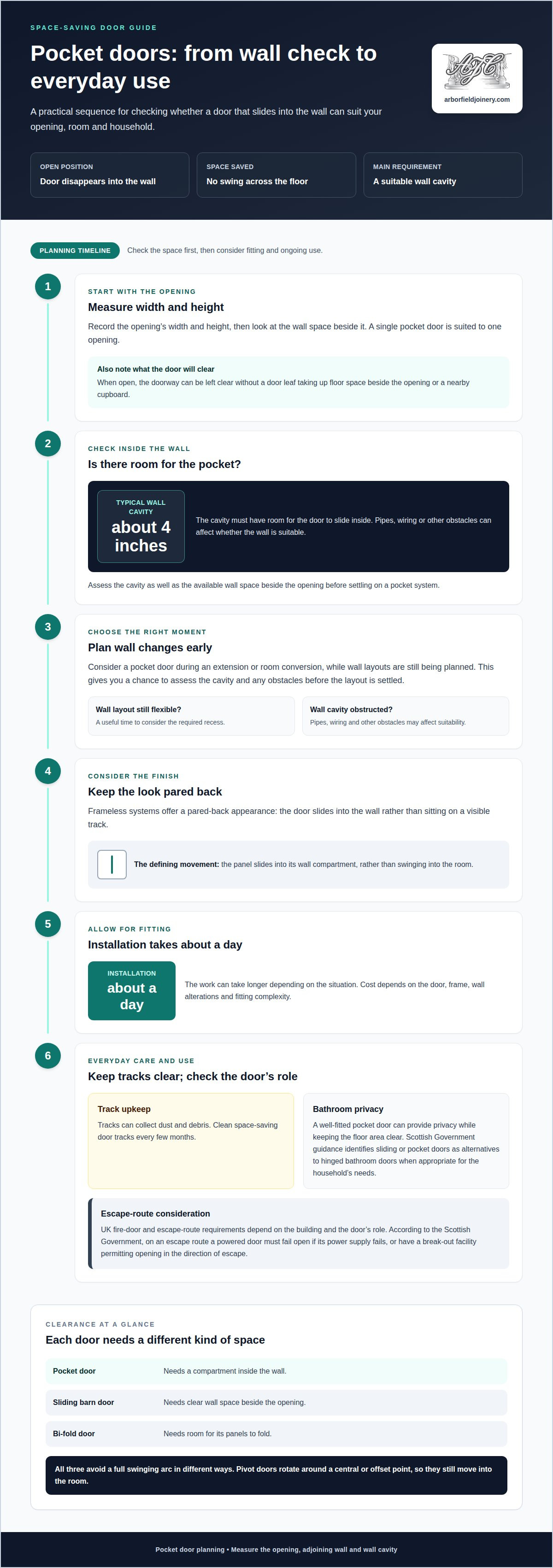
A pocket door slides into a compartment inside the wall, leaving the doorway clear when open. Unlike a swinging bedroom door, it doesn’t take up floor space beside the doorway or a nearby cupboard. The door disappears into its pocket, making it useful where furniture or a narrow passage restricts movement.
That space-saving movement depends on the wall. The typical wall cavity is about 4 inches wide, and it must have room for the door to slide inside. Pipes, wiring or other obstacles can affect whether the wall suits a pocket system. Consider this option early during an extension or room conversion, when wall layouts are still being planned.
Measure the opening’s width and height, then assess the available wall space beside it and the cavity needed. A single pocket door is suited to one opening; frameless systems offer a pared-back appearance, with the door sliding into the wall rather than sitting on a visible track. Installing a pocket door takes about a day, though the work can take longer depending on the situation.
Pocket doors, barn doors and bi-fold doors all avoid a full swinging arc: pocket doors disappear into walls, barn doors travel along them, and bi-fold leaves fold aside. Each needs a different kind of space. Pivot doors rotate around a central or offset point, so they still move into the room.
For a bathroom, a well-fitted pocket door can provide privacy while keeping the floor area clear. Scottish Government guidance identifies sliding or pocket doors as alternatives to hinged bathroom doors when appropriate for the household’s needs.
UK fire-door and escape-route requirements depend on the building and the door’s role. According to the Scottish Government, on an escape route a powered door must fail open if its power supply fails, or have a break-out facility permitting opening in the direction of escape.
The cost of sliding, pocket and bi-fold doors depends on the door, frame, wall alterations and fitting complexity. Clearance needs also differ: a pocket door requires a wall compartment, a barn door needs clear wall space beside the opening, and a bi-fold needs room for its panels to fold. Before choosing, measure the opening and adjoining wall; for a pocket system, assess the wall cavity too.
Noise, privacy and maintenance depend on the door’s fit and movement. Tracks can collect dust and debris, so clean space-saving door tracks every few months.
2. Sliding barn doors
A wall-mounted sliding barn door travels along a rail, avoiding the swing of a traditional door. That can keep a narrow hallway clear and leave nearby furniture in place. In a kitchen, for example, a slider between the cooking area and an adjoining room can separate the spaces without a door leaf opening into the walkway.
The rail needs clear wall space beside the opening, because the door slides across that area when open. Before choosing this style, check the full length of wall on the side where the door will park. A bookcase, light switch or nearby furniture may limit its travel. A wall-mounted slider may be worth considering when a recessed door is not suitable.
Exposed rails make the sliding mechanism part of the room’s design. They can suit a home where visible hardware complements existing finishes, while a simpler door face may feel less prominent. This option won’t suit every layout: the open door remains visible against the wall, so consider how it will sit alongside artwork, shelving and other furnishings.
Sliding doors can also separate indoor and outdoor areas, making movement between them easier. At an opening to a garden or patio, the panels move sideways rather than swinging into the room or outside space. This can preserve space for a dining table or other furniture, though the panels still need room to travel.
A sliding door can work between rooms, including a bedroom and an en-suite. Barn doors offer space-saving benefits similar to pocket doors and are easier to install. Check the rail and travel area for dust and debris every few months, as recommended for space-saving door tracks. Sliding panels can also form part of a room divider, while folding dividers gather differently and suit layouts where a panel can fold back against the wall.
3. Bi-fold doors
A bi-fold door offers an alternative to a standard hinged door by folding back as it opens. Its connected sections gather beside the doorway instead of swinging across the room. That can help keep floor space clear in a compact bedroom or cupboard. Unlike a sliding barn door, a bi-fold doesn’t need a full stretch of wall beside the opening for the door to travel along.
For wardrobes and cupboards, the folding mechanism can provide full access when the door is open. Bi-fold wardrobe doors fold back to open the cupboard, but check that the opening and folded panels suit the available space. In practice, the opening and the door’s folded position matter: consider nearby furniture, a bed or shelving that could obstruct access. Measure the opening’s width and height before choosing a door.
Bi-fold designs can also suit room openings where a conventional door leaf would interfere with movement. During a renovation, consider whether the panels can fold back without clashing with furniture or narrowing the route through the room. A wooden finish can bring a traditional feel, while a simpler design may sit quietly alongside existing interior details. The right choice balances the opening’s function with the available space.
Check how the mechanism moves before settling on a style. Hinged bi-fold doors that fold inward provide full access to a wardrobe, while the gathered panels still occupy space near the opening. A bi-fold door can be installed in about two hours by someone with basic DIY skills, according to the estimate in the research. Once fitted, apply silicone lubricant to its hinges and tracking wheels once a year to help maintain smooth movement. This folding arrangement is useful when you want more access than a sliding panel allows, but can spare only a compact area for the open door.
4. Folding hinged doors
Folding hinged doors keep a familiar hinged action but gather the panels beside the doorway. Unlike a single door leaf, they don’t need to swing through a wide arc into the room. In a compact bathroom, recessed handles can help the door fold back close to the wall, preserving usable floor area. This can suit an interior where a basin, towel rail or nearby furniture restricts the door’s movement.
The key distinction is how much of the opening you need to use at once. A folding hinged door can fold inward, while hinged bi-fold wardrobe doors provide full access to the cupboard when open. The folded panels still occupy space near the frame, so consider the doorway’s position and what sits immediately beside it. A bed close to a bedroom entrance, for example, may affect which way the panels can fold.
For a wider opening, concertina-style doors can be installed in pairs. The two sides fold back towards their respective walls, creating a broader passage without conventional doors swinging into the living space. The same approach can separate areas within an open-plan room, offering privacy when closed and a more connected layout when open.
Before selecting a design, measure the opening and note where the panels will sit when folded. Check their full movement against nearby walls, furniture and fittings. Recessed handles can help a folded door sit close to the wall, while the panel arrangement determines how much of the doorway remains accessible. These details matter in a narrow bathroom or between a living room and dining area.
Choose folding hinged doors when you want to separate rooms or conceal storage but can’t spare the swing of a traditional door. They offer a practical middle ground between a single hinged leaf and a sliding system: the familiar opening action remains, while the folding mechanism gathers the panels to one side. In a tight space, prioritise the folded position as carefully as the closed-door appearance.
Arborfield Joinery
Arborfield Joinery can help you narrow down a door choice by matching the style to your opening, available wall space and the way you use the room. If a pocket or folding design suits your layout, explore those options alongside more traditional door styles, rather than choosing on appearance alone.
The range includes Oak Doors, Walnut Doors, White Primed Doors and Urban Doors, offering different looks for a variety of interiors. Consider the finish alongside the door’s movement: a compact room may call for a folding or pocket arrangement, while a standard hinged design may work where there’s room to open it fully. The right selection should complement both the space and the character of your home.
For guidance on choosing a door that fits your space and style, contact Arborfield Joinery.
Make your next door choice with confidence
Choosing among alternatives to hinged doors for tight spaces starts with how the room works day to day. Before settling on a style, picture the door fully open: where will its panels sit, what might they obstruct, and how will people move through the doorway? These practical details can shape a more comfortable room just as much as the finish or material.
Consider the opening alongside the surrounding walls, fittings and furniture, then match the door’s movement to the available space. A considered choice can help a compact interior feel more natural without compromising the look you want. Arborfield Joinery’s selection includes options for different styles, from the warmth of oak and walnut to white primed finishes.
Ready to explore a door that works with your home? Contact Arborfield Joinery for advice and take the next step towards a space that feels beautifully resolved.
Frequently Asked Questions
What are the best alternatives to hinged doors for small rooms and tight spaces?
Pocket doors, wall-mounted sliders and bi-fold doors are useful alternatives, while folding hinged doors suit rooms where you prefer a familiar opening action. Among alternatives to hinged doors for tight spaces, the best fit depends on how you use the room: a bedroom may need privacy, while a frequently used cupboard needs convenient access. Consider switches, radiators and furniture before choosing.
Can a pocket door be fitted to an existing wall in a UK home?
Yes, a pocket door can be fitted into an existing wall if there’s room to create its recessed compartment and the door can travel freely. Retrofitting involves altering the wall and making good the surface. Wall construction, pipes and wiring can affect the work. When weighing alternatives to hinged doors for tight spaces, consider these practical constraints alongside the room’s layout.
How much do sliding, pocket and bifold doors cost in the UK, including installation?
No specific prices are given for sliding or pocket doors, or for installation.
Share:
Lacquer vs Oil for Internal Joinery: Which Finish Wins?
Laminated vs Toughened Glass for Window Security