
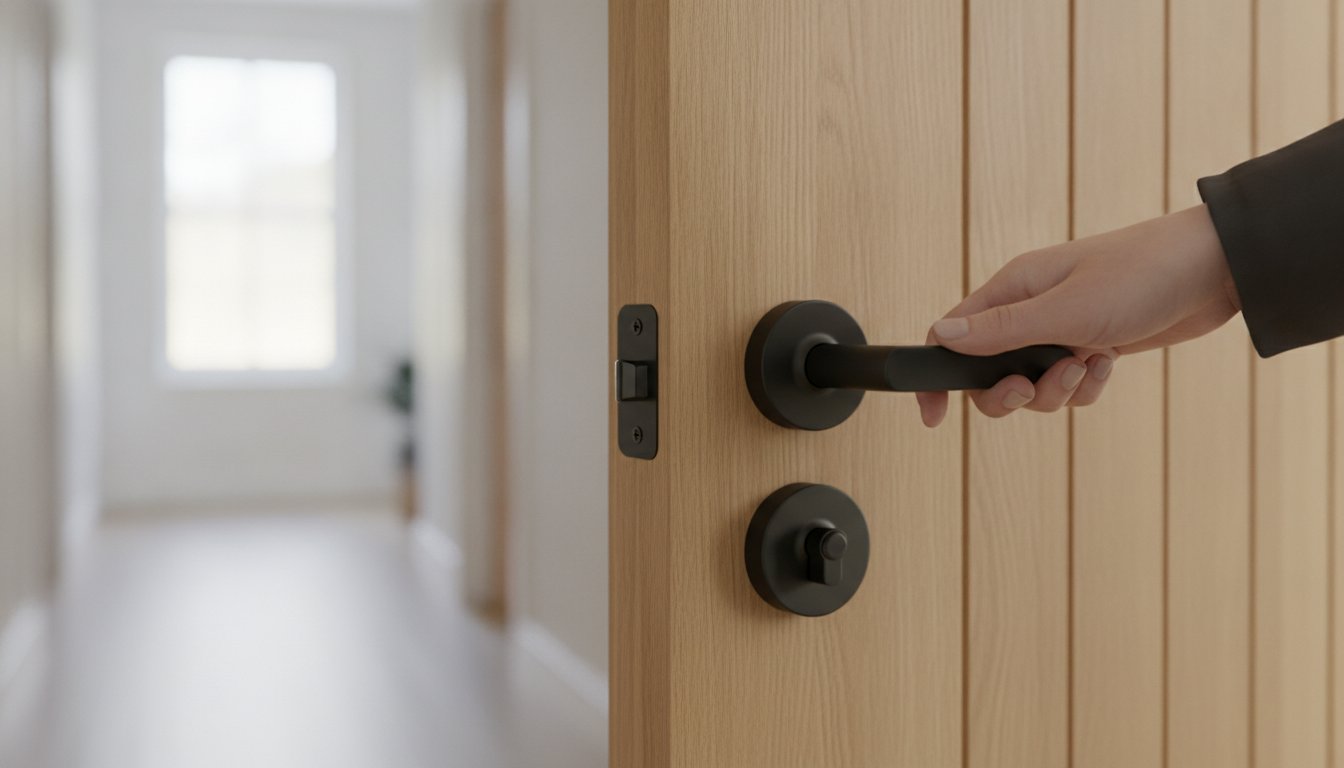
You touch your door handles more than almost any other surface in your home, yet they're often the final detail considered during a renovation. It's a missed opportunity; the right hardware acts as the "jewellery" of a room, providing that crucial first impression of craftsmanship. Whether you're refreshing a single room or outfitting an entire property, the tactile weight and smooth operation of a well-chosen handle can transform the daily experience of moving through your home.
Most homeowners agree that nothing ruins a premium oak door faster than a handle that feels hollow or a finish that begins to tarnish after just a few months. You've likely felt the frustration of trying to match modern levers with traditional joinery, or the technical confusion of ensuring compatibility with your existing latches. This 2026 guide promises to clear that fog, helping you discover how to select the perfect door handles that balance tactile quality, aesthetic appeal, and long-term durability. We'll explore the latest trends in matte black and "quiet luxury" finishes whilst ensuring your hardware choices meet the updated 2026 UK building standards for accessibility and safety.
Key Takeaways
- Understand why the tactile weight and precision engineering of your ironmongery serve as the essential "jewellery" for your home’s design scheme.
- Learn the functional differences between lever on rose and lever on backplate designs to ensure your hardware matches your door's aesthetic and practical needs.
- Discover how to navigate 2026's trending finishes, from the warmth of antique bronze to the enduring appeal of matt black for contemporary interiors.
- Gain the technical confidence to measure backsets accurately and choose the correct latches or locks for your new door handles.
- Explore how premium Spira Brass hardware provides the ergonomic comfort and long-term durability required for high-traffic family homes.
Why Door Handles are the Essential Finishing Touch for Your Interior
Interior designers often refer to door hardware as the "jewellery" of a room, and for good reason. Just as a carefully chosen timepiece or a bespoke accessory can elevate an entire outfit, the right door handle provides the finishing flourish that defines a home’s character. It’s the only part of your joinery that you interact with physically every single day. Because of this, it acts as a silent ambassador for the quality of your entire interior. When a guest reaches for a handle, they aren't just opening a door; they're forming an immediate impression of your home’s craftsmanship and attention to detail.
Modern ironmongery is where form truly meets function. It isn't enough for a handle to look beautiful on a showroom display. It must work flawlessly, providing a satisfying mechanical response that feels deliberate and secure. By choosing a consistent style of hardware, you create a cohesive design language that unifies disparate spaces. Whether you're moving from a busy kitchen to a quiet study, the continuity of high-quality door handles ensures that the transition feels seamless and intentional. This visual harmony is what separates a standard renovation from a truly curated living space.
The Tactile Experience of Quality Joinery
The weight of a handle tells a story before the latch even clicks. A heavy, well-engineered lever suggests that what lies behind it is equally substantial. This tactile feedback is particularly important when pairing hardware with premium internal doors and door frames. A solid brass or stainless steel handle complements the natural density of oak or walnut, whereas a lightweight, hollow alternative can make even the finest timber feel underwhelming. There’s a psychological comfort to a sturdy handle; it provides a sense of permanence and safety that flimsy alternatives simply can't replicate. When the spring has the perfect amount of resistance, the simple act of entering a room becomes a pleasure.
Balancing Aesthetics with Mechanical Longevity
It's easy to be swayed by a low price point, but cheap handles often prove to be a false economy. In high-traffic areas like hallways or utility rooms, a handle might be operated dozens of times a day. Inferior internal springs eventually lose their tension, leading to "drooping" levers that look untidy and function poorly. Premium ironmongery is engineered for tens of thousands of operations, ensuring the spring remains crisp for years. Beyond the mechanism itself, a high-quality finish won't peel or tarnish under the natural oils of your skin. This durability doesn't just save you money on replacements; it protects the door material itself from the wear and tear caused by faulty, scraping mechanisms.
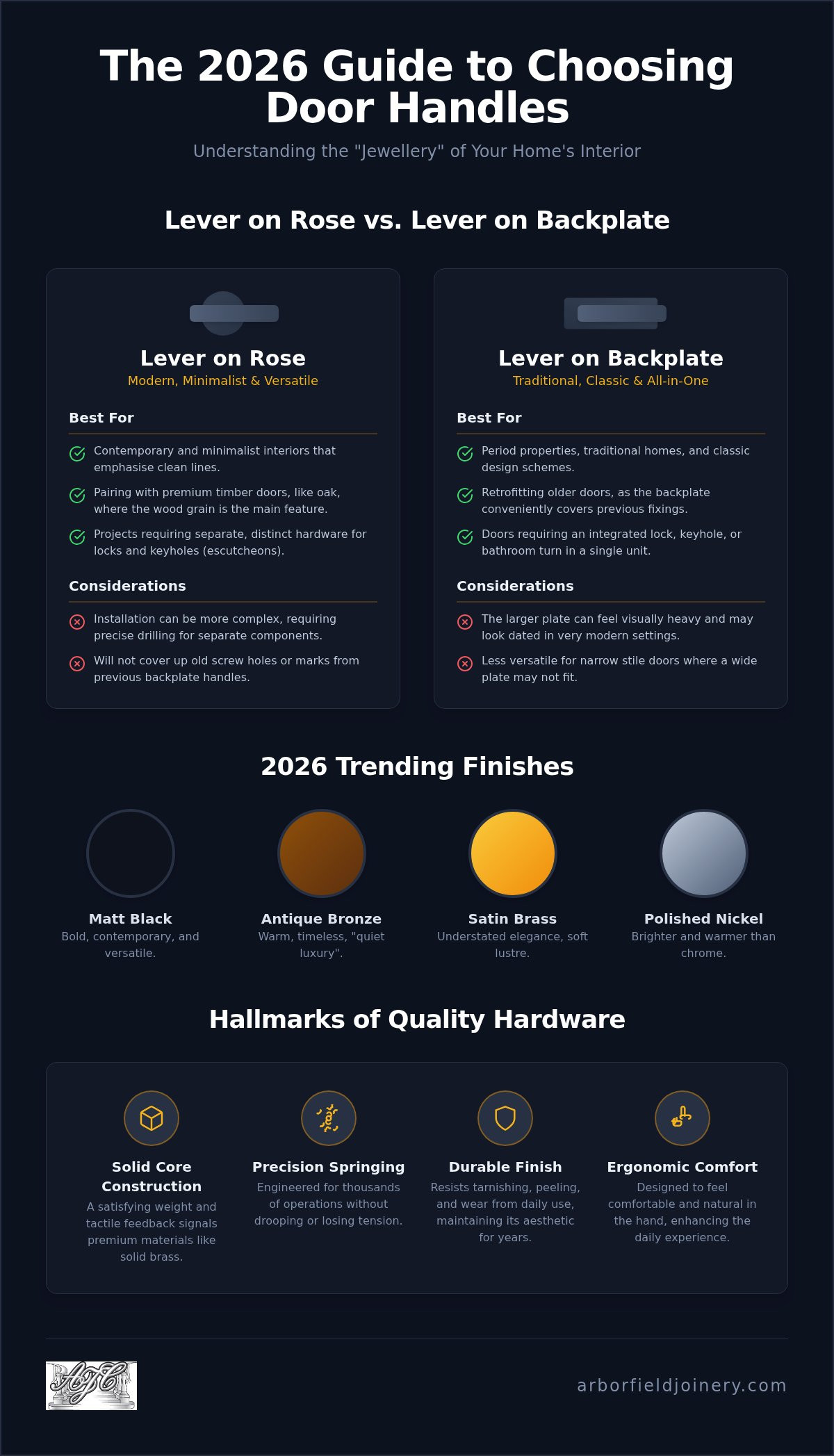
Lever on Rose vs. Lever on Backplate: Which Should You Choose?
Choosing between a lever on rose and a lever on backplate is one of the most significant decisions you'll make when selecting door handles. It isn't just about how the handle looks; it's about how it interacts with the door's construction and the room's overall period style. Whilst both options provide excellent functionality, they serve very different architectural purposes. Understanding these differences is key to ensuring your hardware remains a pleasure to use for years to come.
The Versatility of Lever on Rose
The lever on rose is currently the most popular choice for modern UK homes. This design features a lever attached to a small, circular or square plate, known as the rose, which conceals the internal fixings. It offers a minimalist, clean aesthetic that doesn't distract from the door's natural beauty. These handles are particularly effective when paired with internal oak doors, where the focus should remain on the timber grain and joinery. Because the rose is compact, it fits well on almost any door width, making it a versatile "all-rounder" for contemporary renovations.
Installation is slightly more technical than a backplate, as you often need to install separate escutcheons or thumb-turns for locks. However, the result is a bespoke, high-end look. Most premium rose handles utilise "bolt-through" fixings. These pass through the door and the latch to secure the handles to each other, preventing them from pulling away from the timber over time. This mechanical stability is essential for meeting modern accessibility standards, ensuring the handle remains firm and easy to operate for everyone in the family.
The Traditional Appeal of Backplates
If you're renovating a period property or want a more substantial, traditional feel, the lever on backplate is the classic choice for your door handles. The handle is mounted on a long vertical plate that houses the lever and, if required, the keyhole or bathroom turn. This style is exceptionally sturdy and is often found in high-traffic hallways where durability is paramount. To ensure ease of use, these handles are typically installed at a height between 900mm and 1100mm from the finished floor.
Practicality is a major draw here. If you're replacing old hardware, a backplate is ideal for covering unsightly screw holes or marks left by previous fittings. Aesthetically, they are the perfect partner for Cottage-style doors or heavy, traditional joinery. You can choose from three main configurations:
- Latch: A plain plate for standard passage doors.
- Lock: Includes a cut-out for a sash lock or mortice key.
- Privacy: Features an integrated thumb-turn for bathrooms.
Whether you prefer the sleek lines of a rose or the commanding presence of a backplate, ensure your choice reflects the soul of your home. You can explore our full range of ironmongery to find the perfect match for your interior.
Selecting the Perfect Finish: From Antique Brass to Matt Black
The colour and texture of your door handles serve as the final brushstroke in your room's design. In 2026, the trend has shifted decisively towards "quiet luxury," favouring warmer, muted tones that feel organic rather than clinical. Satin Brass and Antique Bronze have become the leading choices for homeowners seeking to add a sense of heritage and warmth to their interiors. These finishes don't just look expensive; they age gracefully, developing a subtle character that polished alternatives often lack. Whilst Polished Chrome and Satin Nickel remain timeless staples for their versatility, they are increasingly being used as accents rather than the default choice.
For those pursuing an industrial or "Urban" aesthetic, Matt Black continues to be a favourite. It provides a sharp, high-contrast silhouette that works exceptionally well in minimalist settings. However, beauty must be matched by resilience. We recommend looking for PVD (Physical Vapour Deposition) finishes. This advanced coating process bonds the finish to the metal at a molecular level, ensuring your handles resist scratches, humidity, and the natural oils from your hands. To ensure long-term performance, many of our premium ranges are tested against ANSI/BHMA door hardware standards, providing peace of mind that the finish will remain vibrant for years of daily operation.
Matching Handles to Your Door Material
Choosing a finish requires a careful look at your door's timber or paint colour. Light oak doors are naturally enhanced by the golden hues of brass or the earthy depth of bronze, creating an inviting, traditional feel. If you've opted for dark walnut or deep navy painted doors, satin nickel or polished chrome provides a crisp, sophisticated contrast that draws the eye. For a seamless, monochromatic look, matt black handles on charcoal or black doors create a stunning architectural statement. Think about the other hardware in your room, such as light switches or cabinet knobs, to ensure a consistent metal palette throughout the space.
Trend Watch: Knurled and Textured Finishes
Texture is the standout trend for 2026. Knurled door handles, featuring a cross-hatched pattern etched into the metal, are dominating high-end interior projects. Beyond the visual appeal, these textures offer significant ergonomic benefits; the increased friction makes the handle easier to grip and turn, which is particularly helpful for children or elderly family members. These textured designs provide a sophisticated counterpoint to the clean, straight lines of laminate internal doors, bridging the gap between modern utility and bespoke craftsmanship.
Technical Essentials: Latches, Locks, and Measuring for Success
Even the most beautiful handle is only as good as the mechanism behind it. Whilst the visual appeal captures your attention, the technical specifications ensure that your door handles actually perform their job. Selecting the wrong hardware often leads to "drooping" levers or latch bolts that don't quite reach the strike plate. To avoid these frustrations, you must first identify the specific function of each door: passage (latch), security (lock), or privacy (bathroom).
Measuring the "backset" is the most critical step in the purchasing process. This refers to the distance from the edge of the door to the centre of the spindle hole. In the UK, standard sizes typically include:
- 44mm backset (usually for a 64mm total latch length)
- 57mm backset (usually for a 75mm total latch length)
- 82mm backset (usually for a 100mm total latch length)
If you're retrofitting handles to existing doors, getting this right is non-negotiable. Using a different backset will mean drilling new holes and potentially leaving the old ones visible, which ruins the finish of your joinery. A common mistake is failing to match the latch quality to the weight of the handle. Premium, solid timber doors require substantial ironmongery, which in turn needs a heavy-duty spring in the latch. If the spring is too weak, the weight of a solid brass handle will prevent it from returning to a perfectly horizontal position.
Understanding Mortice Latches and Bolts
The heart of your door's operation lies in the latch. Tubular latches are common for simple passage doors, whilst full mortice locks provide a more robust solution for areas requiring security. Always check that the spindle size (the square metal bar connecting the handles) matches both your handle and the latch. Most modern sets use an 8mm spindle, but older doors may require a reducer or a specific conversion kit to ensure a snug, rattle-free fit. You can find professional-grade latches and accessories that are specifically designed to support the weight of premium levers.
Bathroom Privacy Solutions
Privacy is paramount in family homes. You can choose between integrated thumb-turns on a backplate or separate privacy turns if you've opted for rose handles. Regardless of the style, ensure your hardware includes an "emergency release" on the outside. This allows the door to be opened with a coin or screwdriver from the exterior if someone becomes trapped inside. To maintain a cohesive look, always match the finish of your bathroom turns to the rest of your door handles. This small detail ensures that even the most functional rooms feel part of a unified design scheme.
The Arborfield Collection: Premium Spira Brass Handles for Every Style
At Arborfield Joinery, we don't just sell hardware; we curate it. Since our family-run business was established in 1953, we've developed a discerning eye for ironmongery that stands the test of time, leading us to Spira Brass as the pinnacle of our collection. These door handles represent a perfect marriage of heritage craftsmanship and modern precision. When you choose a handle from this range, you're investing in a piece of hardware that offers effortless, smooth operation and a tactile weight that feels immediately premium. To ensure a flawless finish across your entire project, we provide matching accessories, including high-grade hinges, latches, and bolts that coordinate perfectly with your chosen finish.
We believe that selecting the right door handles should be a consultative experience. Our expertise is rooted in decades of working with high-quality timber, which allows us to understand how different metals and textures interact with the natural grain of your doors. Whether you're looking for a single replacement or outfitting a full renovation, our collection provides the durability required for high-traffic family homes whilst maintaining a quiet elegance that complements your interior design.
Standout Products to Consider
Finding the right match for your joinery is simple when you focus on the relationship between material and finish. Here are three highlights from our current selection:
- The Modern Minimalist: A contemporary Lever on Rose in Satin Brass. This handle offers a warm, golden glow that provides a stunning contrast when paired with light internal oak doors.
- The Heritage Classic: A traditional Lever on Backplate in Antique Brass. Its substantial profile and weathered finish make it the ideal companion for heavy timber doors in period properties.
- The Industrial Edge: A Matt Black knurled handle. This design features a diamond-cut texture that provides a superior grip and a bold, architectural silhouette for Urban-style doors.
Why Shop with Arborfield Joinery?
Choosing a supplier is just as important as choosing the product itself. As a family-run enterprise with over 70 years of industry experience, we act as a steady hand for our customers, offering expert advice that is both professional and personal. We understand the nuances of door compatibility and are always available to help you navigate technical requirements like backset measurements or latch strengths. We offer national UK delivery to ensure our premium hardware is accessible to everyone, with free shipping on all orders over £900. When you shop with us, you're not just buying a commodity; you're benefiting from a legacy of quality and service. Browse our complete range of premium door handles here to find the perfect finishing touch for your home.
Elevate Your Home with the Perfect Finishing Touch
Selecting the right hardware is about more than just aesthetics; it’s about ensuring every interaction with your home feels substantial and well-crafted. By balancing the architectural suitability of rose or backplate designs with the performance standards of 2026, you can transform a functional necessity into a design statement. Remember that technical precision, particularly regarding backset measurements and latch quality, is just as vital as choosing between matt black or antique brass finishes.
As family-run joinery experts since 1953, we know that door handles are the final detail that unifies a room's design. Our team is proud to provide premium Spira Brass quality that withstands the rigours of a busy household whilst maintaining its elegant appeal. To help you complete your project with ease, we offer free UK mainland shipping on all orders over £900.
Ready to find the ideal "jewellery" for your interior? Explore our curated collection of Spira Brass door handles and give your joinery the high-end finish it deserves. Your home's transformation is only a click away.
Frequently Asked Questions
Do door handles come in pairs?
Yes, standard internal door handles are almost always sold as a pair. This includes two levers, a connecting spindle, and the necessary fixing screws. You'll receive one handle for each side of the door, ensuring a consistent look and mechanical operation throughout your home.
What is the difference between a latch and a lock handle?
A latch handle is designed for passage doors that don't require security, such as a lounge or kitchen. In contrast, a lock handle features a pre-cut keyhole in the backplate. This allows it to work in conjunction with a mortice sash lock for rooms where privacy or security is necessary.
Can I replace my old door handles with a different style?
You can certainly switch styles, provided the new hardware covers any existing holes or marks on the timber. If you're moving from a backplate to a rose design, you may need to repair the door face. A lever on backplate is often the most practical choice for retrofitting as it hides previous fixing points.
What are the most durable finishes for door handles?
PVD (Physical Vapour Deposition) finishes are the most resilient options available in 2026. This process bonds the colour to the metal at a molecular level, making it exceptionally resistant to scratches and tarnishing. Stainless steel and high-quality brass with a premium lacquer are also excellent choices for long-term durability in high-traffic areas.
Do I need special handles for fire doors?
Yes, handles installed on fire doors must be fire-rated and tested as part of a complete doorset system. It's essential to check for the appropriate certification, such as a CE or UKCA mark, to ensure they meet UK safety standards. Using non-rated door handles on a fire door can compromise its integrity during an emergency.
How do I maintain and clean my brass door handles?
The best way to clean lacquered brass is with a soft, damp cloth and a small amount of mild soapy water. Don't use abrasive cleaners or chemical polishes, as these can strip the protective coating and lead to tarnishing. For unlacquered brass, a specialised metal polish can be used if you prefer a bright shine over a natural patina.
What does "bolt-through" fixing mean?
Bolt-through fixings are male and female screws that pass entirely through the door and the latch mechanism. This secures the door handles to each other rather than just to the timber surface. It provides a much sturdier installation that prevents the hardware from becoming loose or pulling away from the door over time.
Will these handles fit my existing internal doors?
Most modern handles are designed to fit standard UK internal doors, which typically have a thickness of 35mm or 44mm. However, you should always verify the spindle length and the backset of your existing latch. Ensuring these measurements align will guarantee a smooth mechanical fit without the need for extensive door modifications.
Share:
Modern Space-Saving Solutions: A Guide to Internal Bifold Doors in 2026
Timber Bifold Doors for Sale: The Homeowner’s Premium Buying Guide