
The door that moves least isn’t always the one that wears best. The durability of engineered wood versus solid wood doors depends on the room and how the door is used: engineered construction generally resists warping and swelling better, while solid wood can withstand everyday knocks and be refinished over time.
It’s easy to assume a solid timber door will always last longer, but construction, exposure to moisture and care all affect how a door ages. Neither option is automatically right for every room or entrance.
This guide explains how bonded layers and alternating grain directions can improve stability, and where solid wood’s strength and repairability are useful. You’ll also learn how finishes, routine maintenance and daily wear affect longevity, helping you weigh the trade-offs and choose a door that suits your home.
Key Takeaways
- Choose a door with its location in mind: exposure to changing moisture levels can influence stability over time.
- Look beyond the timber surface to understand how construction and grain direction affect movement.
- Weigh easier routine care against the potential to sand and refinish a door as it wears.
- Consider how much daily impact the door will face when deciding which material best suits the room.
Engineered Wood Door vs Solid Wood Door: Which Lasts Longer?
Engineered doors generally offer greater moisture stability, while solid timber brings strength and natural character. Lifespan depends on construction, exposure and maintenance.
Engineered Wood Moisture Stability
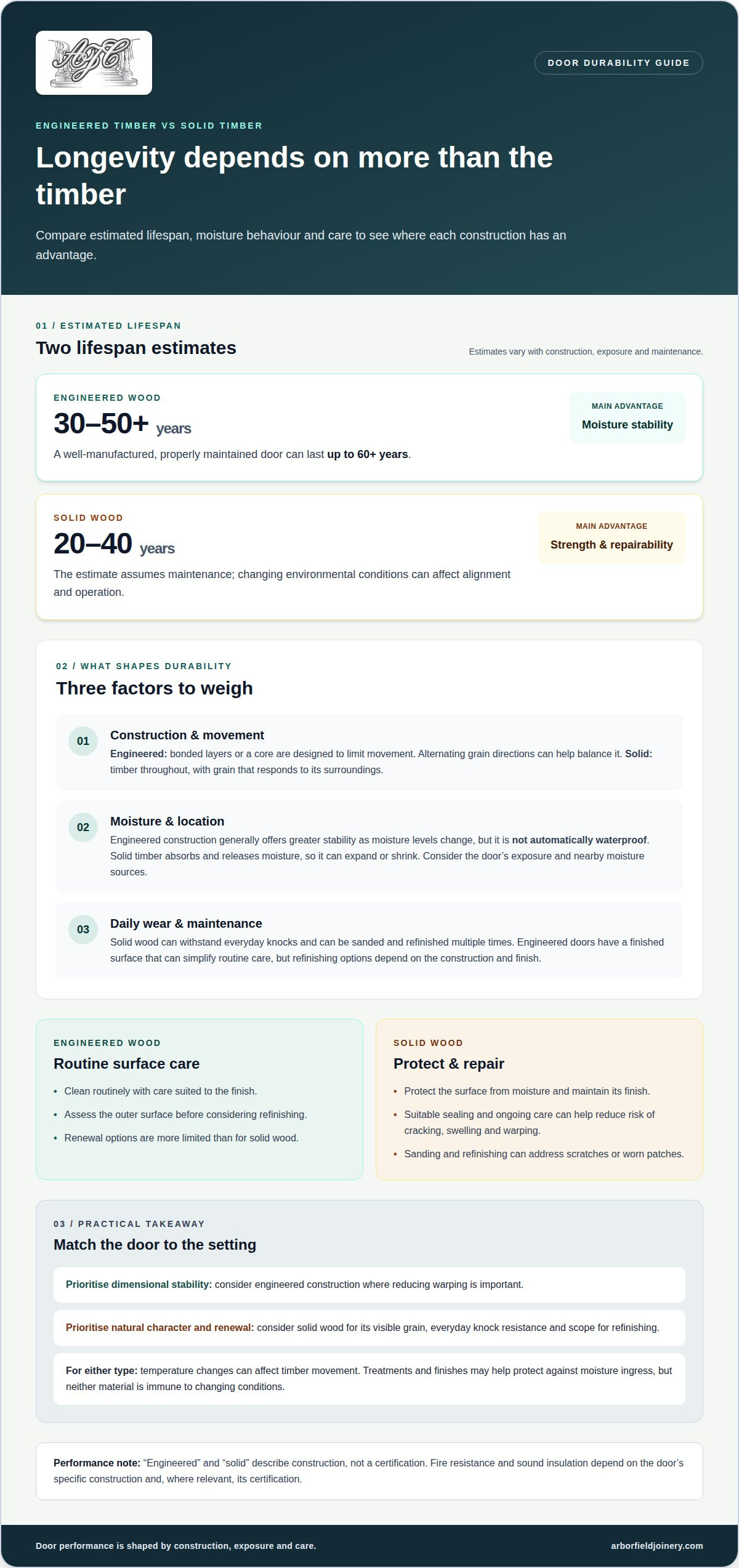
Engineered timber combines bonded layers or a core with an outer finish. Its construction is designed to limit movement, giving it strong stability as moisture levels change. Lifespan estimates range from 30-50+ years; a well-manufactured, properly maintained door can last up to 60+ years. That makes engineered wood a compelling choice where reducing warping is a priority.
Solid Wood Moisture Response
Solid wood is made from timber throughout, so its grain responds to the surrounding air. Timber absorbs and releases moisture, expanding or shrinking as conditions change. Solid wood doors are estimated to last 20-40 years with maintenance, but environmental movement can affect their alignment and operation. Their strength and distinctive grain remain appealing, although changing humidity demands attention.
Moisture and Temperature Stability
Engineered wood can resist moisture better, but it isn’t automatically waterproof. Treatments and finishes can help protect against moisture ingress, yet a door still needs to suit its location. Consider indoor or outdoor exposure and nearby moisture sources. Neither material is immune to temperature changes; shifts in surrounding conditions can affect timber movement and long-term stability.
| Door type | Estimated lifespan | Moisture behaviour |
|---|---|---|
| Engineered wood | 30-50+ years | Greater stability |
| Solid wood | 20-40 years with maintenance | Can expand or shrink |
Choose engineered construction where dimensional stability matters most; consider solid wood for its natural character and resistance to everyday knocks.
Fire resistance can’t be judged by the material label alone. A dense engineered core may enhance sound insulation, but performance depends on the door’s specific construction and certification.
In the UK, engineered doors are generally positioned as a cost-effective option, while solid wood doors are often premium. The final price depends on the door’s construction and finish.
For moisture-prone rooms, engineered wood flooring is generally a safer flooring choice than solid wood; flooring performance doesn’t determine door suitability.
Engineered timber construction and grain direction
Engineered doors combine bonded timber layers or an engineered core with a finished outer surface, which may use veneer, laminate or a decorative coating. Some designs bond smaller sections of timber with alternating grain directions. This layered construction differs from a traditional solid timber door, which is made from wood throughout.
Grain direction matters because timber naturally responds to its surroundings. In engineered construction, alternating grain directions are intended to balance movement and help limit warping. A dense internal structure may also enhance thermal efficiency and acoustic insulation. These features vary by door, so “engineered” describes how it is made, not one uniform specification.
Solid wood offers a different appeal: the material and visible grain give each door natural character. A solid oak door, for example, is made entirely from oak. It doesn’t have engineered timber’s bonded layers, so the grain runs through the material. This traditional construction can withstand daily use, although natural timber movement remains part of its behaviour.
Engineered wood flooring uses a related layered principle, but it is not built like a door. Its hardwood veneer sits above a supporting core, while engineered doors may use several bonded timber layers or a dense core. The flooring veneer affects whether it can be sanded and refinished. Door construction instead centres on its core, faces and how their grain directions work together.
“Engineered” and “solid” describe a door’s construction, not a certification. The timber type alone doesn’t establish tested fire resistance, sound insulation or other performance ratings. In the UK, check product-specific documentation against the door’s intended use: construction alone cannot establish whether a particular rating applies.
Compare the door’s core, outer finish and grain arrangement with its intended setting. These details say more about lasting performance than the material label alone, and help distinguish a layered engineered design from the continuous timber of a solid door.
Which Is Easier to Maintain?
Engineered doors can be straightforward to maintain because their finished surface protects the door. Routine cleaning helps preserve its appearance, while care and any refinishing depend on the finish. For an interior door, gentle cleaning can remove everyday marks without making refinishing the first response to minor wear.
Solid wood needs attention, particularly where moisture levels fluctuate. Protecting the surface from moisture and maintaining its finish can help reduce the risk of cracking, swelling and warping. Solid timber can be sanded and refinished multiple times, making it possible to address scratches or worn patches. That repairability can help preserve its character over time.
Engineered doors also need care. Plywood or high-density fibreboard constructions benefit from routine cleaning and periodic refinishing, but their options are more limited than solid wood’s. A bonded structure and finished outer layer affect how much the surface can be renewed, so refinishing isn’t automatically suitable for every mark. Regular cleaning can help maintain the finish without removing material unnecessarily.
- For everyday cleaning: clean the surface routinely, using care appropriate to its finish.
- For surface wear: assess the finish before choosing refinishing; solid wood allows more scope for sanding.
- For moisture exposure: keep solid timber protected with suitable sealing and ongoing care.
- For engineered construction: treat periodic refinishing as surface maintenance, not an unlimited route to renewal.
Choose solid wood if repeated refinishing matters most. Choose engineered wood if you prefer a more uniform finish and straightforward routine care. In either case, consistent cleaning and timely attention to worn finishes help maintain the door’s condition and performance.
Solid wood door durability and wear resistance
Solid wood’s key advantage in busy areas is its ability to withstand everyday knocks. Oak is a practical option for high-traffic parts of a home, and its grain gives the surface natural character. Minor marks can blend with that character rather than immediately detracting from the door’s appearance.
That resilience matters in a hallway, where bags, shoes and frequent opening can scuff a door. Solid oak can withstand this everyday impact, and its timeless appearance suits both traditional and contemporary interiors. Engineered wood can perform well, too, but it may not withstand decades of extensive wear as effectively as solid wood.
Refinishing is another practical advantage of solid timber. It can be sanded and refinished multiple times, allowing worn finishes or surface scratches to be addressed rather than simply covered. This flexibility can extend the door’s useful life, especially when appearance matters as much as function. Engineered doors have more limited refinishing options, so surface wear may be harder to renew.
Solid wood still responds to its surroundings. Changes in moisture and temperature can cause timber to expand or contract, potentially affecting how the door sits and operates. In a busy room, those shifts may become noticeable as the door is opened and closed repeatedly. Protective finishes and regular care help maintain the surface, but they don’t remove the timber’s natural movement.
For a high-traffic interior, consider the likely knocks alongside the room’s changing conditions. Solid wood is a strong choice where impact resistance, repairability and natural aesthetics lead; engineered construction may better suit a setting where dimensional stability matters more. For external use, oak doors should be installed under cover.
Explore solid wood door options if lasting character and the ability to renew the finish are priorities. The clearest choice is the door whose wear resistance and movement suit its location.
Arborfield Joinery
Arborfield Joinery offers a range of interior doors to suit different priorities. Oak Doors and Walnut Doors bring natural timber character, while White Primed Doors and Urban Doors offer different looks. Consider the room’s conditions, expected wear and maintenance needs when comparing options.
Consider the door’s position and how it will be used, then compare suitable styles against those practical priorities. This helps you balance appearance with the stability and upkeep that matter in your home.
For help choosing an interior door, contact Arborfield Joinery to discuss the options.
Choose the right door for the room
Turn the durability question into a room-by-room decision. Consider how each space is used, the look you want to preserve and how much ongoing care feels practical. The right balance may differ between a quiet bedroom and a busy hallway, so focus on the conditions each door will face rather than choosing one material for the whole home.
Comparing engineered wood and solid wood doors for durability can clarify what matters most: stable everyday performance, natural timber character or the ability to refresh the surface over time. Once your priorities are clear, it’s easier to explore styles that suit your home and expectations for upkeep.
Contact Arborfield Joinery for door advice and take the next step towards choosing with confidence.
Frequently Asked Questions
What is engineered timber?
Engineered timber doors are made by bonding timber layers or sections into a structure, rather than using one continuous piece of wood throughout. The outer face may have veneer, laminate or a decorative coating. In some designs, alternating grain directions help balance movement. The core and finish vary, so the term describes a construction approach, not one specific timber or door specification.
Why Architects Prefer Engineered Wood Doors?
Designers may choose engineered doors for the control their layered construction offers. Bonded components can support a stable, consistent design, while veneers and decorative finishes provide different visual options. A dense core may also be designed to enhance thermal efficiency or acoustic insulation. These are possibilities, not automatic properties of every engineered door, so the specific design and intended use matter.
Which Works Best as a Main Door Material?
Neither material is automatically best for every main entrance; the door must suit its exposure and intended use. An engineered front door can offer long-term reliability with minimal adjustment, while solid wood can bring natural character and resistance to everyday impact. For an entrance exposed to weather, prioritise a door designed for that setting. Material alone doesn’t establish weather resistance or suitability.
How durable are engineered wood doors compared with solid wood doors?
Both constructions can provide lasting service, but they handle different demands well. Engineered construction is generally favoured for stability, while solid timber has an advantage where repeated knocks and surface renewal matter. Actual performance also depends on construction, finish, location and upkeep. For a busy household, consider likely impact and maintenance before treating either material as universally tougher.
How do engineered and solid wood doors resist warping, cracking and splitting?
Engineered doors use bonded layers or sections to balance timber movement, which can help limit distortion. Solid wood responds as its surroundings change, making its finish and ongoing care important. Neither construction is immune to damage. Avoiding prolonged moisture exposure and maintaining worn finishes help protect the door, while its construction determines how movement is managed.
Which type of wood door handles humidity and temperature changes better?
Engineered timber generally handles changes in humidity and temperature with greater dimensional stability. That can matter in a room where conditions fluctuate, since timber naturally takes in and releases moisture. Solid wood responds more directly to those changes. Neither option is waterproof, and the door’s finish and intended location still matter. Match the construction to the room’s conditions rather than relying on the material name alone.
Share:
Pet-friendly door solutions for cats and dogs: which doors can fit a pet flap
Life Cycle Analysis of Bespoke Joinery Materials Explained