
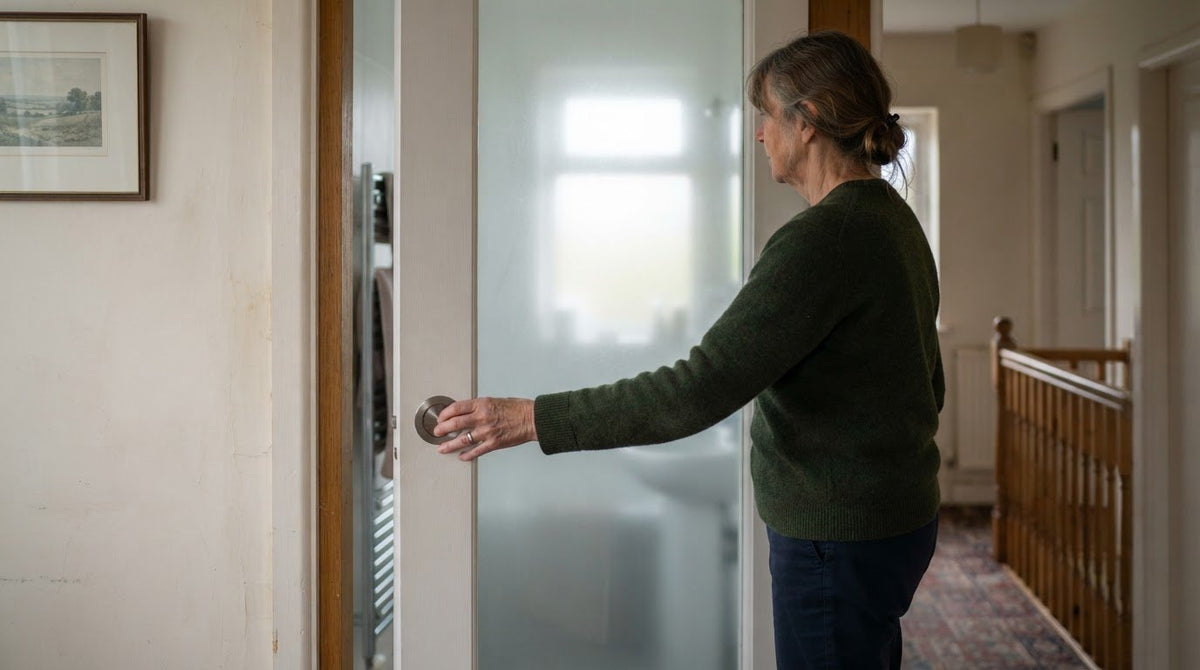
Clear glass can make a room feel brighter and more open, but it offers less privacy than frosted glass. For frosted vs clear glass doors for privacy, choose frosted to obscure views while letting light through, or clear when an unobstructed view and maximum daylight matter more.
That trade-off is especially useful to consider for a pocket door, where the glazing can connect two rooms without taking up swing space. It’s natural to want both a bright interior and a greater sense of seclusion, but the right balance depends on where the door sits and what you’d like to see through it.
This guide compares frosted and clear glass, including their privacy at internal doors and front entrances. Use the practical guidance to match the glazing to the room, your need for daylight and the level of visibility you’re comfortable with.
Key Takeaways
- Choose frosted glass for a pocket door when privacy matters more than a completely clear view, and consider how much light the room needs.
- Compare frosted glass with patterned obscure glazing and privacy film to find an option that suits the look and flexibility you want.
- Think about how clear glass behaves after dark, especially in rooms where interior lights may make the space visible from outside.
- For front doors and internal glass doors, weigh privacy alongside brightness and visibility to choose glazing that feels right for each space.
Frosted vs clear glass pocket doors - which one should you choose?
For a pocket door beside a bathroom, frosted glass prioritises privacy, while clear glass keeps the view open. Consider the room’s use, cleaning and glazing design when choosing.
Bathroom Privacy
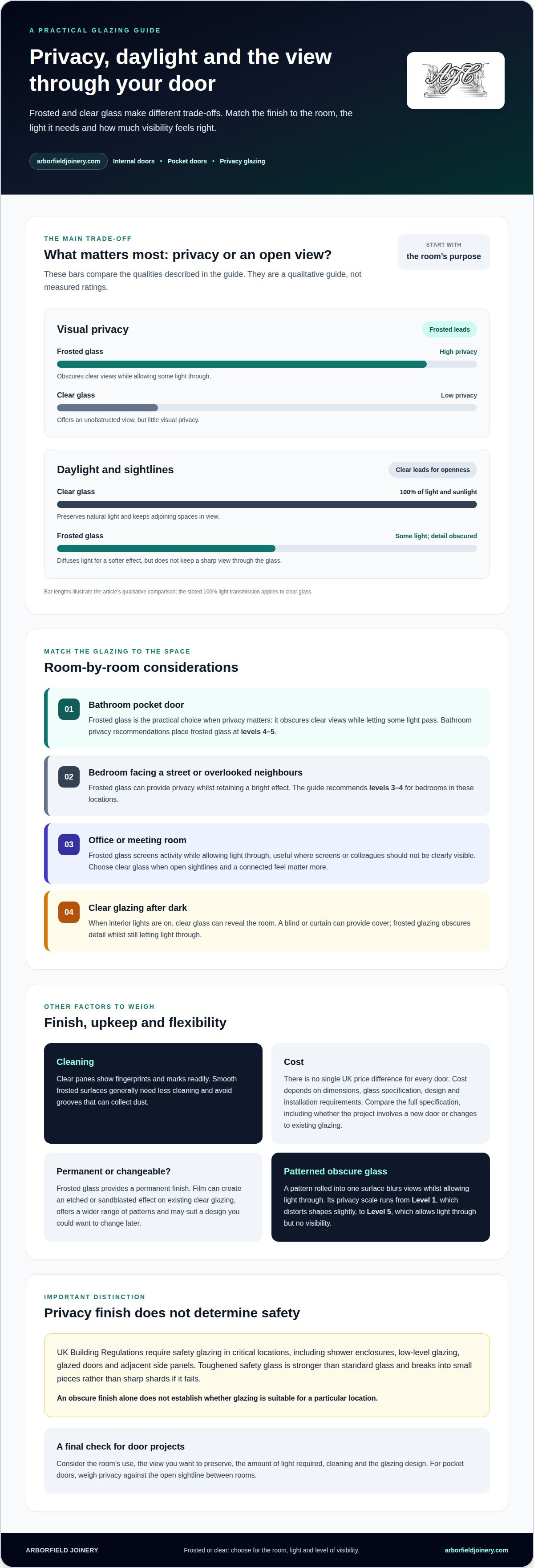
Frosted glass obscures clear views while allowing some light to pass, making it a practical choice for a bathroom pocket door. Bathroom privacy recommendations place frosted glass at levels 4-5. Clear glass offers little visual privacy, so people can see through it. For bathroom windows, frosted glazing can keep the space bright whilst concealing detail. Shower screens need suitable glazing too: 8 mm or 10 mm toughened glass may be used, depending on panel size and supporting hardware.
Frosted Glass Costs
There’s no single UK price difference for every frosted and clear glass door. The final cost depends on the door’s dimensions, glass specification, design and installation requirements. A clear pane and a decorative frosted design may involve different materials or work, so compare the full specification rather than the finish alone. For a pocket door, consider whether the project involves a new door or changes to existing glazing.
Frosted Glass Pros and Cons
In bathrooms, frosted glass provides privacy while retaining a bright effect; in bedrooms, levels 3-4 are recommended where rooms face streets or overlooked neighbours. Its drawback is a blurred view between rooms. Clear glass offers an unobstructed sightline, but sacrifices privacy. For maintenance, frosted glass generally needs less cleaning: clear panes show fingerprints and marks readily, while smooth frosted surfaces avoid grooves that can collect dust.
Glass for Offices and Meeting Rooms
In an office or meeting room, frosted glass can screen activity while allowing light through, without making the space feel enclosed. It suits partitions where people need daylight but shouldn’t have a clear view of screens or colleagues. Clear glass keeps sightlines open and creates a connected feel between work areas. Consider whether the room needs visual separation during meetings or visibility across a hallway.
| Glass option | Privacy | Light and view | Example use |
|---|---|---|---|
| Frosted | High; bathroom levels 4-5 | Light passes; views are obscured | Bathroom or meeting room |
| Clear | Low | Open views between rooms | Hallway or shared office |
Choose frosted for privacy or clear for open sightlines, and match the glazing to the room’s purpose.
What’s the difference between frosted glass and other privacy glazing options?
Frosted glass softens views, while patterned obscure glass and applied films offer different finishes. The right option depends on whether you’re changing existing glazing or planning a permanent design.
Frosted glass diffuses light across its surface, limiting clear sightlines. Textured obscure glass instead has a pattern rolled into one surface, blurring views whilst allowing light to pass through. Its privacy scale runs from Level 1 to Level 5: Level 1 distorts shapes slightly, while Level 5 allows light through but no visibility. Levels 2, 3 and 4 offer progressively greater concealment.
For existing clear glazing, frosted window film can create an etched or sandblasted effect without replacing the glass. Window film can be a flexible option when you may want to change the design later. Choosing between frosted glass and film depends on whether you want a permanent finish or flexibility to change the design. Film also offers a wider range of patterns.
In the UK, Building Regulations require safety glazing in critical locations, including shower enclosures, low-level glazing, glazed doors and adjacent side panels. Toughened safety glass is stronger than standard glass and breaks into small pieces rather than sharp shards if it fails. Privacy and safety are separate considerations: an obscure finish alone doesn’t establish whether glazing is suitable for a particular location.
Side-facing roof windows often need obscure glazing because privacy regulations protect neighbouring properties. In double- or triple-glazed units, obscure glass performs like clear glazing for insulation; the finish changes visibility, not that performance. For coordinated glazing choices, consider the window’s location, privacy needs and intended design together.
Clear glass transparency and light transmission
Clear glass allows 100% of light and sunlight through, preserving natural light across adjoining spaces. Its transparency also means unobstructed visibility: a clear pocket door between a hallway and living room keeps both areas in view. That openness can make a room feel connected, but it offers little visual separation when someone wants privacy.
Frosted glass offers a different balance. It obscures detail and lets only a limited amount of light through, creating a softer, diffused effect. For example, a frosted internal door can screen a study from a busy hallway whilst retaining some brightness. Its smooth surface spreads light more evenly than a clear pane, but doesn’t preserve a sharp view through the glass.
Consider how visibility changes after dark. Clear glass can reveal a room’s interior when the lights are on, unless a blind or curtain provides cover. A clear door beside a lit living room, for example, may expose the space to someone in the next room. Frosted glazing obscures detail in this situation, although it still lets light through.
Reflective privacy film works differently: it creates a mirrored appearance on the brighter side and provides daytime privacy while allowing visibility outwards. The effect depends on which side of the glass is brighter, so it isn’t the same as permanent frosted glazing. In a garden room, privacy film can preserve an outward view during daylight while concealing the interior.
First decide whether an open sightline matters more than screening detail. Then consider the room’s use, lighting and nearby windows. Clear glass can suit a doorway between bright shared spaces; frosted glass may work better where privacy matters. Assess the glazing from both sides and at eye level, since the view changes with position. Textured obscure glass is another option if you prefer a patterned finish to a smooth frosted appearance.
Privacy for front doors and internal glass doors
Choosing frosted vs clear glass doors for privacy at a front entrance starts with considering what visitors can see from outside. Clear panels bring daylight into the hall but also reveal its contents and anyone inside. Frosted glazing screens detail while keeping the entrance bright, balancing visibility with a more private appearance.
For a front door facing a pavement or neighbouring homes, decorative glass can soften sightlines and add character. Sandblasted effects or coloured inserts create a distinctive finish. Clear glass suits an entrance where an open view is welcome, but can feel revealing after dark when interior lights are on. Consider the view from outside at different times of day.
Internal doors call for a room-by-room decision. Frosted glazing can separate a home office or bathroom from shared areas, while clear panels connect spaces such as a kitchen and dining room. The frosted vs clear glass doors for privacy choice depends on whether the room needs visual separation or an open sightline. A meeting room, for example, may benefit from screening activity without closing off the office.
Privacy film is another option for existing front doors, patio doors, sidelights and internal glass doors. Frosted film creates an etched appearance without replacing the pane. Reflective film provides daytime privacy from the brighter side, while blackout or opaque film prevents visibility through the glass entirely.
Before choosing, consider what someone approaching the entrance can see, how much light the hallway needs and how each room is used. A frosted entrance panel can screen the hall, while clear glazing between shared living spaces keeps them visually connected. In a home office, privacy may matter more during calls than an uninterrupted view.
Explore glazed door designs to consider how the glass finish can complement your entrance or interior.
Arborfield Joinery
Arborfield Joinery offers a range of doors to help you match your privacy needs with your home’s style. Once you’ve decided whether a room calls for frosted glazing or a clear view, consider how the door will fit into the interior. Oak, walnut, white primed and Urban Doors offer different looks for your chosen space.
For a glazed doorway, consider the room’s purpose, the light you want to retain and the level of visibility that feels comfortable. These priorities can help narrow your options before you choose a door design. To discuss your door requirements, contact Arborfield Joinery.
Make the choice that feels right at home
Before settling on a door, picture the view from both sides and consider how the room will be used throughout the day. A home office may call for a different balance of privacy and openness than a shared living space. Your choice between frosted vs clear glass doors for privacy can also shape how connected adjoining rooms feel.
Consider the overall design as well as the glazing. The door’s material, finish and proportions all influence how it sits within your interior, so weigh them together rather than treating glass as a separate decision. A considered choice can bring each room’s practical needs into harmony with the character of your home.
For guidance on choosing a door to suit your space, contact Arborfield Joinery to discuss your doors. Take the next step with a clearer picture of the look and feel you want to create.
Frequently Asked Questions
Best door glazing for your family home: clear, frosted or decorative?
Choose glazing according to the room’s activity and the view you want to preserve. Clear panels suit a doorway between shared spaces where seeing through helps the home feel connected. Frosted glazing is a considered option for a bathroom or a room used for focused work. Decorative glass, such as sandblasted effects or coloured inserts, adds character while softening the view. Match the finish to the room’s purpose and interior style.
How do you cover glass doors for privacy?
Apply privacy film to existing glass when you want to change its appearance without replacing the pane. Frosted film creates an etched-glass look, while blackout or opaque film prevents visibility through the glass. Reflective film provides daytime privacy from the brighter side, but the effect depends on which side is more brightly lit. For a glazed door, choose film based on whether you want filtered light or complete concealment.
What is Obscure Glass?
Obscure glass is glazing designed to blur views while still admitting light. Textured versions have a pattern formed on one surface, so the degree of distortion depends on the pattern. An obscure-glass scale runs from Level 1 to Level 5: lower levels reveal more shape and detail, while Level 5 allows light through without visibility. It can suit windows or doors where a clear view is unnecessary.
What types of frosted glass are available for home use?
Frosted glass with sandblasted effects or coloured inserts can give a door a decorative finish. Frosted window film is another way to create an etched appearance on existing glazing. Film comes in a wider range of patterns and can be removed or replaced, while frosted glass is permanent. Consider whether you want a plain diffused surface or a more distinctive design.
Can silhouettes or movement be seen through frosted glass, especially at night?
Frosted glass obscures clear views, but the amount of visible shadow depends on its privacy level and lighting. On the obscure-glass scale, Level 4 leaves shadows barely visible, while Level 5 allows light through without visibility. For a bathroom or bedroom, consider how the room appears with its lights on and choose a higher concealment level if silhouettes would be unwelcome.
Which is better for privacy: frosted glass, obscure glass or patterned glass?
For strong concealment, choose a high privacy level, such as Level 5 obscure glass, which allows light through without visibility. Frosted glass also obscures clear views, while patterned obscure glass blurs sightlines through its textured surface. The pattern affects how much shape or movement can be made out, so select by the desired privacy effect and appearance. For maximum concealment, blackout or opaque film prevents visibility entirely.
Share:
Choosing a Composite Stable Door for Your Home
How to Make a Small Room Look Bigger with Door Colours